
How to Use a Multimeter: A Complete Beginner’s Guide
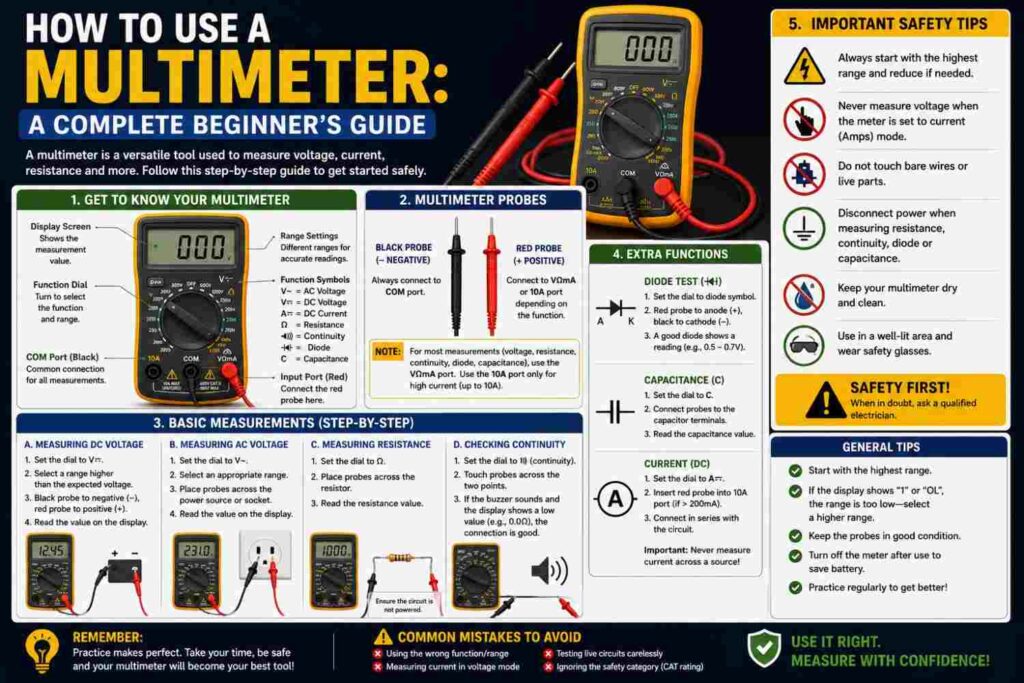
A multimeter is the single most useful tool an electrician, technician, or curious homeowner can own, yet many people buy one, glance at the confusing dial, and quietly…
What Really Happens When an Electrical Circuit Is Overloaded?
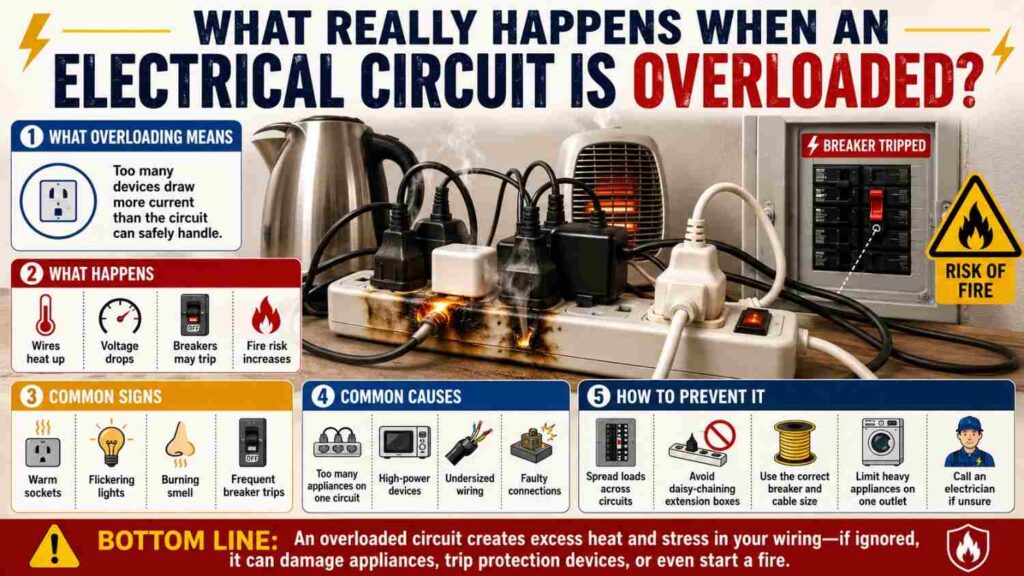
What actually happens inside an overloaded electrical circuit, why it’s a leading fire risk, and how to prevent it at home.
Why Electricity Is Transmitted at Very High Voltage
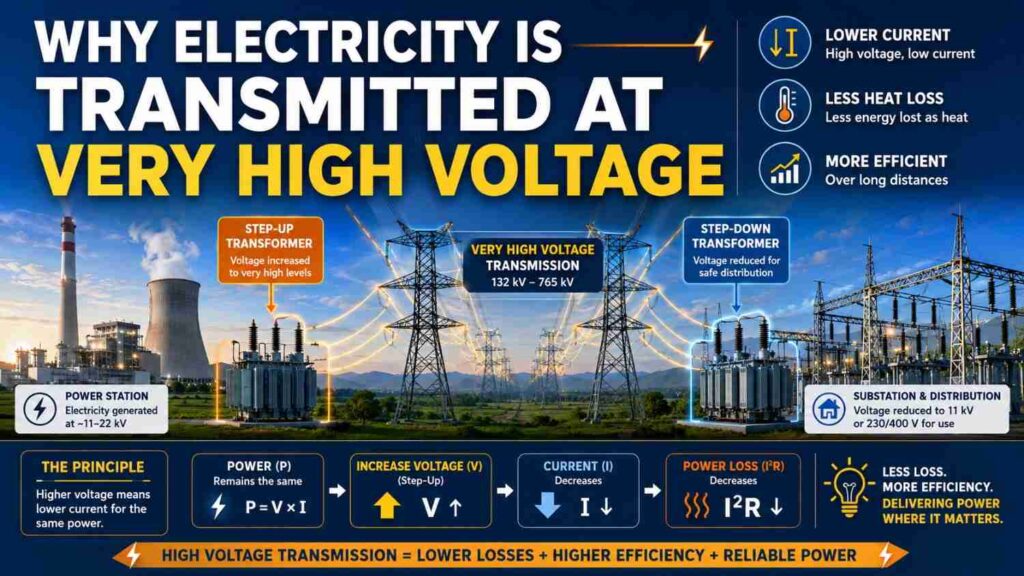
Why the grid transmits electricity at extremely high voltage, and how this simple physics saves enormous amounts of energy.
What Is Electrical Frequency and Why Do Nigeria and Other Countries Use 50 Hz?
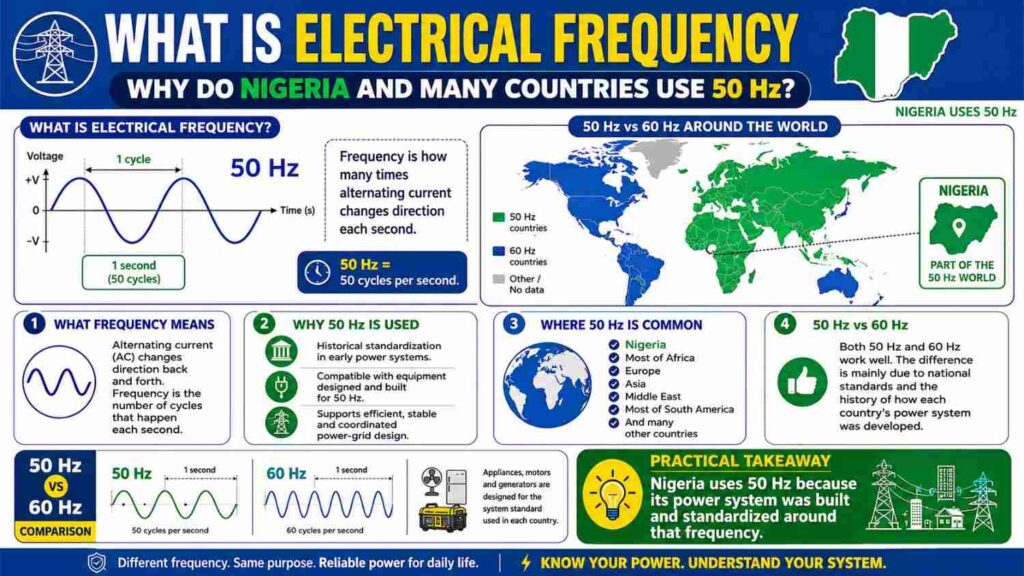
What electrical frequency is, why Nigeria and most of the world use 50Hz, and why frequency stability matters for the grid.
Active, Reactive and Apparent Power Explained Without the Confusion
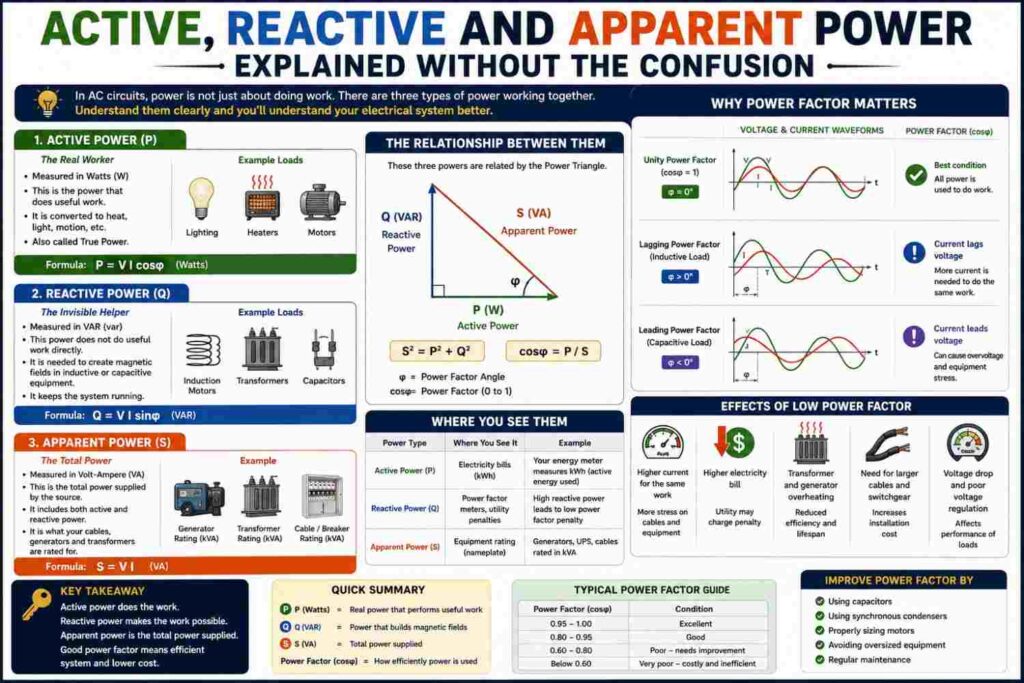
Active, reactive and apparent power explained simply, with the power triangle, worked examples and why it matters for backup power.
Series vs Parallel Circuits: A Simple Guide for Beginners
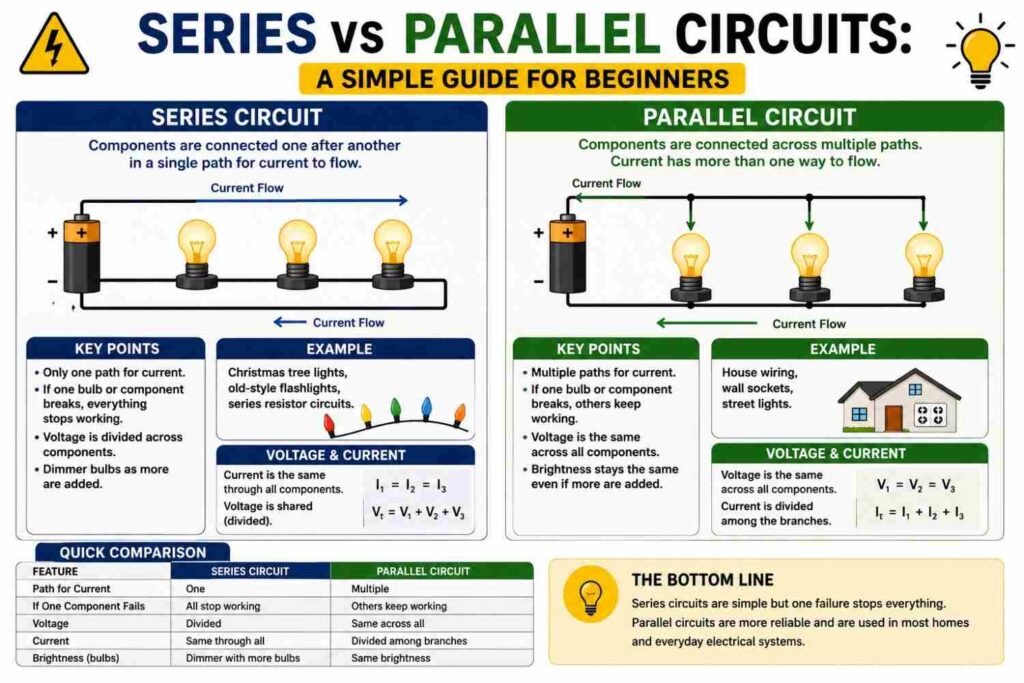
A clear, beginner-friendly explanation of series and parallel circuits, with worked examples and real household applications.
What Is a Transformer and How Does It Actually Work?
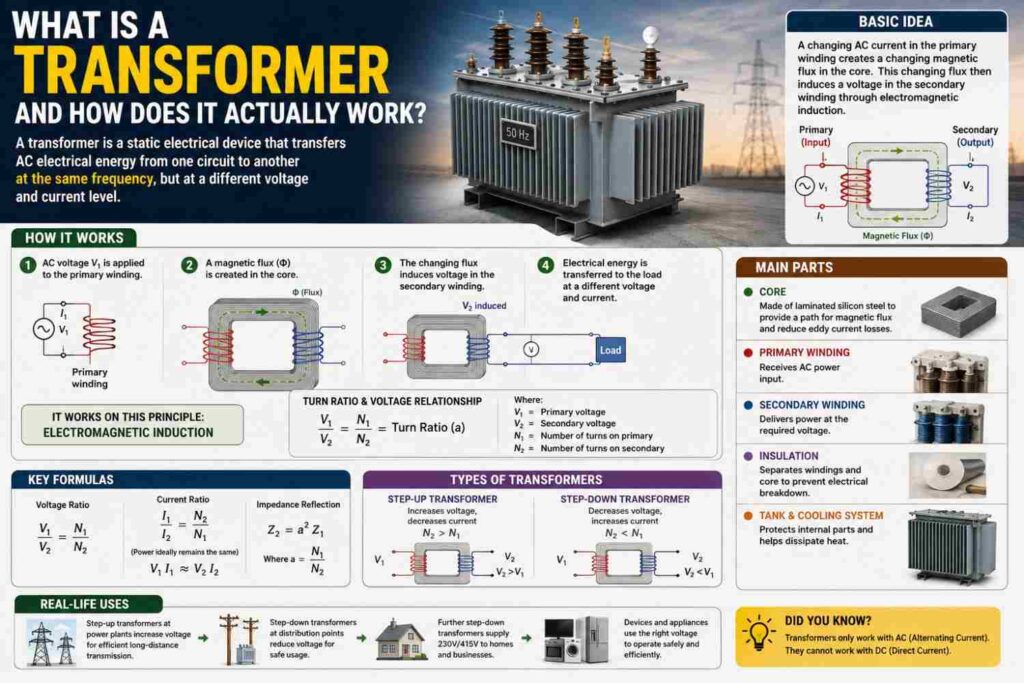
Discover how transformers work, why they hum, and why they are essential to moving electricity from power stations to your home.
Step-Up vs Step-Down Transformers: What Is the Difference?
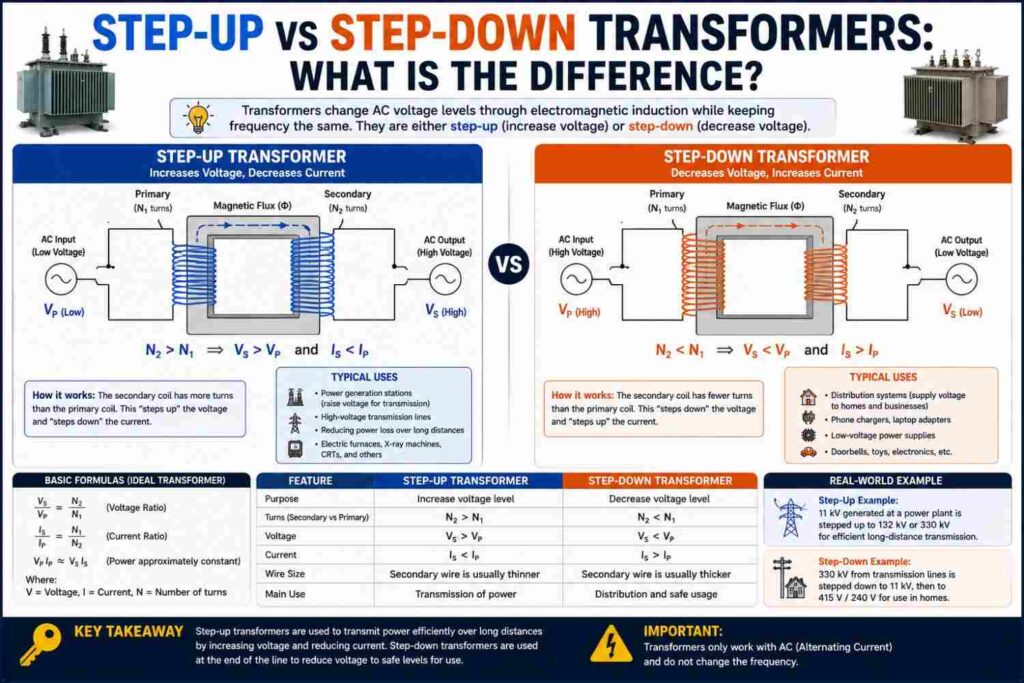
Step-up transformers raise voltage for transmission; step-down transformers lower it for safe use. Here’s how each works.
Voltage, Current, Resistance and Power Explained in Simple Terms
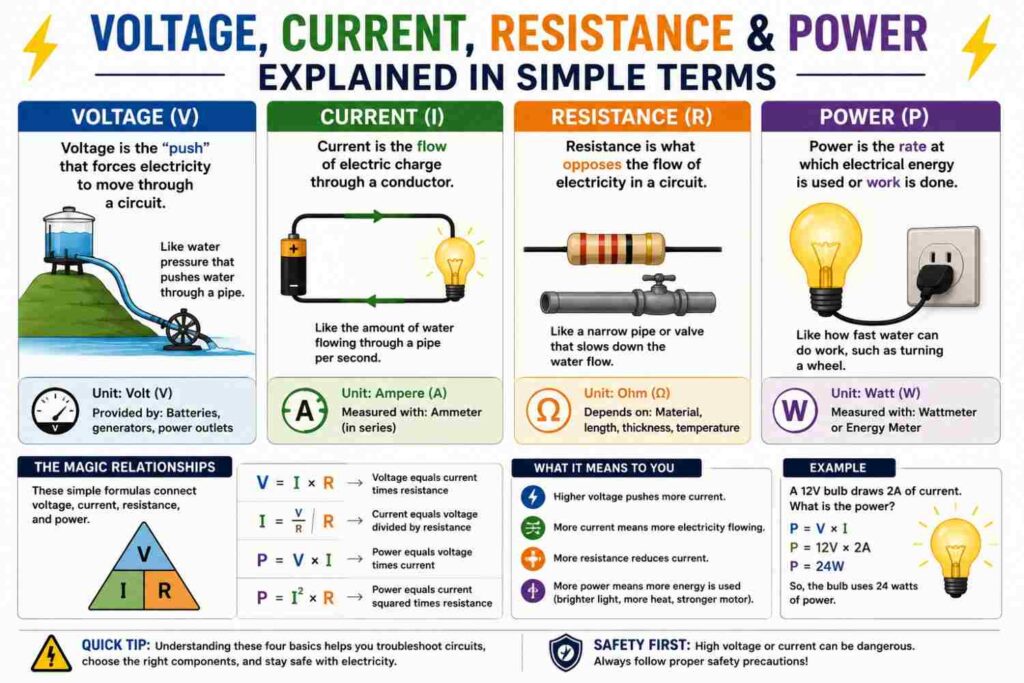
A beginner-friendly guide to voltage, current, resistance and power, using simple analogies, Ohm’s Law and real examples.
kW vs kWh: What Is the Difference and Why Should You Care?
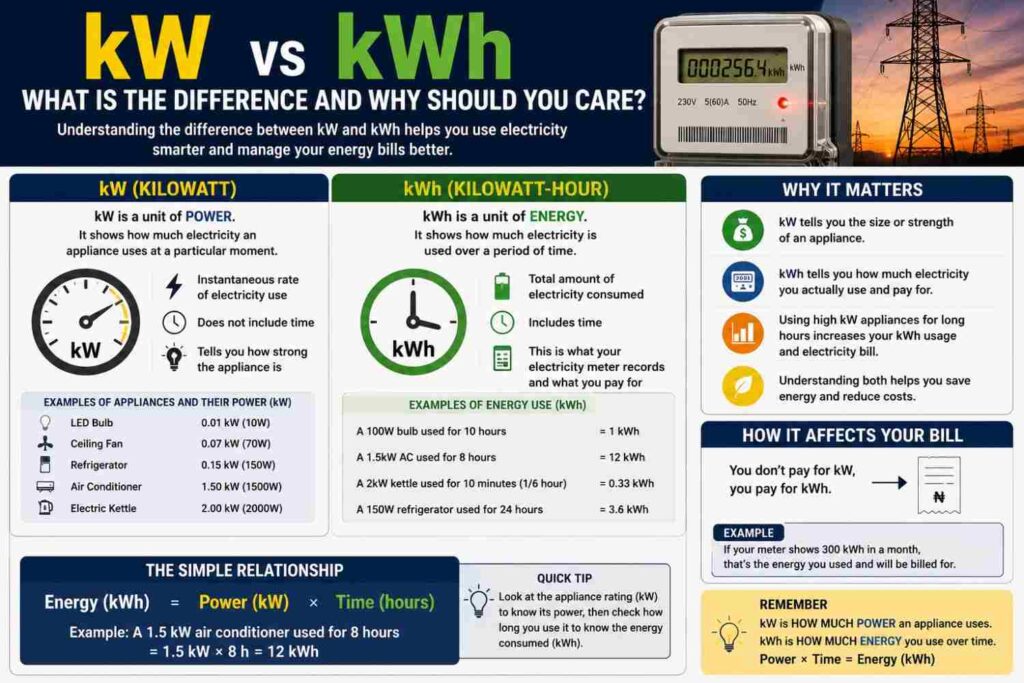
kW measures power, kWh measures energy. Understand the difference so you can size inverters correctly and read your electricity bill.