
A hot wall socket is one of the more common electrical complaints in Nigerian homes, and for good reason: it sits at the intersection of nearly every risk factor covered elsewhere on this site, connection quality, cable sizing, overload and simple wear over time.
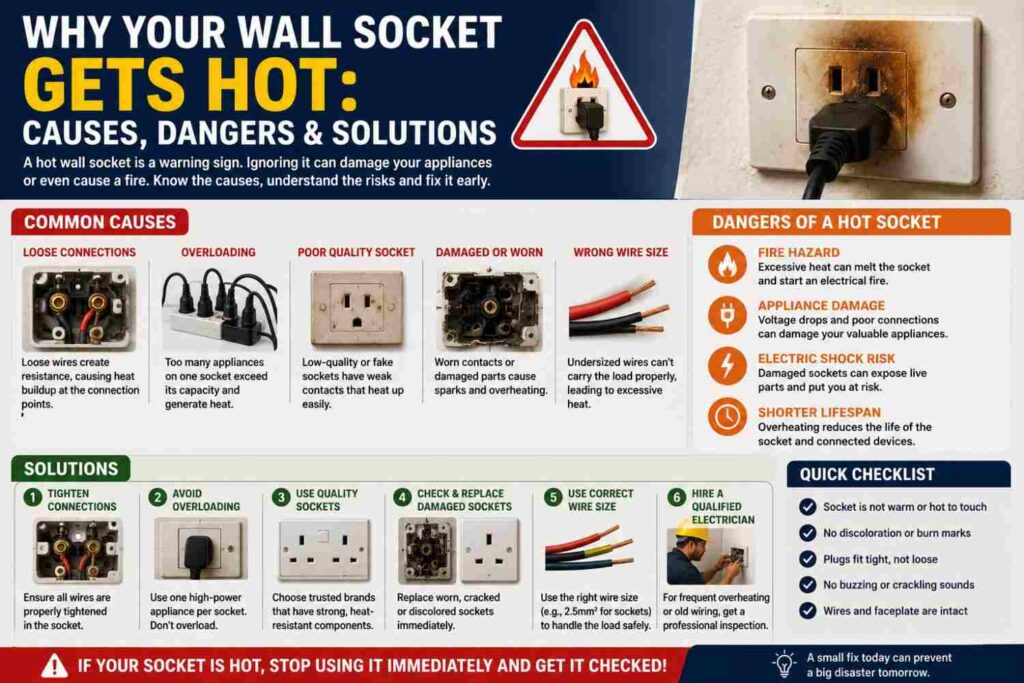
This article focuses specifically on why sockets themselves, more than cables running through walls, so often become the hot spot in a circuit, and what to do about it.
Why Sockets Are Often the Weakest Link
A socket outlet involves multiple physical connection points, terminal screws gripping bare wire, spring contacts gripping a plug’s pins, and internal metal contacts carrying current between them. Each of these connection points introduces some contact resistance, and unlike a continuous run of cable, that resistance is concentrated in a small physical area, meaning any imperfection, a loose terminal screw, worn spring contacts, or corrosion, causes heat to build up in exactly one small spot rather than spreading harmlessly along a length of cable.
Common Causes of a Hot Socket
- Loose terminal screws: Over time, vibration and thermal expansion/contraction cycles can gradually loosen the screws holding wires in place inside a socket, increasing resistance at that connection.
- Worn or damaged spring contacts: Repeated plugging and unplugging wears the internal metal contacts that grip a plug’s pins; loose-fitting plugs are a common visible symptom of this wear.
- Overloading: Drawing more current than the socket and its wiring were designed for generates excess heat throughout, concentrated particularly at the socket’s connection points.
- Poor quality sockets: Substandard sockets, sometimes using inferior metal contacts or thinner internal components, can run hotter than quality alternatives even under identical, correctly rated loads.
- Old age: Sockets, like all components, degrade over years of use, with contact resistance often gradually increasing well before a dramatic failure occurs.
- A loose-fitting plug: A plug that does not grip firmly, whether due to a worn socket or a slightly undersized or damaged plug, creates poor contact and localized heating right at the point of connection.
What to Do If You Discover a Hot Socket
- Unplug whatever is connected and avoid using that socket until it has been assessed.
- Check whether the plug itself feels unusually hot too, which can help indicate whether the problem lies primarily with the socket, the plug, or the connected appliance’s cord.
- Avoid touching the faceplate for extended periods or attempting to open the socket yourself; leave diagnosis and repair to a qualified electrician.
- If there is any smell, discoloration, sparking or sound, treat it as urgent and switch off the circuit at the distribution board.
Socket Heating vs Cable Heating: How to Tell the Difference
If only one specific socket feels hot while others on the same circuit remain normal, the problem is very likely localized to that socket itself (a loose connection, worn contacts, or a faulty plug) rather than the underlying cable or circuit design, since cable-related overload issues typically affect every socket on the same circuit fairly evenly. This distinction is genuinely useful for diagnosis: a single hot socket among otherwise normal ones points an electrician quickly toward that specific fitting, while multiple hot sockets across a circuit point more toward overload or undersized cable as the underlying cause.
Why Frequently Used Sockets Deserve Extra Attention
Sockets that are plugged and unplugged frequently, such as those used for chargers, irons, or portable appliances moved between rooms, experience more mechanical wear on their internal spring contacts than sockets that host a permanently connected appliance. This is why kitchen sockets, sockets near workstations, and other high-traffic locations often show heating symptoms before less frequently used sockets elsewhere in the same home, even when all were installed at the same time with identical components.
Preventive Steps
- Have sockets in high-use areas periodically checked and, if needed, tightened or replaced by a qualified electrician.
- Avoid forcing plugs that do not fit snugly; a loose fit is a symptom worth addressing rather than working around.
- Choose quality sockets and accessories from reputable suppliers rather than the cheapest available option.
- Avoid leaving heavy appliances plugged into sockets that show any signs of looseness or wear.
How Electricians Diagnose a Hot Socket
A qualified electrician diagnosing a hot socket typically follows a structured process rather than guessing: first isolating the circuit safely, then visually inspecting the socket for discoloration, scorch marks or visible damage, checking the tightness of terminal connections behind the faceplate, testing the socket’s internal contacts for wear, and measuring actual current draw under typical load to rule out overload as a contributing factor. In some cases, a thermal imaging camera is used to compare the temperature of the suspect socket against others on the same circuit under similar load, quickly confirming whether the heating is genuinely localized or part of a broader circuit issue. This structured, methodical approach is exactly why professional diagnosis, rather than a homeowner’s own touch-test alone, is the appropriate response to a persistently hot socket, particularly one feeding a high-power appliance.
The Hidden Cost of Ignoring a Hot Socket
Beyond the obvious fire risk, a chronically hot socket carries other, less visible costs worth considering. Repeated heat cycling accelerates wear on both the socket and any plug regularly used with it, meaning the problem tends to worsen progressively rather than remain stable, often leading to a socket that eventually fails outright, sometimes at an inconvenient moment such as during a power-hungry activity like ironing clothes or boiling water for guests. Appliances plugged into a poor-contact socket may also experience subtle voltage drop at the point of use, which can affect performance and, for some sensitive electronics, contribute to premature wear over time. Addressing a hot socket promptly, rather than tolerating it as a minor inconvenience, therefore protects not just against fire risk but against these more gradual, cumulative costs as well.
Common Misconceptions
- “A hot socket always means the wiring behind the wall is faulty.” Often the socket fitting itself, not the wall wiring, is the actual source of the problem.
- “New sockets can’t develop heating problems.” Poor installation quality or substandard components can cause heating issues even in relatively new sockets.
- “It’s fine to keep using a warm socket as long as it’s not too hot to touch.” Any persistent, unexplained warmth warrants investigation rather than being tolerated indefinitely.
Comparing Socket Materials and Build Quality
Sockets are typically constructed with either thermoplastic or thermoset (often melamine-based) housings, and the choice affects heat tolerance meaningfully: thermoset materials generally retain their shape and structural integrity at higher temperatures than many common thermoplastics, making them a preferred choice for sockets expected to feed higher-power appliances. Internal contact materials matter just as much as the housing: sockets using quality brass or bronze alloy contacts with adequate spring tension maintain good electrical contact over many years and thousands of insertion cycles, while cheaper alternatives using thinner or lower-grade metal can lose spring tension and develop poor contact, and therefore heating issues, much sooner in their service life. When replacing sockets, particularly in kitchens or other high-demand areas, specifying quality components rather than simply the cheapest available option is a small upfront cost that meaningfully reduces the likelihood of heating problems developing within just a few years of installation.
Frequently Asked Questions
Can a hot socket damage the appliance plugged into it?
Yes, sustained heat at a poor connection can damage both the plug and, in some cases, stress the appliance’s power cord or internal components over time.
Is it worth replacing all sockets in an older home at once?
For homes with widespread wear or an uncertain installation history, a professional assessment and planned replacement of aging sockets can be a worthwhile preventive investment rather than waiting for individual failures.
Why does my socket only get hot with certain appliances?
This often points to that specific appliance drawing more current than others, or having a plug that fits less securely, concentrating heat at that particular connection more than with lower-current devices.
Can I fix a loose socket myself?
Socket repair involves working with live electrical connections and should be handled by a qualified electrician rather than as a DIY task, given the shock and fire risks involved.
Sockets Feeding Generators and Inverters
Sockets used to connect generators or receive backup power from an inverter deserve particular attention, since they may see heavier, more frequent use than typical household sockets, especially in homes that rely on backup power for extended periods during grid outages. Outdoor or semi-outdoor sockets used for generator connections are also more exposed to dust, moisture and temperature extremes than indoor sockets, all of which can accelerate the wear and corrosion that contribute to heating problems over time. Periodically inspecting these specific sockets, and ensuring generator connections use a proper changeover arrangement rather than improvised extension leads plugged directly into household sockets, meaningfully reduces both heating risk and the broader safety hazards associated with informal backup power connections.
Final Thoughts
A hot socket is rarely a mystery once you understand where heat in electrical systems tends to concentrate: at connection points rather than along cable runs. Recognizing the difference between a single problematic socket and a broader circuit issue, and responding promptly to warning signs, is a practical, valuable skill for any homeowner, and a good reason to keep a qualified electrician’s contact on hand for these kinds of routine but important checks.