
A small spark or flash when you flip a light switch can be startling, and while a tiny spark is sometimes normal, a switch that sparks consistently or produces a visible flash every time is a warning sign worth taking seriously.
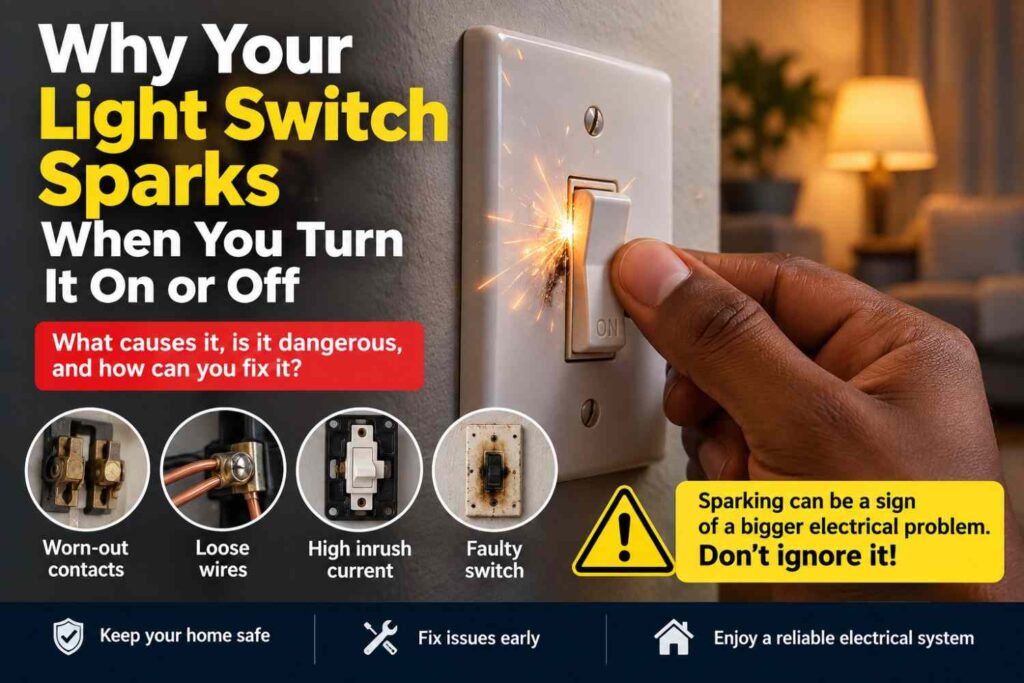
Understanding why sparking happens helps you tell the difference between a minor, expected occurrence and a genuine electrical fault that needs attention before it causes bigger problems. This article explains the common causes and what to do about each one.
Why a Tiny Spark Can Be Normal
When you switch on a light, especially one with a filament or inductive component, there is often a brief moment where the switch contacts are close but not fully connected, and a small arc can jump across that gap as current begins to flow. This is a well-understood electrical phenomenon and, in very small amounts, is considered normal switch behavior, particularly with older mechanical switches. The key distinction is between a barely visible flicker of a spark, which is generally harmless, and a loud crack, visible flash, or spark that happens every single time you use the switch, which points to a real problem.
Common Causes of Switch Sparking
- Loose wiring connections at the switch terminals, causing current to arc across a small gap instead of flowing through a solid connection.
- Worn-out switch contacts that no longer close firmly, common in switches that are old or used very frequently.
- An overloaded circuit where the switch is carrying more current than it is rated for, causing excessive heat and arcing.
- Poor quality or counterfeit switches with substandard internal contacts that arc more than properly manufactured components.
- Voltage spikes on the mains supply, which can cause a brief surge of current at the moment of switching.
- Moisture or corrosion inside the switch housing, particularly relevant in humid coastal areas of Nigeria, which degrades the contact surfaces over time.
Diagnosing the Cause
| Observation | Likely Cause |
|---|---|
| Spark only when switching a specific high-power appliance | Overloaded circuit or undersized switch rating |
| Spark has gradually gotten worse over months | Worn contacts or loosening terminal screws |
| Switch feels warm or discolored around the edges | Loose connection generating heat, needs urgent attention |
| Sparking started right after a power outage returned | Voltage spike when supply was restored |
| Switch is in a bathroom, kitchen, or humid outdoor area | Moisture or corrosion inside the switch housing |
Step-by-Step: What to Do When You Notice Sparking
- Turn off the circuit breaker feeding that switch before doing anything else, since working on a live sparking switch is unsafe.
- Remove the switch cover carefully and visually inspect the wiring for loose terminal screws or discolored, burnt-looking wires.
- Tighten any loose terminal connections firmly, ensuring bare wire is not exposed beyond the terminal clamp.
- Check the switch’s current rating against the load it controls, since undersized switches on high-wattage circuits are a common cause of arcing.
- Replace the switch entirely if the contacts appear worn, pitted, or discolored, since damaged contacts will continue to arc regardless of how well the wiring is tightened.
- If sparking persists after these steps, call a qualified electrician to inspect the circuit further, since the cause may lie deeper in the wiring or distribution board.
When Sparking Signals a Serious Danger
A switch that sparks loudly, smells of burning plastic, or has visibly scorched marks around the switch plate should be treated as an immediate hazard rather than a minor nuisance. These signs indicate that significant heat has already built up at the connection point, which can lead to melted insulation and, in the worst cases, an electrical fire. If you notice any of these more severe signs, isolate the circuit at the breaker immediately and avoid using that switch until it has been properly inspected and repaired by a qualified electrician.
The Role of Nigeria’s Voltage Fluctuations
Nigeria’s mains supply, nominally 230V to 240V single-phase, can experience sudden spikes, particularly when power is restored after an outage or when a DisCo transformer is switched back online. These spikes place extra stress on switch contacts at the exact moment current is flowing, increasing the likelihood of a visible spark compared to a stable supply. Households in areas with a known history of unstable voltage benefit from installing surge protection devices, a topic discussed further in our voltage fluctuation and surge protection article, which helps shield switches, sockets, and connected appliances from these sudden spikes.
Choosing Quality Switches to Prevent the Problem
Not all switches sold in Nigerian markets are built to the same standard, and some cheaper, unbranded switches use thinner internal contacts and lower quality plastic housings that wear out and arc far sooner than certified products. When replacing a sparking switch, it is worth paying slightly more for a switch from a recognized brand with a proper current rating clearly marked, since this small extra cost significantly reduces the chance of recurring sparking and the safety risks that come with it. Matching the switch rating to the actual load it controls, particularly for high-wattage fittings, is equally important.
Common Misconceptions
- “Any spark from a switch means the house is about to catch fire.” A very small, occasional spark is a normal part of how mechanical switches work, and only becomes dangerous when it is loud, frequent, or accompanied by heat and burning smells.
- “Sparking switches are always caused by a fault in the switch itself.” The wiring behind the switch, the load it controls, or even mains voltage spikes can all cause sparking even when the switch itself is not defective.
- “Tightening the switch cover screws fixes sparking.” The cover screws are cosmetic and unrelated to the internal terminal connections that actually carry current, so tightening them has no effect on sparking.
Frequently Asked Questions
Is it safe to keep using a switch that sparks occasionally?
A very faint, occasional spark is generally considered normal, but if it happens every time or seems to be getting worse, it is safer to have the switch inspected before continuing regular use.
Can a sparking switch damage the appliances connected to it?
Yes, repeated arcing can sometimes cause brief voltage irregularities that may affect sensitive electronics, and in more severe cases the underlying loose connection can also affect the reliability of the whole circuit.
How often should switches be replaced as a precaution?
There is no fixed schedule, but switches showing any wear, discoloration, or age beyond 10 to 15 years of regular household use are worth inspecting and replacing proactively as part of general electrical maintenance.
Final Thoughts
A small spark now and then from a light switch is often just a normal part of how switches work, but frequent, loud, or heat-associated sparking is a clear signal that something needs attention, whether that is a loose connection, worn contacts, or an overloaded circuit.
Taking the time to inspect and, where necessary, replace a problematic switch with a properly rated, quality product is a small investment that protects both your home and your family.
When in doubt, especially if you notice burning smells or scorch marks, it is always safer to isolate the circuit and call a qualified electrician rather than continuing to use a switch that may be developing a more serious fault.