
A visibly swollen or bulging inverter battery case is an unambiguous warning sign that something has genuinely gone wrong internally, and understanding both why this happens and how to respond safely is important knowledge for any household relying on battery backup power.
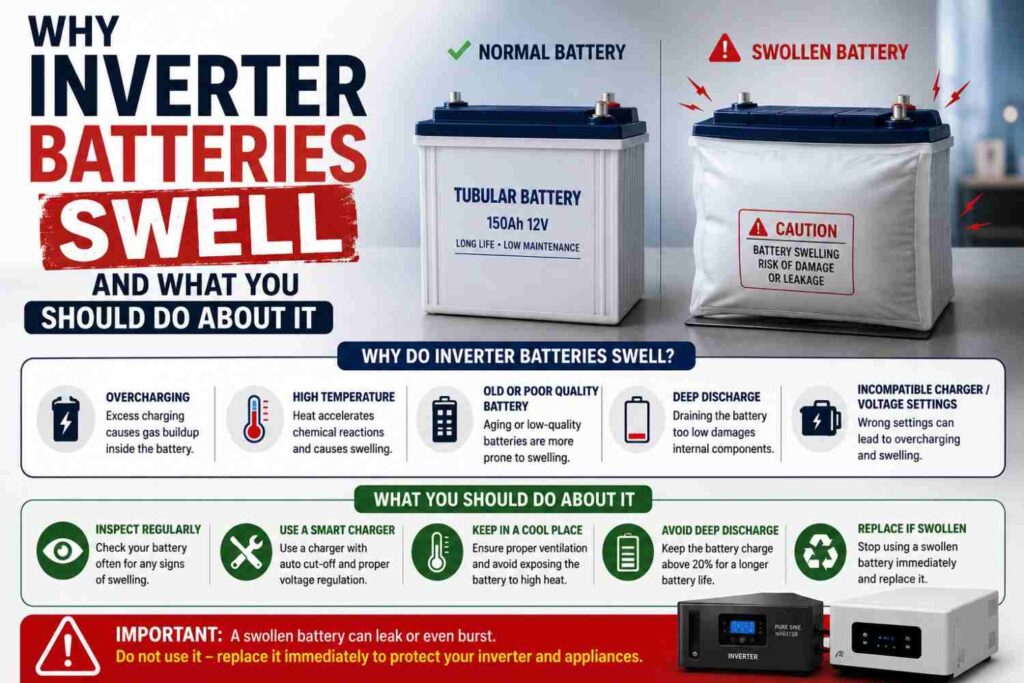
This article explains the causes and the appropriate response.
What’s Actually Happening Inside a Swelling Battery
Battery swelling occurs when internal gas builds up faster than it can safely vent, or in sealed batteries, faster than the case’s slight flexibility can accommodate, physically pushing the outer casing outward. This gas buildup stems from internal chemical reactions occurring abnormally, generating gas as a byproduct in a way that doesn’t happen during normal, healthy battery operation.
1. Overcharging
Persistent overcharging, whether from a faulty charge controller, incorrect charging settings mismatched to your battery type, or a malfunctioning inverter charging circuit, is one of the most common causes of battery swelling, since excess charging current beyond what the battery can safely absorb generates excessive internal heat and gas production as a direct consequence.
2. Excessive Heat Exposure
Batteries exposed to consistently high ambient temperatures, particularly relevant in poorly ventilated installation spaces during Nigeria’s hottest periods, or batteries positioned too close to heat-generating equipment, experience accelerated internal chemical reactions that can contribute to gas buildup and swelling over time, even without an underlying charging fault.
3. Battery Age and Natural End-of-Life Degradation
As batteries age and approach the natural end of their service life, internal degradation of plates and electrolyte can produce gas as part of the broader degradation process, meaning swelling in an older battery may simply reflect its genuine end-of-life state rather than pointing to any specific external fault requiring separate correction.
4. Manufacturing Defects
Occasionally, swelling stems from a genuine manufacturing defect present from the battery’s original production, an internal short, contamination, or a sealing flaw, that manifests as premature swelling well before the battery’s expected service life would otherwise suggest, particularly relevant for lower-quality or unbranded batteries with less rigorous quality control.
5. Deep Discharge Followed by Aggressive Recharging
Repeatedly discharging a battery too deeply, discussed in our dedicated depth of discharge article, followed by fast, aggressive recharging rather than a proper, gentler charging profile, can stress the battery’s internal chemistry in ways that contribute to gas buildup and swelling over repeated cycles.
Why Swelling Is a Genuine Safety Concern, Not Just Cosmetic
A swollen battery case indicates internal pressure and chemical instability that can, in more severe cases, lead to case rupture, electrolyte leakage (a genuine chemical hazard, particularly for lead-acid batteries containing corrosive sulfuric acid), or in rare but serious cases, fire, meaning swelling should never be dismissed as a minor cosmetic issue to simply monitor indefinitely without action.
What to Do If You Notice a Swollen Battery
- Stop using the battery immediately and disconnect it from your system if safely possible.
- Avoid puncturing, dropping, or applying pressure to the swollen case, which could trigger case rupture and chemical exposure.
- Ensure the area remains well ventilated, particularly if any unusual odor is present, since gas buildup can include potentially harmful fumes.
- Do not attempt to charge the battery further or continue drawing power from it.
- Contact a qualified technician or the battery’s manufacturer/supplier for proper assessment, safe disposal, and, if applicable, warranty evaluation.
- Have your charging system checked to rule out overcharging as a contributing cause before installing a replacement battery, avoiding a repeat of the same failure.
A Quick Cause Reference Table
| Likely Cause | Key Indicator |
|---|---|
| Overcharging | Check charge controller settings and behavior |
| Excessive heat exposure | Poorly ventilated installation location |
| Natural aging/end of life | Battery is old relative to expected lifespan |
| Manufacturing defect | Premature swelling in a relatively new battery |
| Deep discharge/aggressive recharge pattern | History of frequent deep discharge cycles |
How to Reduce the Risk of Swelling Going Forward
Ensuring your charging system is properly configured for your specific battery type and chemistry, installing batteries in a well-ventilated location away from significant heat sources, respecting recommended depth of discharge limits, and choosing quality batteries from reputable manufacturers all meaningfully reduce swelling risk, addressing the most common underlying causes discussed throughout this article proactively rather than only responding after the fact.
Proper Disposal: Why This Matters Beyond Your Own Household
Swollen batteries, particularly lead-acid variants containing hazardous materials, require proper disposal through appropriate recycling channels rather than informal disposal in general household waste, both for environmental protection and because improperly discarded swollen batteries can pose ongoing risk to anyone who later encounters them; many battery retailers and manufacturers offer take-back or recycling programs specifically worth using when replacing a swollen unit.
Common Misconceptions
- “A slightly swollen battery is still safe to keep using if it still holds charge.” Any visible swelling indicates a genuine internal issue and safety risk warranting discontinued use, regardless of whether the battery still appears to function.
- “Swelling only happens to cheap, low-quality batteries.” While quality does affect risk, overcharging, heat exposure, and aging can cause swelling in batteries of any quality tier.
- “It’s safe to try to relieve the pressure by puncturing the case.” This is genuinely dangerous, risking direct exposure to hazardous internal chemicals and gases; swollen batteries should only be handled by qualified personnel for proper disposal.
Frequently Asked Questions
Is a swollen battery covered under warranty?
This depends on the cause and your specific warranty terms; manufacturing defects are often covered, while damage clearly attributable to improper charging or misuse typically isn’t, making it worth having the cause properly assessed.
Can a swollen battery be safely repaired rather than replaced?
No; a swollen battery has experienced genuine internal damage and should be safely disposed of and replaced rather than repaired, given the safety risks involved in continued use.
How quickly does swelling typically progress once it starts?
This varies depending on the underlying cause and severity, from gradual swelling over weeks to more rapid progression under severe overcharging or heat conditions, which is why prompt attention at the first sign of swelling is always the safer approach rather than waiting to see how it develops.
Final Thoughts
A swollen inverter battery is a genuine, unambiguous warning sign requiring prompt, careful action rather than continued use or casual monitoring, reflecting real internal chemical instability with genuine safety implications. Understanding the common causes, overcharging, heat, age, defects, and deep discharge patterns, helps you both respond appropriately when swelling occurs and take reasonable preventive steps to reduce the risk in your own system going forward.