
A melted electrical plug is one of the more alarming sights a homeowner can encounter, but understanding exactly why it happens turns a scary mystery into a solvable, preventable problem. This article explains the physical process behind melting plugs, the most common underlying causes, and practical steps to prevent it from happening in your own home.
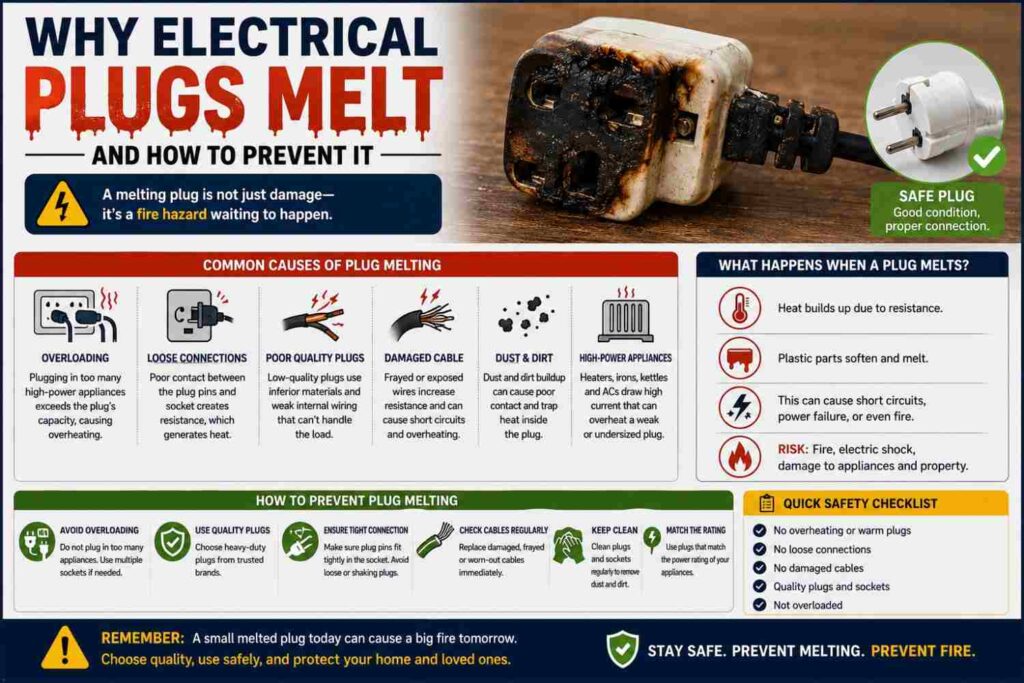
What Actually Causes a Plug to Melt
Plastic plug housings are designed to tolerate normal operating temperatures with a substantial safety margin, but excessive heat, generated by poor electrical contact, overload, or a fault, can exceed that margin and cause the plastic to soften, deform or, in severe cases, melt outright. The heat responsible almost always originates from one of two sources: excessive current relative to the plug’s rating, or poor contact resistance at the connection between the plug’s pins and the socket’s internal contacts, concentrating heat exactly where the plastic housing surrounds those connection points.
Common Causes in Detail
1. Loose-Fitting Plug and Socket Connection
A plug that does not sit snugly in its socket, whether due to a worn socket, a slightly damaged plug, or simple manufacturing tolerance issues, creates poor electrical contact. Poor contact means higher resistance at that specific point, and higher resistance under load means concentrated heating exactly at the plug-socket interface, often the first and most visible place melting occurs.
2. Overloading the Plug or Socket
Using a plug or socket to carry more current than it is rated for, whether through a single overloaded high-power appliance or multiple devices sharing an adapter beyond its rating, generates excess heat that the plug’s plastic housing was never designed to dissipate.
3. Substandard or Counterfeit Plugs
Plugs made with inferior materials, thinner internal contacts, or lower-grade plastic housing can fail at loads well within what a quality plug would handle safely, a genuine concern in markets where counterfeit or substandard electrical accessories circulate alongside legitimate products.
4. A Damaged or Frayed Power Cord
Internal damage to a cord near where it enters the plug can increase resistance at that specific point, generating localized heat that, over time, can affect the plug itself even if the visible cord damage seems minor.
Warning Signs Before a Plug Actually Melts
- The plug or socket feeling warm or hot during normal use
- A slightly loose or wobbly fit when the plug is inserted
- Discoloration on the plug’s pins or housing, often a yellowish or brownish tint
- A faint burning or plastic smell near the socket
- Visible scorch marks, even faint ones, around the plug or socket
Any of these signs should prompt you to stop using that plug and socket combination immediately and have it assessed, rather than waiting for the more dramatic and dangerous stage of actual melting or fire.
Why Certain Appliances Are More Prone to This Problem
High-power appliances, kettles, irons, electric heaters and similar devices, draw substantially more current than lighting or small electronics, meaning any imperfection in their plug or socket connection is amplified into more significant heat generation. This is why melted plugs disproportionately involve high-power appliances rather than phone chargers or lamps, and why particular care, including periodic inspection of plugs and cords, is warranted for these specific higher-risk devices.
What to Do If You Find a Melted or Partially Melted Plug
- Do not attempt to use the plug or appliance again until it has been properly inspected or replaced.
- Have the socket it was plugged into checked as well, since the same conditions that damaged the plug may have also affected the socket’s internal contacts.
- Replace the damaged plug with a quality replacement, ideally by a qualified electrician or competent person familiar with proper plug wiring and fitting.
- Investigate whether overload, a loose connection, or a substandard component was the root cause, rather than simply replacing the plug and risking a repeat occurrence.
Prevention: Practical Steps
- Buy quality plugs and sockets from reputable suppliers rather than the cheapest available option.
- Avoid forcing a loose-fitting plug into a socket; address the underlying fit issue instead.
- Don’t overload adapters and multi-plug blocks with combined loads exceeding their rating.
- Periodically inspect plugs on high-power appliances for discoloration, looseness or damage.
- Replace, rather than tape over or ignore, any plug showing early warning signs.
How Plug Design Affects Melting Risk
Not all plugs are created equal, even when they appear superficially similar. Quality plugs use robust brass pins with good conductivity and precise dimensional tolerances that ensure firm, low-resistance contact with a socket’s internal springs, along with heat-resistant plastic housing rated for sustained use with high-power appliances. Substandard plugs may use thinner, lower-conductivity pin material, looser manufacturing tolerances that lead to poor socket contact from the moment they are new, and plastic housing that begins to soften at temperatures a quality plug would tolerate without issue. This is one of several reasons that, for high-power appliances specifically, kettles, irons, heaters and similar devices, investing in quality plugs and cords, sometimes replacing a manufacturer-supplied plug with a better one where permitted, is a genuinely worthwhile precaution rather than an unnecessary expense.
The Role of Ambient Temperature and Ventilation
A plug’s ability to safely dissipate the heat generated during normal operation depends partly on its surroundings. A plug tucked behind furniture, inside a poorly ventilated cabinet, or in a naturally hot part of a building will run hotter for the same electrical load than one in a well-ventilated, cooler location, reducing its safety margin before reaching melting temperatures. This is a particularly relevant consideration in Nigeria’s warmer climate, where ambient conditions already reduce the thermal margin available compared to cooler regions, making proper appliance placement and avoiding enclosed, poorly ventilated socket locations for high-power devices a genuinely useful, low-cost precaution.
Common Misconceptions
- “Only cheap plugs melt.” While quality matters, even good plugs can overheat under sufficiently poor connection or overload conditions; quality reduces but does not eliminate the risk.
- “A melted plug is just a plug problem, not a wiring problem.” The underlying cause is often a socket or connection issue, or genuine overload, not simply a defective plug in isolation.
- “If it hasn’t caught fire, it’s not serious.” A melted plug represents a real fire risk that came close to a more serious outcome, and should be treated as a genuine warning sign, not a minor cosmetic issue.
Fused Plugs and Their Role in Preventing Melting
In some wiring standards, plugs themselves contain an internal fuse, sized specifically to the appliance they serve, adding an additional layer of protection beyond the circuit’s main breaker. A correctly sized plug fuse can interrupt a fault or overload condition at the appliance level, often faster and more precisely than a shared circuit breaker protecting several sockets at once, potentially preventing the kind of sustained excess current that leads to melting in the first place. Where fused plugs are used, ensuring the fuse rating actually matches the connected appliance, rather than defaulting to whatever fuse happens to be on hand, is an important but easily overlooked detail; a fuse rated too high provides little meaningful protection, defeating much of the purpose of having a fused plug at all.
Frequently Asked Questions
Can a melted plug still be used if I just clean it up?
No. A plug showing melting damage should always be replaced, since the underlying insulation and contact integrity have been compromised in ways that are not fully reversible or safely repairable.
Is it normal for a plug to feel slightly warm during use?
Mild warmth on a plug carrying a high-power appliance’s rated current can be normal, but distinctly hot, or warmth accompanied by looseness, smell or discoloration, is not and warrants attention.
Should I replace the socket too if only the plug melted?
Yes, it’s worth having the socket inspected, since the same poor contact conditions that damaged the plug may have also affected the socket’s internal contacts, even if less visibly.
Are certain plug designs less prone to melting than others?
Quality plugs with robust pin construction and good manufacturing tolerances generally maintain better contact and run cooler than poorly made alternatives, making plug quality a genuine, worthwhile consideration, especially for high-power appliances.
What to Teach Household Members About Plug Safety
Because plugs are handled directly by everyone in a household, not just electricians, a few simple habits meaningfully reduce risk: always insert plugs fully and squarely rather than at an angle or only partially, never force a plug that doesn’t fit smoothly, unplug appliances by gripping the plug itself rather than yanking the cord, and report any plug or socket that feels unusually warm, loose or discolored rather than assuming it will resolve on its own. Teaching children and other household members to recognize and report these warning signs, rather than relying solely on periodic adult inspection, adds a valuable additional layer of everyday vigilance, particularly in busier households where high-power appliances see frequent daily use.
Final Thoughts
A melted plug is never a random, unlucky event; it is the visible result of excess heat generated by poor contact, overload, or substandard components, concentrated at one of the most vulnerable points in any electrical connection. Recognizing the early warning signs, choosing quality accessories, and responding promptly rather than tolerating a warm or loose plug are simple, practical steps that meaningfully reduce this specific and genuinely common household fire risk.