
Standing in front of a shelf of LED bulbs that all look identical except for a small label reading warm white, cool white, or daylight can be confusing, especially when the packaging rarely explains what those terms actually mean for your room.
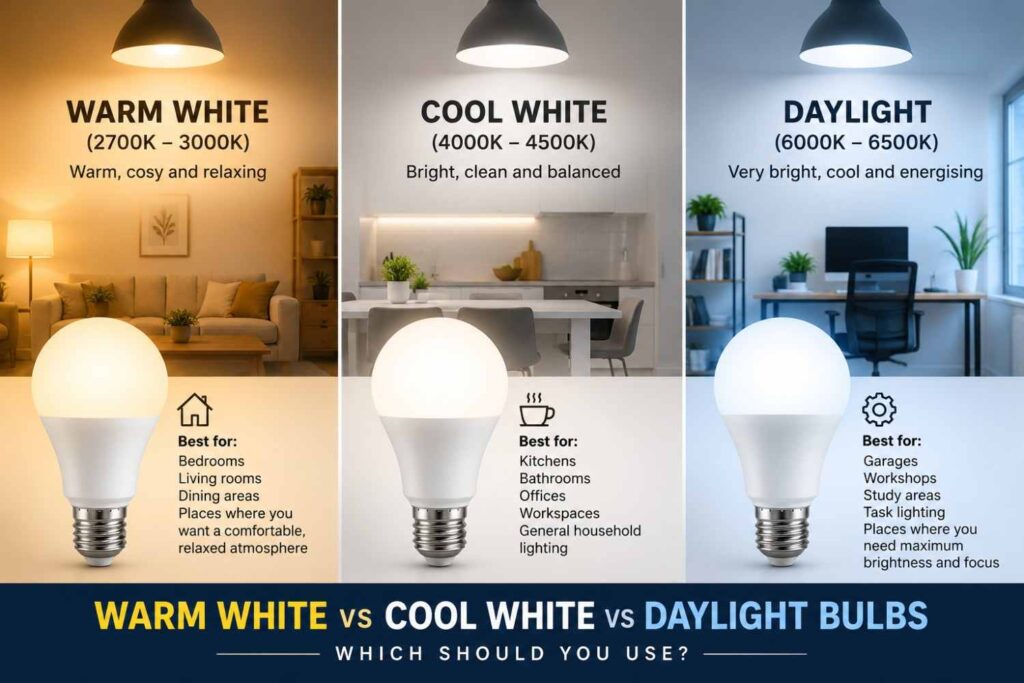
These labels describe the color temperature of the light, and choosing the right one has a real effect on comfort, productivity, and even how colors appear in your home. This article explains the differences and helps you pick the right option for each space.
What Color Temperature Actually Means
Color temperature is measured in Kelvin (K) and describes the visual warmth or coolness of the light a bulb produces, not its physical heat. Lower Kelvin values, around 2700K to 3000K, produce a warm, yellowish light similar to traditional incandescent bulbs. Mid-range values, around 4000K to 4500K, produce a neutral white light. Higher values, around 5000K to 6500K, produce a cool, bluish-white light often called daylight because it resembles natural midday sunlight.
Color Temperature Comparison Table
| Type | Kelvin Range | Appearance | Best Used In |
|---|---|---|---|
| Warm White | 2700K-3000K | Yellowish, cozy glow | Bedrooms, living rooms, dining areas |
| Cool White | 4000K-4500K | Neutral, balanced white | Kitchens, offices, hallways |
| Daylight | 5000K-6500K | Bright, bluish-white | Workshops, garages, study areas, security lighting |
Warm White: Comfort and Relaxation
Warm white bulbs create the cozy, familiar atmosphere many people associate with traditional lighting. This tone is well suited to bedrooms, living rooms, and dining areas because it tends to relax the eyes and mind, making it easier to unwind in the evening. Warm white is also generally more flattering for skin tones and complements wood furniture and warm-colored decor, which is one reason it remains a popular default choice for residential Nigerian homes.
Cool White: Balanced Everyday Use
Cool white sits between warm and daylight, offering a crisp but not harsh brightness suited to spaces where you need clarity without the intensity of full daylight tone. Kitchens benefit from cool white because it makes it easier to judge food freshness and cleanliness while cooking. Offices and hallways also work well with cool white since it supports alertness during work hours without feeling clinical, and it pairs reasonably well with most interior color schemes.
Daylight: Maximum Clarity and Focus
Daylight bulbs mimic natural sunlight and are the most energizing and alerting of the three options, making them well suited to spaces requiring sharp visual focus such as workshops, garages, study desks, and security floodlights outside the home. The strong blue-white tone increases contrast and can make fine detail work, such as reading or precision tasks, noticeably easier. However, daylight tone in a bedroom or living room can feel cold and uncomfortable, disrupting the relaxed atmosphere most people want in those spaces during the evening.
Matching Color Temperature to Room Function
- Bedrooms: warm white for a calming, sleep-friendly atmosphere in the evening.
- Living rooms: warm or neutral white depending on whether the room is used more for relaxing or for active tasks like reading.
- Kitchens: cool white for clarity while cooking and cleaning.
- Bathrooms: cool white or neutral white for accurate color and grooming tasks.
- Home offices and study areas: daylight for alertness and reduced eye strain during long work sessions.
- Outdoor security lighting: daylight for maximum visibility and contrast at night.
- Garages and workshops: daylight for precision tasks and clear visibility of tools and materials.
The Effect on Perceived Energy and Sleep
Color temperature does more than affect appearance; it can influence alertness and sleep quality. Cooler, bluer light in the evening can suppress the body’s natural preparation for sleep, which is why many lighting guides recommend switching to warm white tones in bedrooms and living rooms after sunset. Conversely, daylight-toned lighting in a workspace during the day can help maintain alertness and reduce the drowsy feeling that can come from overly warm, dim lighting during work hours.
Voltage Stability and Color Consistency
It is worth noting that unstable mains voltage can sometimes affect how consistently a bulb maintains its rated color temperature and brightness over time, particularly with lower quality LED drivers. In areas of Nigeria with frequent voltage swings from the grid, using a stabilizer helps protect the internal electronics of your bulbs and keeps their light output and color consistent for longer, a topic discussed further in our voltage fluctuation and surge protection article. Buying from reputable brands also reduces the chance of color temperature drifting or bulbs appearing dimmer than their rated output over months of use.
Common Misconceptions
- “Daylight bulbs are always the best choice because they are the brightest.” Brightness and color temperature are separate properties, and daylight tone can feel harsh and uncomfortable in relaxation spaces regardless of how bright it is.
- “Warm white bulbs are dimmer than cool white or daylight bulbs.” Color temperature does not determine lumen output, so a warm white bulb can be just as bright as a cool white or daylight bulb of the same wattage.
- “Any color temperature works fine anywhere in the house.” The right color temperature depends heavily on the room’s purpose, and mismatched choices can make spaces feel uncomfortable or reduce task performance.
Frequently Asked Questions
Can I mix warm white and cool white bulbs in the same room?
It is generally best to keep one color temperature per room for visual consistency, though layering different tones for accent versus general lighting can work if done deliberately.
Which color temperature is best for reading?
Neutral white to daylight tones, roughly 4000K to 5000K, tend to work best for reading since they offer good contrast and clarity without the harshness of the very highest Kelvin values.
Does color temperature affect electricity consumption?
No, color temperature does not directly affect electricity use; consumption is determined by the bulb’s wattage and driver efficiency rather than its color tone.
Final Thoughts
Choosing between warm white, cool white, and daylight bulbs is about matching the mood and function of each room rather than picking whichever option looks brightest on the shelf.
Warm tones suit relaxation spaces, cool white works well for everyday clarity, and daylight tone excels where sharp focus and visibility matter most. Taking the time to select the right color temperature room by room makes a noticeable difference in comfort and usability, often more than people expect from something as simple as a bulb’s light color.