
Choosing between tubular and lithium batteries for your inverter system is one of the most consequential decisions in setting up reliable backup power, with genuine tradeoffs in upfront cost, lifespan, maintenance, and performance that deserve a closer look than a quick shop recommendation typically provides.
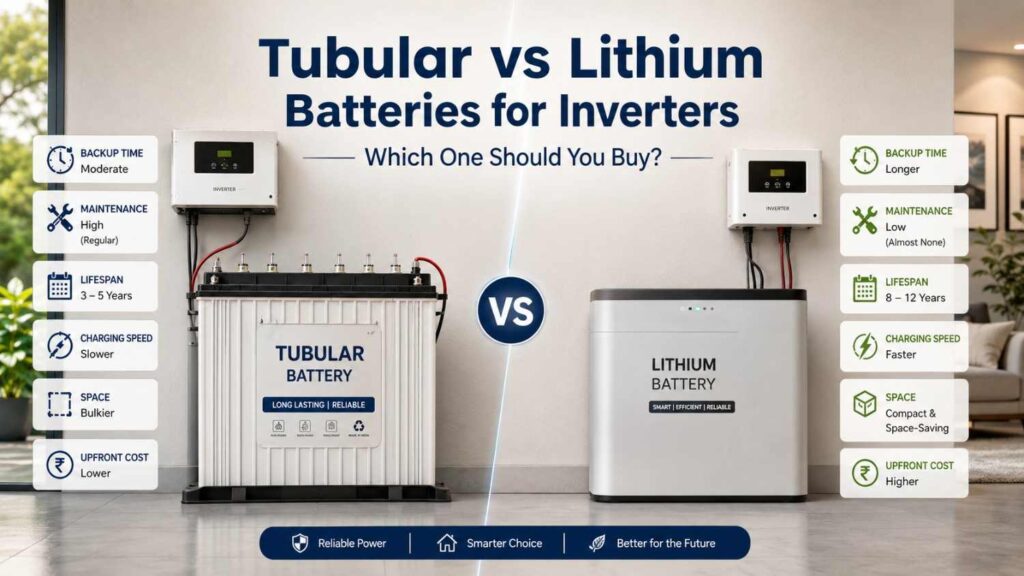
This article walks through the real differences to help you decide which technology actually fits your household’s needs and budget.
How the Two Technologies Fundamentally Differ
Tubular batteries are a mature, well-established lead-acid battery technology, using tube-shaped positive plates designed for improved durability and cycling compared to older flat-plate lead-acid designs, while remaining fundamentally lead-acid chemistry with the associated characteristics of that technology. Lithium batteries, specifically lithium iron phosphate (LiFePO4) in most inverter applications, use an entirely different chemistry offering higher energy density, different charging behavior, and generally superior cycle life, at a meaningfully higher upfront cost.
Upfront Cost: The Most Obvious Difference
Tubular batteries are considerably cheaper upfront, often by a factor of two to three times or more compared to an equivalent-capacity lithium battery, making them the more accessible entry point for many Nigerian households working within a constrained budget. Lithium’s higher upfront cost is a genuine barrier for many buyers, even though, as discussed below, the total cost picture over the battery’s full lifespan looks considerably different than the upfront price alone suggests.
Lifespan and Cycle Life: Where Lithium Pulls Ahead
Tubular batteries typically offer 1,500-2,000 charge cycles under good maintenance conditions, translating to roughly 3-5 years of typical daily-cycling use in a Nigerian household with frequent grid outages. Lithium batteries typically offer 3,000-6,000+ cycles, often translating to 8-15 years or more of comparable use, meaning a single lithium battery can outlast two or three tubular battery replacements over the same period, a factor that meaningfully changes the total cost comparison when calculated over a full decade or more rather than just the initial purchase.
Weight and Physical Footprint
Lithium batteries are significantly lighter and more compact than tubular batteries of equivalent capacity, often by a factor of two to three times less weight for the same energy storage, a genuinely practical advantage for installation, wall-mounting options, and homes with limited space for battery banks, where tubular batteries’ bulk and weight can be a real constraint.
Maintenance Requirements
Tubular batteries require periodic maintenance, checking and topping up electrolyte fluid levels with distilled water, ensuring terminals remain clean and corrosion-free, and general upkeep that, if neglected, can significantly shorten the battery’s effective lifespan below its theoretical potential. Lithium batteries are essentially maintenance-free, with no fluid levels to check and generally more robust tolerance of neglect, an appealing advantage for households wanting reliable power without ongoing upkeep responsibilities.
Depth of Discharge and Usable Capacity
As explored in more depth in our dedicated depth of discharge article, tubular batteries are generally recommended to be discharged only to around 50% of their rated capacity to preserve reasonable lifespan, meaning roughly half their rated capacity is genuinely usable in practice. Lithium batteries typically tolerate much deeper discharge, often 80-90% or more, without significantly compromising lifespan, meaning a lithium battery’s usable capacity is considerably closer to its full rated capacity than an equivalent tubular battery, an important factor when comparing batteries of the same rated Ah capacity.
A Direct Comparison Table
| Factor | Tubular (Lead-Acid) | Lithium (LiFePO4) |
|---|---|---|
| Upfront cost | Lower | Higher (2-3x or more) |
| Typical cycle life | 1,500-2,000 cycles | 3,000-6,000+ cycles |
| Typical lifespan | 3-5 years | 8-15+ years |
| Weight | Heavier | Significantly lighter |
| Maintenance | Periodic (water top-up, terminals) | Essentially maintenance-free |
| Usable depth of discharge | ~50% recommended | ~80-90% typical |
Charging Speed and Efficiency
Lithium batteries generally accept charge faster and more efficiently than tubular batteries, meaning a lithium-based system can recover from a discharge cycle more quickly during brief windows of grid or generator availability, a genuinely practical advantage for households experiencing frequent, short power restoration windows rather than long, predictable charging periods.
Which Should You Actually Choose?
For households with a tighter upfront budget, willing to accept more frequent replacement and ongoing maintenance in exchange for lower initial cost, tubular remains a reasonable, functional choice, particularly for lighter backup power needs. For households able to invest more upfront, prioritizing long-term reliability, reduced maintenance burden, and better total cost of ownership over a decade-plus horizon, lithium generally represents the stronger long-term investment, especially as lithium battery prices have gradually declined and narrowed the upfront cost gap in recent years.
Availability and Local Servicing Considerations in Nigeria
Beyond the pure technical comparison, practical local factors matter genuinely: tubular batteries and qualified technicians familiar with servicing them are widely available across Nigeria, with an established local supply chain for replacement units, while lithium batteries and technicians genuinely experienced with their specific charging and maintenance requirements remain somewhat less universally available outside major cities, though this is steadily improving as lithium adoption grows. Factoring in how easily you could source a replacement or repair service in your specific location is a genuinely practical consideration alongside the purely technical comparison.
Common Misconceptions
- “Lithium is always the objectively better choice regardless of budget.” For households genuinely budget-constrained upfront, tubular remains a legitimate, functional option despite its shorter lifespan.
- “Tubular batteries are outdated technology with no remaining advantages.” Tubular remains a mature, reliable, widely serviceable technology with a considerably lower barrier to entry.
- “The upfront price difference tells the whole cost story.” Calculated over a decade or more, accounting for tubular’s shorter lifespan and multiple replacements, the total cost gap between the two technologies narrows considerably.
Frequently Asked Questions
Can I replace a tubular battery with lithium in my existing inverter setup?
Often yes, though it’s worth confirming your inverter’s charging profile is compatible with or configurable for lithium’s different charging characteristics; some older inverters may need a settings adjustment or, in some cases, aren’t fully compatible without modification.
Is lithium safe for typical home use given some past battery safety concerns in the news?
LiFePO4, the lithium chemistry typically used in inverter applications, is specifically valued for its stability and safety compared to other lithium chemistries used in different applications; reputable brands with proper battery management systems are considered safe for standard residential use.
Does climate or heat affect one battery type more than the other?
Both technologies perform somewhat better in moderate temperatures, though lithium generally tolerates Nigeria’s high ambient temperatures with less accelerated degradation than tubular batteries, which can experience faster water loss and plate degradation in sustained heat.
Final Thoughts
Tubular and lithium batteries represent a genuine tradeoff between upfront affordability and long-term value, maintenance burden, and performance, rather than one being simply better than the other in every situation. Understanding your own budget constraints, maintenance tolerance, and long-term priorities is the key to choosing the option that genuinely fits your household, rather than defaulting to whichever a seller happens to recommend or stock.