Solar panel cleaning is one of those maintenance tasks that’s easy to underestimate, yet in Nigeria’s dusty, harmattan-affected conditions, it can make a genuinely measurable difference to how much power your system actually delivers.
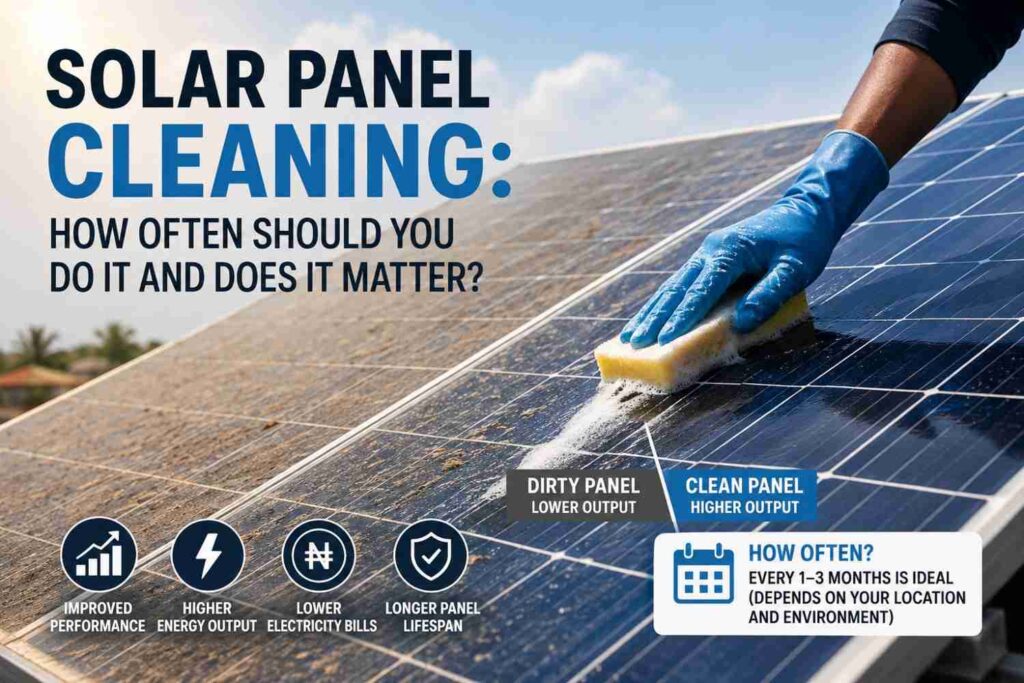
This article covers how much cleaning actually matters, how often it’s genuinely needed, and how to do it safely and effectively.
Why Dust Accumulation Actually Reduces Output
Dust settling on a panel’s glass surface physically blocks a portion of incoming sunlight from reaching the solar cells beneath, directly reducing the panel’s electricity generation in rough proportion to how much light is being blocked, an effect that compounds gradually as dust continues accumulating between cleanings rather than reaching some fixed maximum and stopping.
How Much Does Dust Actually Cost You in Real Terms?
Research and field measurements across various dusty environments generally find that moderate dust accumulation over several weeks to a couple of months can reduce output by roughly 5-15%, with heavier, prolonged accumulation, particularly common during Nigeria’s harmattan season, sometimes reducing output by 20% or more before cleaning, a genuinely significant loss when sustained over an extended period without addressing it.
Why Harmattan Season Deserves Special Attention
Nigeria’s harmattan season, typically running roughly from late November through March depending on region, brings a distinctive fine dust haze that settles on outdoor surfaces, including solar panels, considerably faster than during other parts of the year, making this specific period worth more frequent cleaning attention than your system might need during the rest of the year.
How Often Should You Actually Clean Your Panels?
A reasonable general guideline suggests cleaning every 2-4 weeks during harmattan season and roughly monthly during the rest of the year, though your specific local dust conditions, whether you’re near a busy road, construction activity, or particularly dusty terrain, and your panels’ tilt angle (steeper angles shed some dust naturally through gravity and rain) all affect how quickly meaningful accumulation actually builds up on your specific installation.
Does Rain Make Cleaning Unnecessary?
As mentioned in our dedicated rainy weather article, rainfall does provide some natural cleaning benefit, washing away a portion of accumulated dust, though it’s not a complete substitute for deliberate cleaning, since rain can also leave behind mineral deposits or streaking as water evaporates, particularly in areas with harder water or heavier airborne particulate content, meaning even rainy-season panels can benefit from periodic manual attention despite the partial natural cleaning effect.
A Realistic Cleaning Frequency Table
| Season/Condition | Suggested Cleaning Frequency |
|---|---|
| Harmattan season (heavy dust) | Every 2-4 weeks |
| Rainy season | Roughly monthly, supplementing natural rain-washing |
| Dry season, outside harmattan | Every 4-6 weeks |
| Near construction, unpaved roads, or heavy dust sources | More frequent than general guidelines, based on observed buildup |
How to Clean Solar Panels Safely
- Clean during cooler parts of the day, early morning or evening, to avoid thermal shock from cold water on hot glass, which can occasionally cause micro-cracking over repeated instances.
- Use plain water and a soft brush or cloth rather than harsh chemicals or abrasive materials that could scratch the panel’s protective glass surface.
- Avoid high-pressure water jets directed at panel edges or connection points, which can potentially force water into seals not designed for that kind of direct pressure.
- Prioritize safety when accessing roof-mounted panels, using proper fall protection or, for higher or harder-to-access installations, engaging a professional cleaning service rather than taking on unnecessary personal risk.
- Clean in the early morning or late afternoon when panels are actively generating less power, both for safety (less risk of any electrical concern, though modern panels are designed to be safely touched) and practical convenience.
Is Professional Cleaning Worth the Cost?
For ground-mounted or easily, safely accessible panels, homeowner cleaning is often perfectly adequate and considerably cheaper than professional service. For roof-mounted systems, particularly on taller buildings or steep roofs where safe access is genuinely difficult, professional cleaning services, while an added ongoing cost, can be worthwhile both for safety reasons and because professionals often clean more thoroughly and consistently than an occasional, rushed homeowner effort.
Signs of Uneven Dust Buildup That Deserve Extra Attention
Not all dust accumulates evenly across a panel’s surface; bird droppings, leaves, or debris tend to concentrate in specific spots, and because of the disproportionate shading effect discussed in our dedicated shading article, even small concentrated deposits can meaningfully impact output beyond what their small physical size might suggest. Periodically inspecting panels specifically for these concentrated deposits, rather than only assessing overall dustiness, helps catch this particular issue before it meaningfully impacts your system’s performance between regular scheduled cleanings.
Building Cleaning Into a Broader Maintenance Routine
Cleaning is most effective when paired with a brief visual inspection of the broader system each time: checking for any visible damage, loose mounting hardware, or exposed or damaged cabling while you’re already accessing the panels for cleaning purposes, turning what could be a single-purpose task into a more comprehensive periodic system checkup. This combined approach catches developing issues earlier than cleaning alone would, without requiring significant additional time or effort beyond the cleaning task you’re already undertaking.
Weighing DIY Cleaning Tools and Products Marketed for Solar Panels
A growing market of specialized solar panel cleaning tools and solutions exists, ranging from soft extendable brushes to specifically formulated cleaning solutions claiming superior results over plain water; while some of these products offer genuine convenience, particularly for reaching elevated panels safely from the ground, plain water and a soft cloth or brush remains a perfectly effective, low-cost baseline approach, and any specialized product should specifically state it’s safe for the anti-reflective coatings common on modern panel glass before use.
Common Misconceptions
- “Solar panels are self-cleaning and never need manual attention.” While rain provides some natural cleaning, it’s not sufficient on its own, particularly during harmattan season’s heavy dust accumulation.
- “More frequent cleaning is always better regardless of actual need.” Unnecessarily frequent cleaning adds cost and, if done improperly, introduces some risk of minor surface wear; matching frequency to actual local conditions is the better approach.
- “Any cleaning method or cleaning agent is fine as long as the panel looks clean afterward.” Harsh chemicals or abrasive materials can damage the panel’s protective coating or glass surface over repeated use, even if the immediate visual result looks acceptable.
Frequently Asked Questions
Can dirty panels cause any damage, or do they just reduce output?
Generally just reduced output rather than direct damage, though very uneven dust or debris patterns can occasionally contribute to the kind of disproportionate shading effect discussed in our dedicated shading article if concentrated heavily on specific cells.
Is it worth installing panels at a steeper angle specifically to reduce cleaning frequency?
Steeper angles do help shed dust somewhat more effectively through gravity, but this should be balanced against your site’s optimal angle for overall sun capture discussed in our panel-count and system sizing articles, rather than optimizing primarily for reduced cleaning needs.
How can I tell if my panels actually need cleaning without measuring output directly?
A visible dust film or discoloration on the panel surface is usually a reasonably reliable visual indicator; if you have access to your system’s output monitoring, comparing recent performance against expected seasonal output also helps confirm whether cleaning would meaningfully help.
Final Thoughts
Solar panel cleaning is a genuinely worthwhile, low-cost maintenance habit that measurably protects your system’s output, particularly important given Nigeria’s harmattan dust conditions for a significant portion of the year. Building a realistic, season-adjusted cleaning routine, rather than either neglecting it entirely or over-cleaning unnecessarily, is a simple way to ensure your solar investment continues delivering closer to its real potential throughout the year.