
Many Nigerian households own both a generator and an inverter system, and a common question is whether these two power sources can be run together safely, whether to combine their capacity or to have the generator charge the inverter’s batteries. This article explains what’s genuinely safe, what requires caution, and how proper equipment makes this combination work well.
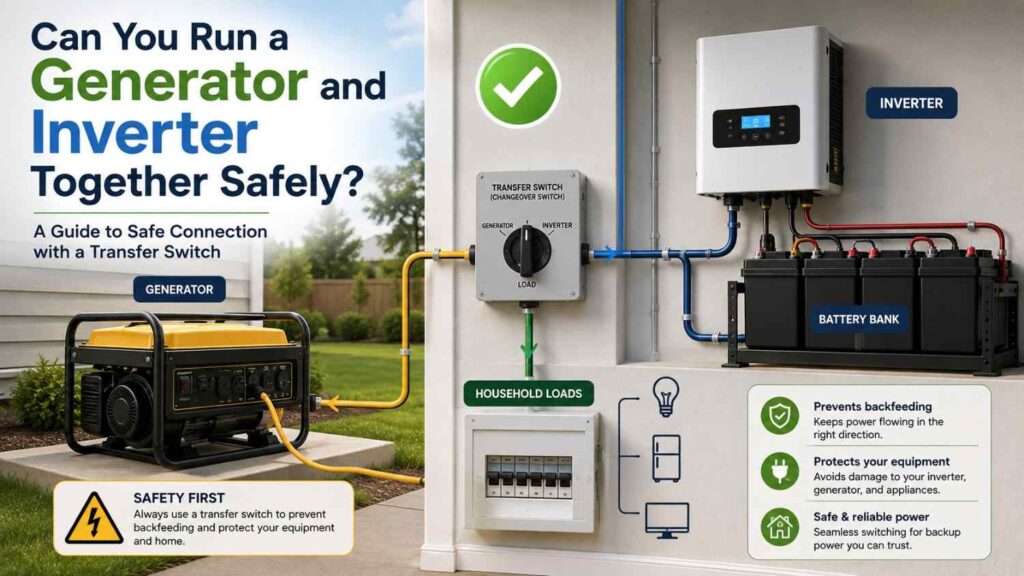
The Core Safety Concern: Backfeeding and Synchronization
The primary danger in connecting two power sources improperly is backfeeding, where power from one source flows backward into the other in an uncontrolled way, potentially damaging both units, and the related issue of trying to directly connect two AC sources that aren’t properly synchronized in phase and frequency, which can cause serious equipment damage or even safety hazards. This is why simply connecting a generator and inverter output together without proper equipment is genuinely dangerous and should never be attempted.
Using a Generator to Charge Your Inverter Battery: The Safe, Common Approach
The most common and genuinely safe way to combine these systems is using your generator to power your home (and by extension, your inverter’s charging circuit) during outages, allowing the inverter to charge its battery bank from generator power just as it would from grid power, then automatically switching to battery power once the generator is switched off. This approach doesn’t involve directly combining the two sources’ output simultaneously, avoiding the synchronization concerns discussed above.
Why Most Inverters Are Specifically Designed for This Exact Scenario
Quality inverters include a charging circuit specifically designed to accept AC input from either grid or generator power for battery charging, treating both sources essentially the same way from the inverter’s perspective, meaning this generator-charges-battery approach is standard, well-supported functionality rather than an unusual or risky configuration, as long as your generator’s output falls within your inverter’s acceptable input voltage and frequency range.
Automatic Transfer Switches: Enabling Safe, Seamless Switching
For households wanting seamless, automatic switching between grid, generator, and inverter battery power without manual intervention, an automatic transfer switch (ATS), discussed in depth in our dedicated ATS article, properly manages this switching, ensuring only one source powers your home’s circuits at any given moment, eliminating the backfeeding risk entirely through proper electrical isolation between sources.
Can You Combine Generator and Inverter Output Simultaneously for More Capacity?
Combining a generator’s output with an inverter’s output simultaneously, to add their capacities together for powering unusually heavy combined loads, requires specialized synchronization equipment specifically designed for this purpose and is generally not something typical residential setups are configured for; attempting this without proper professional-grade synchronization equipment risks genuine equipment damage and safety hazards, and most residential situations are better served by simply using generator power directly for heavy loads while reserving inverter battery power for lighter, quieter overnight or brief-outage use.
A Simple Reference Table for Safe Combinations
| Scenario | Safety Status |
|---|---|
| Generator charges inverter battery via standard AC input | Safe, standard functionality |
| Automatic transfer switch manages source switching | Safe, recommended for seamless switching |
| Manual changeover switch, properly used | Safe if used correctly (never both sources connected simultaneously) |
| Direct simultaneous connection without synchronization equipment | Unsafe, avoid |
Why Proper Installation by a Qualified Electrician Matters Here
Given the genuine safety risks involved in improperly combining power sources, having a qualified electrician properly install and configure your changeover mechanism, whether manual or automatic, discussed further in our dedicated manual vs automatic changeover comparison, is a genuinely important investment rather than an area for DIY experimentation, particularly given how directly backfeeding risks can affect not just your own equipment but potentially utility workers if backfeeding reaches grid lines during an outage.
Setting Up Your System’s Priority Order
Many households configure their combined generator-inverter setup with a specific priority order, using battery power first for typical needs, automatically starting the generator only if battery charge drops below a certain threshold or if a particularly heavy load is detected, an approach that minimizes generator runtime and fuel cost while still ensuring adequate backup capacity is available when genuinely needed, worth discussing explicitly with your installer when configuring your specific system.
Common Misconceptions
- “Any generator and inverter can simply be wired together for more power.” Combining output simultaneously requires specialized synchronization equipment most residential setups don’t have.
- “Using a generator to charge an inverter battery is a risky, unusual configuration.” This is standard, well-supported functionality in virtually all quality inverters designed for exactly this use case.
- “A manual changeover switch is inherently unsafe compared to automatic.” Manual switches are safe when properly used and installed; the risk comes from improper wiring or forgetting to fully switch sources, not the manual mechanism itself.
Frequently Asked Questions
Does my generator need to match my inverter’s voltage exactly to charge its battery safely?
Your generator’s output needs to fall within your inverter’s acceptable input voltage and frequency range, which is typically a reasonably wide tolerance band matching standard grid specifications; checking your specific inverter’s documented acceptable input range confirms compatibility.
Is it safe to run my generator and inverter-powered circuits in the same house without a transfer switch, just being careful?
This is genuinely risky and not recommended; proper switching equipment, whether manual or automatic, removes the risk of human error leading to dangerous backfeeding, a risk not worth accepting given how straightforward proper equipment installation is by comparison.
Can solar charging and generator charging both feed the same inverter battery bank?
Yes, this is a common and well-supported configuration; most inverter and charge controller setups are designed to accept charging input from multiple sources (solar via charge controller, generator or grid via AC input) without conflict, since they’re charging the same battery bank rather than trying to combine AC output directly.
Final Thoughts
Generators and inverters can absolutely work together safely and effectively, most commonly through the generator charging the inverter’s battery bank via standard AC input, a well-supported, standard configuration in quality equipment. The genuine safety concerns arise specifically around improperly combining AC output simultaneously without proper synchronization equipment, making proper switching equipment and qualified installation the key to safely getting the best of both power sources.