
For decades, buying a light bulb meant looking at the wattage printed on the box and assuming a higher number meant a brighter bulb. That assumption breaks down completely with modern LED lighting, where a low-wattage bulb can easily outshine an old high-wattage one.
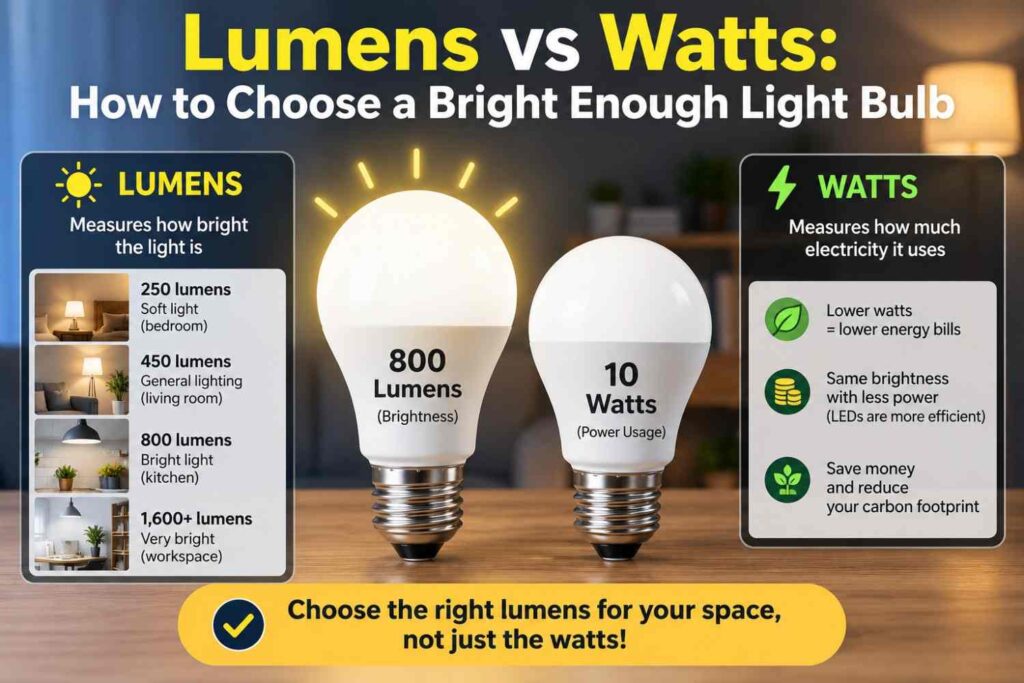
Understanding the difference between lumens and watts is the key to buying bulbs that actually give you the brightness you need without overpaying on your electricity bill. This article explains both terms clearly and shows you how to shop by lumens instead.
What Watts Actually Measure
A watt is a unit of electrical power, measuring how much energy a device consumes per second, not how much light it produces. When incandescent bulbs were the only option, wattage was a reasonably reliable stand-in for brightness because all incandescent bulbs converted electricity to light at roughly the same low efficiency. That relationship no longer holds across different bulb technologies, since LED, fluorescent, and incandescent bulbs each convert a very different share of their electrical input into visible light.
What Lumens Actually Measure
A lumen is the unit that directly measures the total visible light output of a bulb, regardless of how much electricity it uses to produce that light. This is the number you should focus on when trying to judge how bright a bulb will actually be in a room. Two bulbs with wildly different wattages can produce the exact same lumen output, meaning the same brightness, if one is a much more efficient technology than the other.
Lumens to Watts Conversion Reference
| Old Incandescent Wattage | Approximate Lumens | Equivalent LED Wattage |
|---|---|---|
| 40W | 450 lm | 5-6W |
| 60W | 800 lm | 8-9W |
| 75W | 1,100 lm | 10-12W |
| 100W | 1,600 lm | 13-15W |
| 150W | 2,600 lm | 20-25W |
Why the Old Wattage Habit Leads You Astray
If you walk into a shop still thinking “I need a 60W bulb” without knowing that number was really a proxy for brightness, you might end up buying a 60W LED bulb, which would be extremely bright, more like a small floodlight than a normal room light, and would consume far more electricity than necessary. This mismatch is one of the most common and easily avoidable mistakes shoppers make when replacing old incandescent bulbs with LED alternatives. Learning to read the lumen figure on the packaging, which reputable manufacturers now print alongside the wattage, solves this problem entirely.
How to Judge the Right Lumen Output for Your Space
- Estimate the size of the room in square meters, since larger rooms generally need a higher total lumen output to feel adequately lit.
- Decide the room’s purpose, since task-focused spaces like kitchens and study areas need more lumens per square meter than relaxation spaces like bedrooms.
- Check whether the room has multiple light fittings or just one, since total brightness should be spread across fittings rather than concentrated in a single overpowered bulb.
- Consider wall and ceiling color, since dark surfaces absorb light and effectively reduce the perceived brightness compared to light-colored surfaces.
- Choose a bulb whose printed lumen figure matches your estimated need, rather than defaulting to whatever wattage number feels familiar from old habits.
Efficiency: Lumens per Watt
Once you understand lumens and watts separately, the next useful concept is lumens per watt, which tells you how efficiently a bulb converts electricity into light. This figure lets you compare bulbs of different technologies fairly, as covered in more depth in our LED versus fluorescent versus incandescent efficiency article. A bulb with a higher lumens-per-watt figure gives you the same brightness for less electricity, which matters directly for your monthly prepaid meter units and for how much load your inverter or generator carries during outages.
Reading Nigerian Bulb Packaging Correctly
Many LED bulbs sold in Nigerian markets now print both wattage and lumen output on the box, though quality and accuracy vary between brands. It is worth buying from recognized brands or shops that stock certified products, since some cheaper imported bulbs overstate their lumen output relative to actual performance. If a bulb seems noticeably dimmer than its printed lumen figure suggests when you get it home, this is often a sign of a lower quality driver or LED chip, which can also affect how well the bulb tolerates Nigeria’s variable mains voltage over time.
Color Temperature Also Affects Perceived Brightness
Beyond raw lumen output, the color temperature of a bulb, measured in Kelvin, affects how bright a space feels to the human eye. Cooler, bluer light often feels crisper and more energizing at the same lumen output compared to warmer, yellower light, which can feel softer and slightly dimmer even at an identical lumen figure. This interaction between lumens and color temperature is worth considering together, and is explored further in our warm white versus cool white versus daylight bulbs article.
Common Misconceptions
- “A higher wattage bulb is always brighter.” Brightness is determined by lumens, and different bulb technologies produce very different amounts of light per watt consumed.
- “Lumens and watts measure the same thing differently.” They measure completely different properties; watts measure power consumption while lumens measure actual visible light output.
- “You can’t compare bulbs of different types by their labels.” Reputable LED packaging now lists lumen output specifically so shoppers can compare brightness directly across different bulb types and brands.
Frequently Asked Questions
How many lumens do I need for a typical bedroom?
A standard sized bedroom is usually comfortably lit with around 600 to 800 lumens for general lighting, though task lighting near a desk or mirror may need additional focused brightness.
Why do two bulbs with the same wattage look different in brightness?
This happens because they use different technologies or driver efficiencies, so wattage alone does not determine how much light is actually produced.
Is a higher lumen bulb always better to buy?
Not necessarily, since a bulb that is too bright for a small room can feel harsh and uncomfortable, so the right lumen output depends on matching brightness to the specific space and purpose.
Final Thoughts
Shifting your buying habit from wattage to lumens is one of the simplest changes you can make to get properly lit rooms without wasting electricity. Wattage tells you how much power a bulb draws, while lumens tell you how bright it actually is, and the two no longer move together predictably now that LED technology dominates the market.
Next time you shop for bulbs, check the lumen figure on the packaging first, match it to the room’s size and purpose, and only then consider wattage as a secondary factor for estimating your electricity cost.