
Flickering lights can range from a barely noticeable nuisance to an unmistakable warning sign of a genuine electrical hazard, and telling the difference matters. This article walks through the full range of causes behind flickering lights, from completely harmless to genuinely urgent, and explains how to tell which category your situation falls into.
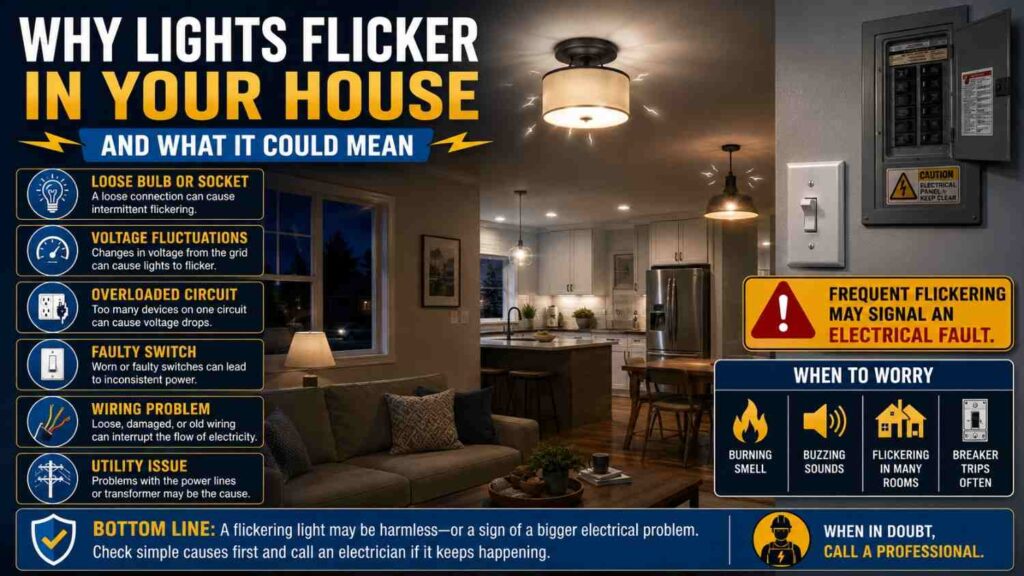
Harmless, Low-Concern Causes
1. LED Dimmer Incompatibility
As covered in our dedicated bulb lifespan article, LED bulbs paired with an older dimmer switch not designed for LED compatibility often flicker, particularly at low dimmer settings, due to a mismatch between the dimmer’s switching technology and the LED driver’s electronics. This is typically resolved by switching to a genuinely LED-compatible dimmer.
2. Bulb Nearing End of Life
A single bulb flickering, especially if it has been in use for a long time, may simply be showing early signs of failure rather than indicating any wider electrical issue; replacing that specific bulb often resolves it immediately.
3. Large Appliances Starting Up
A brief, momentary dip or flicker when a large appliance like an air conditioner, refrigerator or water pump motor starts up is often normal, caused by the brief inrush current these motors draw at startup, which can cause a momentary, harmless voltage dip on the shared circuit.
Moderate Concern: Worth Investigating
4. Loose Bulb or Fixture Connection
A bulb that isn’t fully seated, or a fixture with a loosening connection, can cause intermittent contact and flickering; this is generally straightforward for a homeowner to check by ensuring the bulb is properly and securely installed, though a persistently loose-feeling fixture should be assessed by an electrician.
5. Voltage Fluctuations from the Grid
Flickering across multiple lights in your home, correlating with times of high demand in your area or with your neighbors’ generator or major appliance usage, can indicate grid voltage instability rather than a fault within your own home’s wiring specifically.
Serious Concern: Warrants Prompt Electrician Attention
6. Loose Connections at the Distribution Board or Wiring
Flickering across an entire circuit or multiple circuits, particularly if it worsens when specific large appliances are used, can indicate a loose or deteriorating connection somewhere in your home’s wiring or at the distribution board itself, a genuinely serious issue since loose connections generate heat and are a known contributing factor to electrical fires, as discussed in our dedicated wiring mistakes article.
7. A Deteriorating Neutral Connection
A loose or high-resistance neutral connection, whether within your home or further upstream in the supply, can cause voltage imbalances that manifest as flickering, sometimes accompanied by lights becoming unusually bright or dim at the same time, a topic covered in more depth in our dedicated article on neutral wire voltage issues.
8. An Overloaded Circuit
Flickering that consistently coincides with specific high-power appliances switching on, beyond a brief harmless dip, particularly if accompanied by warm sockets or breakers tripping, suggests the circuit may be overloaded, discussed extensively in our dedicated circuit overload article.
A Diagnostic Approach You Can Use
| Observation | Likely Category |
|---|---|
| Only one bulb flickers, especially on a dimmer | Bulb or dimmer compatibility issue |
| Brief flicker only when AC/fridge/pump starts | Normal motor startup, usually harmless |
| Multiple lights flicker together, whole house | Possible grid voltage issue or main connection fault |
| Flickering worsens with specific appliance use, plus warmth | Possible overload or loose connection — call electrician |
| Flickering with burning smell or sparking | Urgent — switch off circuit and call electrician immediately |
Why Whole-House Flickering Deserves Extra Attention
Flickering affecting your entire home simultaneously, rather than a single room or circuit, points toward something at the main incoming supply level, either within your property’s main connection and distribution board, or further upstream at the transformer or grid level. This distinction matters for diagnosis: an electrician investigating whole-house flickering will focus first on the main incoming connection and distribution board, while flickering isolated to one room or circuit points toward a more localized issue within that specific circuit’s wiring.
Generators, Inverters and Flickering
Backup power sources introduce their own potential flickering causes worth distinguishing from grid-related issues. A generator with an aging or poorly maintained AVR (automatic voltage regulator) can produce unstable output voltage that manifests as flickering, particularly under varying load, a topic explored in our dedicated generator AVR article. Inverters, particularly lower-quality modified sine wave units discussed in our pure vs modified sine wave comparison, can also cause certain types of lighting, especially some LED and CFL bulbs, to flicker more noticeably than they would on clean grid or pure sine wave power.
Why Room-by-Room Testing Is the Most Useful First Step
Before calling an electrician, walking through your home and noting exactly which rooms and circuits flicker, and under what conditions, gives you information that dramatically speeds up professional diagnosis. Turn off every non-essential appliance and observe whether flickering continues; then reintroduce appliances one at a time, particularly larger ones like air conditioners, pumps, or irons, to see whether flickering correlates with any specific device switching on. This simple process of elimination, similar in spirit to the troubleshooting approach used for short circuits, often narrows the likely cause considerably before a professional even arrives, saving both time and diagnostic cost.
How Aging Distribution Boards Contribute to Flickering
Older distribution boards, particularly those using outdated fuse-based protection rather than modern circuit breakers, or boards that have simply aged and developed loose or corroded internal connections over many years, are a surprisingly common contributor to whole-house or multi-circuit flickering. Corrosion and thermal cycling gradually loosen screw terminals inside the board, and each loosened connection adds resistance that can manifest as flickering under load, well before it becomes severe enough to cause a more obvious fault like a hot board or tripped breaker. Homes with distribution boards more than fifteen to twenty years old, or boards that have never been professionally inspected, are reasonable candidates for a routine checkup even in the absence of dramatic symptoms, simply because this kind of gradual degradation is difficult to notice from casual observation alone.
When Flickering Coincides With Other Symptoms
Flickering rarely occurs in complete isolation from other electrical symptoms if the underlying cause is a genuine wiring or connection fault rather than a simple bulb issue. Paying attention to whether flickering coincides with warm sockets or switch plates, a persistent burning smell, breakers that trip more often than they used to, or unusual sounds like buzzing or crackling from the distribution board, helps distinguish a minor nuisance from a developing hazard that deserves urgent rather than routine attention. Any combination of flickering with these additional symptoms should move the issue from “worth investigating eventually” to “worth addressing promptly.”
Keeping a Simple Flicker Log
For flickering that doesn’t have an obvious, immediately identifiable cause, keeping a brief informal log, noting the date, time, which lights or rooms were affected, and what else was happening in the home at the time (an appliance switching on, weather conditions, generator use), can reveal patterns that aren’t obvious from memory alone. This kind of record is particularly useful for intermittent flickering that doesn’t happen consistently enough to observe directly, and it gives an electrician concrete, specific information to work from rather than a vague, hard-to-pin-down description of “sometimes the lights flicker.”
The Cost of Ignoring Persistent Flickering Over Time
Beyond the immediate safety concerns already discussed, persistently ignoring flickering that stems from a genuine wiring or connection fault carries a compounding cost: loose connections generating heat tend to worsen gradually rather than staying static, meaning a fault that today only causes mild flickering can, over months or years, progress toward the more serious symptoms covered elsewhere in this series, including warm sockets, burning smells, or in the worst cases, fire. Addressing flickering promptly when it first appears, rather than adapting to it as a background annoyance, is generally far less costly and disruptive than addressing the same underlying fault after it has had years to worsen.
Common Misconceptions
- “All flickering is dangerous and requires immediate action.” Many causes, particularly brief flickers from large appliance startup or a single aging bulb, are harmless and normal.
- “Flickering only relates to the bulb itself.” While bulb issues are common, flickering can originate anywhere from the bulb itself to the main grid connection, requiring a process of elimination to properly diagnose.
- “If replacing the bulb doesn’t fix it, there’s nothing more to be done.” Persistent flickering after bulb replacement usually indicates a wiring or connection issue worth professional investigation, not a dead end.
Frequently Asked Questions
Should I be worried if flickering only happens occasionally?
Infrequent, brief flickering, especially correlating with large appliance startup, is often normal; persistent or worsening flickering warrants attention.
Can flickering damage my appliances over time?
Voltage instability associated with some causes of flickering can potentially stress sensitive electronics over time, making it worth addressing the underlying cause rather than simply tolerating persistent flickering.
Is flickering more common with certain bulb types?
LED and CFL bulbs can be more sensitive to certain electrical issues, including dimmer incompatibility and some inverter output types, than traditional incandescent bulbs, though they are also generally more energy-efficient and longer-lasting overall.
Final Thoughts
Flickering lights sit on a genuine spectrum from harmless quirk to serious warning sign, and learning to distinguish between the two, based on pattern, scope and accompanying symptoms, is a genuinely useful practical skill. When in doubt, particularly for whole-house flickering or flickering accompanied by other warning signs like warmth or smell, involving a qualified electrician promptly is always the safer choice.