
Contactors and relays are both electromechanical switching devices that look and function similarly at a glance, leading many students and even some technicians to use the terms loosely or interchangeably. This article explains the genuine, practical differences and when each device is actually the appropriate choice.
What a Relay Actually Is
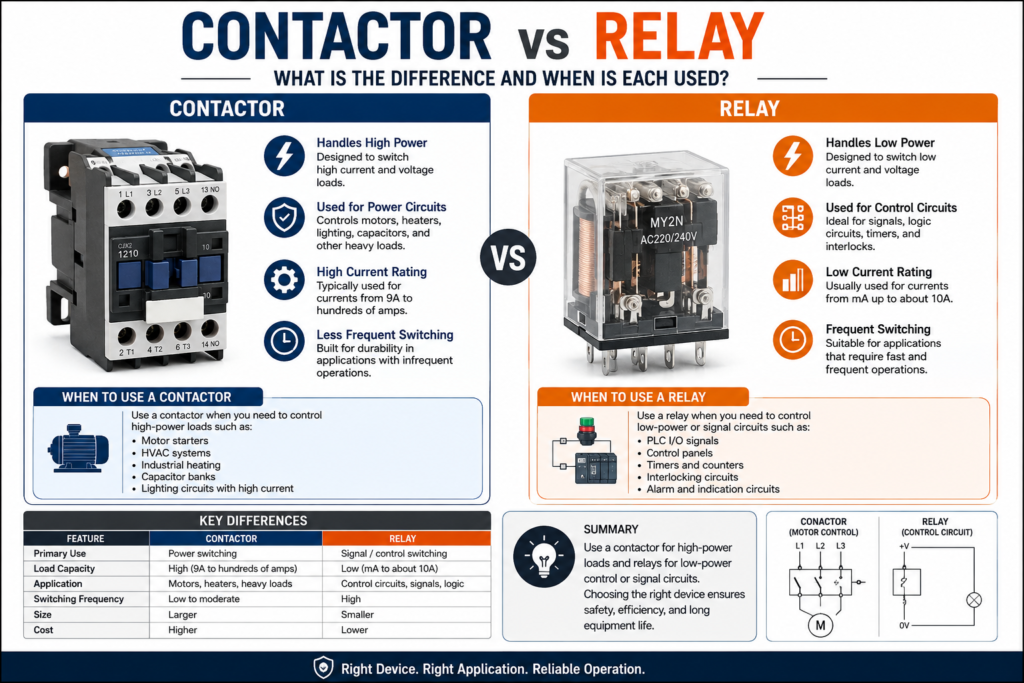
A relay is an electromechanical switch that uses a small electromagnetic coil to control one or more sets of contacts, allowing a low-power control signal to switch a separate circuit, commonly used for control circuits, signaling applications, and switching relatively low current loads.
What a Contactor Actually Is
A contactor is essentially a heavy-duty relay specifically designed and rated for switching higher current loads, most commonly motors, heating elements, lighting banks, and other substantial electrical loads, built with more robust contacts and construction specifically engineered to handle the higher current switching and arc suppression these applications require.
The Core Practical Difference: Current Rating and Construction
While both devices share the same basic electromagnetic switching principle, the genuine practical difference comes down to current handling capacity and construction robustness: relays typically handle lower currents (often under 10-20 amps) suited to control circuits and lighter loads, while contactors are specifically built with heavier contacts, better arc suppression, and higher current ratings suited to motor and heavy load switching.
A Direct Comparison Table
| Factor | Relay | Contactor |
|---|---|---|
| Typical current rating | Lower (control circuits, light loads) | Higher (motors, heavy loads) |
| Construction | Lighter duty | Heavy duty, robust arc suppression |
| Typical applications | Control signaling, low-power switching | Motor starting, heavy load switching |
| Number of poles | Often multiple, smaller contacts | Typically fewer, larger contacts |
Why Motors Specifically Require Contactors, Not Relays
Electric motors draw significantly higher inrush current during starting than their steady-state running current, discussed further in our dedicated motor overheating and star-delta starting articles, creating substantial switching stress that ordinary relays aren’t built to handle reliably over repeated switching cycles, making contactors, specifically engineered for this higher-stress switching duty, the appropriate and standard choice for motor control applications.
How Contactors and Relays Often Work Together
In practical industrial control systems, relays and contactors frequently work together rather than as alternatives: a low-power control relay, often driven by PLC output signals, discussed in our dedicated PLC article, energizes the contactor’s coil, which then switches the actual high-current motor or load circuit, illustrating how these devices complement rather than substitute for each other in typical control system design.
Overload Protection: A Related but Distinct Consideration
Contactors themselves don’t inherently protect against sustained overload conditions; they’re typically paired with separate overload relays or protection devices, discussed in our dedicated motor protection article, that monitor current and disconnect the circuit if sustained overload conditions are detected, an important complementary safety consideration beyond the contactor’s basic switching function.
Contact Wear and When to Replace Either Device
Both relays and contactors experience gradual contact wear from repeated switching, particularly from arcing during load interruption, and this wear accelerates with switching frequency and load characteristics; genuinely recognizing signs of developing contact wear, increased contact resistance, visible pitting, or unusual chattering noise during operation, before complete failure occurs, is a worthwhile practical maintenance habit for anyone responsible for industrial control panels.
Common Misconceptions
- “Contactors and relays are simply different names for the same device.” While sharing the same basic electromagnetic switching principle, they’re built for genuinely different current handling capacities and applications.
- “Any relay can substitute for a contactor if you’re careful.” Using an undersized relay for motor switching risks contact damage, arcing, and premature failure given the higher switching stress motor loads create.
- “Contactors include built-in overload protection automatically.” Overload protection typically requires separate, dedicated protection devices paired with the contactor, not an inherent contactor function.
Frequently Asked Questions
Can a contactor be used in place of a relay for lower-current applications?
Technically yes, though this is often unnecessarily costly and oversized; relays are generally the more appropriate, cost-effective choice for genuine low-current control applications.
How do I determine whether a specific application needs a relay or contactor?
Checking the actual current draw of the load being switched against the device’s rated capacity is the essential first step; motor and heavy load applications generally require contactors, while control signaling and light loads typically suit relays.
Do contactors and relays require different maintenance considerations?
Given their higher switching duty, contactors generally require more attention to contact wear and periodic inspection, particularly in applications with frequent motor starting cycles, compared to typically lighter-duty relay applications.
Final Thoughts
Contactors and relays share the same basic electromagnetic switching principle but serve genuinely distinct practical roles based on current handling capacity, relays for control circuits and lighter loads, contactors for motors and heavy loads. Understanding this practical distinction, along with how these devices typically work together in real control systems, provides essential foundational knowledge for anyone working with industrial electrical control systems.