
A burning smell near an electrical socket is one of the clearest, most unambiguous warning signs your home’s electrical system can give you, and it deserves an immediate, serious response rather than a wait-and-see approach.
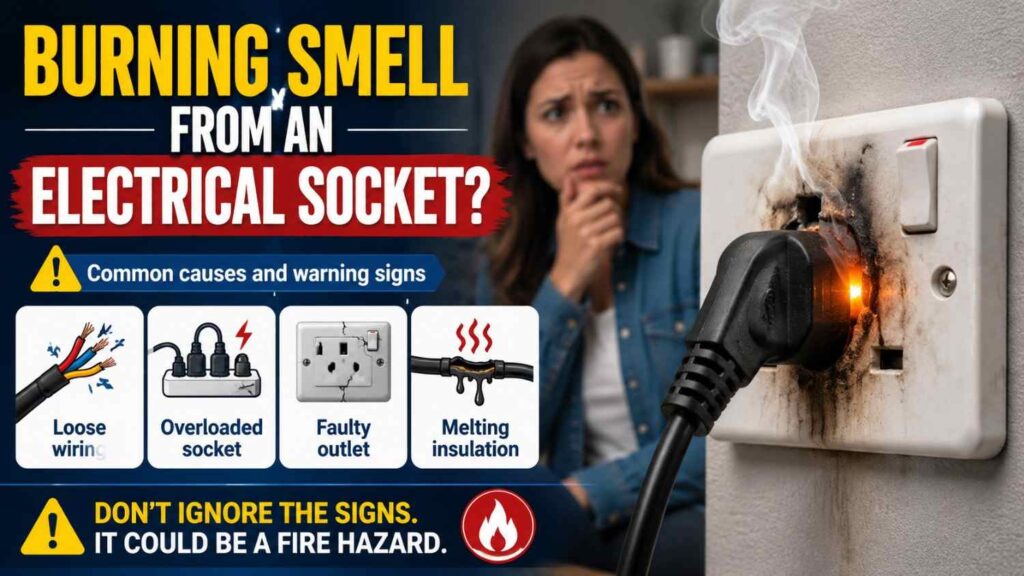
This article explains what’s actually burning when you smell it, the range of possible causes, and exactly what to do the moment you notice this specific warning sign.
What Is Actually Burning?
The smell associated with electrical burning typically comes from overheating plastic, insulation, or, in more advanced cases, the beginning stages of actual charring or combustion of surrounding materials. Unlike a general musty or dusty smell, an electrical burning smell has a distinctive acrid, plasticky character that most people recognize instinctively once they’ve encountered it, often described as similar to an overheating appliance motor or an electrical fire starting.
Common Sources of the Smell
- Overheating socket connections, caused by loose terminals, worn contacts, or overload, as discussed in our dedicated hot socket article
- A melting or melted plug, covered in depth in our dedicated article on that specific issue
- Overheating cable insulation within the wall, often from an undersized or overloaded circuit
- A failing appliance plugged into that socket, rather than the socket or wiring itself
- Dust or debris that has accumulated inside a socket and is heating up, though this typically produces a milder, more short-lived smell than a genuine electrical fault
Why You Should Never Ignore This Smell
A burning smell indicates that temperatures at that location have already risen well beyond normal operating range, meaning insulation and other materials are actively being damaged in real time. Unlike many other electrical warning signs that develop gradually over weeks or months, a burning smell often indicates a fault that is actively, currently worsening, making prompt action significantly more time-sensitive than responding to a merely warm socket or an occasionally tripping breaker.
Immediate Steps to Take
- Do not touch the affected socket or any connected appliance.
- Switch off the circuit at the distribution board if you can safely identify and access it.
- If the smell is strong, accompanied by visible smoke, or you’re unsure which circuit is affected, switch off power at the main isolator for the whole property.
- Ventilate the area by opening windows and doors if safe to do so.
- Do not attempt to inspect inside the socket yourself. Wait for a qualified electrician.
- If you see any flame, however small, treat it as a fire emergency and follow appropriate fire safety procedures, including evacuating if necessary.
Distinguishing Socket Smell From Appliance Smell
Determining whether the smell originates from the socket itself or from a connected appliance can help direct troubleshooting: unplug the appliance (only if it’s safe to do so without touching a hot plug or socket directly) and see if the smell is associated with the appliance specifically or persists at the socket even without anything connected. If the smell is coming from the appliance itself rather than the socket, the appliance should be taken out of service and inspected or repaired, while the socket may not require immediate replacement, though it’s still worth having checked given it was exposed to whatever fault occurred.
What an Electrician Will Check
| Check | Purpose |
|---|---|
| Visual inspection of socket and surrounding area | Identify visible scorching or damage |
| Terminal connection tightness | Identify loose connections causing localized heating |
| Circuit load assessment | Rule out or confirm overload as a contributing factor |
| Insulation resistance testing | Check for damaged cable insulation |
| Earth continuity testing | Confirm proper safety protection is in place |
After the Immediate Issue Is Resolved
Once an electrician has identified and repaired the specific fault, it’s worth asking whether the same underlying cause, overload, an aging distribution board, or widespread undersized wiring, might affect other sockets or circuits in your property, particularly if the property is older or has an uncertain electrical history. A single burning smell incident is sometimes an isolated fault, but it can also be the first visible symptom of a broader issue affecting your home’s electrical system more generally.
How Fast an Overheating Fault Can Escalate
One reason a burning smell demands such urgent response is how quickly the underlying condition can escalate once insulation or nearby materials begin actively degrading from heat. A loose connection generating enough heat to produce a noticeable smell has often already been through a period of slower, less noticeable heating; once materials begin visibly charring or off-gassing, the margin before actual ignition can be measured in minutes rather than hours, particularly if the socket is surrounded by combustible materials like wooden trim, curtains, or furniture. This escalation curve is part of why fire safety guidance consistently treats a burning electrical smell as equivalent in urgency to seeing actual smoke, rather than waiting for more dramatic confirmation before acting.
What to Have Ready Before the Electrician Arrives
While waiting for a qualified electrician after switching off the affected circuit, it helps to note a few specific details that speed up diagnosis: roughly how long you’d noticed any warmth or unusual behavior at that socket before the smell appeared, what (if anything) was plugged in at the time, whether any other sockets on the same circuit have shown similar signs, and whether the smell has recurred after previous, similar episodes. This information, combined with the electrician’s own testing, often narrows down whether the fault is isolated to one socket or reflects a broader circuit-level issue considerably faster than testing alone without any context.
Fire Safety Basics Worth Knowing in Advance
Every home should have a basic plan for an electrical fire scenario worked out in advance, rather than improvised in the moment: knowing where your main isolator switch is and how to operate it quickly, keeping a suitable fire extinguisher (rated for electrical fires, never water-based) accessible, and ensuring everyone in the household knows never to use water on an electrical fire given the serious shock risk this creates. Having this plan in place before an emergency occurs, rather than trying to figure it out while already smelling smoke, is a small amount of preparation that meaningfully improves outcomes if a burning smell does progress toward an actual fire.
Distinguishing Electrical Smells From Other Household Smells
Not every unusual smell near a socket or appliance is electrical in origin, and learning to distinguish can prevent both unnecessary panic and, more importantly, dangerous complacency. A genuine electrical burning smell tends to be sharp, plasticky and localized to a specific point, distinct from cooking smells, dust burning off a newly used heater (typically brief and fading quickly), or general musty smells from damp areas. When in doubt about which category a smell falls into, treating it with electrical caution, switching off the suspected circuit and investigating, costs little compared to the risk of wrongly assuming a genuine electrical fault is something more benign.
Insurance and Documentation Considerations
If a burning smell incident does progress to actual damage, whether a melted socket, scorched wall surface, or a more serious fire, having documentation, photos taken safely after power is off, the electrician’s assessment report, and receipts for any repair work, can matter significantly for insurance purposes if you carry home insurance covering electrical damage. This is a secondary consideration compared to the immediate safety response, but worth keeping in mind once the immediate danger has passed and you’re dealing with the practical aftermath of a genuine electrical fault.
Common Misconceptions
- “If the smell goes away on its own, the problem is resolved.” The smell disappearing doesn’t mean the underlying fault has resolved; it may simply mean the immediate overheating episode has paused, with the risk of recurrence remaining.
- “A faint smell isn’t worth calling an electrician for.” Even a faint burning smell warrants investigation, since the intensity of the smell doesn’t reliably correlate with the severity of the underlying fault.
- “It’s fine to keep using other sockets on the same circuit while waiting for an electrician.” If the fault relates to circuit-wide overload or a shared connection point, other sockets on that circuit may be affected too; it’s safer to avoid the whole circuit until assessed.
Frequently Asked Questions
Is a burning smell always dangerous, or could it be something harmless?
While occasionally a very faint, brief smell might relate to dust burning off newly installed equipment, a persistent or recurring electrical burning smell should always be treated as a genuine warning sign requiring investigation.
How quickly should I call an electrician after noticing this smell?
As soon as possible; this is one of the electrical warning signs that genuinely warrants urgent, same-day attention rather than being scheduled for a routine future visit.
Can a burning smell from one socket indicate a problem elsewhere in my home?
It’s possible, particularly if the underlying cause relates to circuit-wide overload, a distribution board issue, or a widespread wiring problem rather than an isolated socket-specific fault.
Final Thoughts
A burning smell from an electrical socket is one of the few electrical warning signs that leaves little room for ambiguity: it means active overheating is occurring right now, and it deserves an immediate, decisive response, switching off power and calling a qualified electrician, rather than a cautious wait-and-see approach. Recognizing and acting on this specific signal promptly is one of the most important pieces of electrical safety knowledge any homeowner can have.