
With demand for wiring, rewiring, and electrical maintenance work steady across Nigeria’s homes, shops, and construction sites, an electrical installation business remains one of the more accessible ways to turn practical electrical skill into a livelihood.
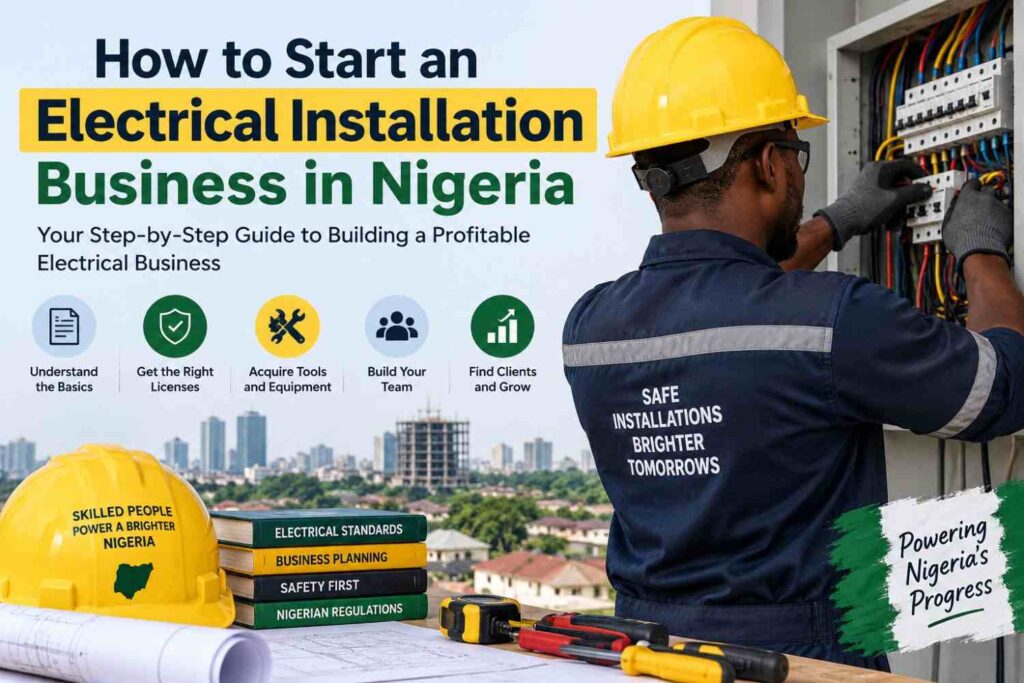
But turning a technical skill into a functioning business involves more than being good with wiring; it requires proper registration, the right tools, a way to find clients, and an understanding of the safety standards your work will be judged against.
This article outlines a practical path to starting an electrical installation business in Nigeria.
Get the Right Technical Foundation First
Before registering a business or buying tools, be honest about your technical readiness. Many successful installers in Nigeria come up through apprenticeships under an experienced electrician, formal technical or vocational training, or an electrical engineering background combined with hands-on site experience such as SIWES placements.
Whichever path you take, you need a solid grasp of wiring practices, load calculations, earthing, and basic safety standards, since poor workmanship is the single biggest reputation risk in this business. If your background is more theoretical than practical, spend real time on-site under someone experienced before taking on independent jobs.
Formalising the Business
Operating informally may work for very small jobs, but registering your business gives you credibility with clients, especially for larger contracts, estate work, or corporate clients who require a formal invoice.
In Nigeria, this typically means registering with the Corporate Affairs Commission (CAC), either as a business name or a limited liability company depending on your scale and growth plans.
Beyond CAC registration, it is worth researching whether your state or the electrical trade bodies in your area require any additional trade registration or membership, since requirements can vary and add credibility when dealing with larger clients.
Understanding the Regulatory and Safety Landscape
Electrical installation work in Nigeria operates within a safety and standards framework that clients increasingly expect installers to be aware of, even for residential work.
Bodies such as the Standards Organisation of Nigeria (SON) set product and installation standards, while the Nigerian Electricity Management Services Agency (NEMSA) is responsible for technical inspection and certification of electrical installations, particularly for larger or commercial jobs.
Being familiar with these standards, and being able to reference them when discussing a job with a client, sets a professional installer apart from an unregistered one working purely on informal reputation.
Tools and Equipment You Will Need
Starting lean is realistic in this business, but there is a baseline toolkit that separates a serious installer from someone who cannot take on real jobs.
Essential items include a good multimeter, insulated hand tools, a cable tester, conduit and wiring accessories, a proper set of ladders, and personal protective equipment such as insulated gloves and safety boots.
As the business grows, investing in items like a clamp meter, a proper tool bag system, and a small vehicle for transporting equipment and materials becomes worthwhile.
Pricing and Costing Jobs
New installers often either undercharge out of fear of losing clients or overcharge without a clear costing method, both of which hurt the business long term.
A reliable approach is to cost each job based on materials, labour hours, transport, and a reasonable margin, rather than picking a number based on what feels acceptable. The table below shows a simplified structure for thinking through job costing.
| Cost Component | What to Include |
|---|---|
| Materials | Cables, sockets, switches, conduit, distribution boards, consumables |
| Labour | Your time and any assistants’, based on realistic hours to complete the job properly |
| Transport | Cost of moving yourself, assistants, and materials to and from site |
| Tool wear and overhead | A small allowance for tool depreciation and running the business |
| Margin | Your profit on top of the above, reflecting your experience and reliability |
Finding and Retaining Clients
- Build relationships with building contractors, developers, and estate managers who regularly need electrical work.
- Ask satisfied clients for referrals, since word of mouth remains the strongest source of new work in this trade.
- Create a simple online presence, even a basic social media page with photos of completed work, to build credibility.
- Partner with hardware and electrical materials shops, who often refer customers needing installation services.
- Maintain a portfolio of past jobs, including before-and-after photos, to show prospective clients your standard of work.
Managing Growth and Hiring Help
As demand grows, most successful installers reach a point where they cannot personally handle every job, and taking on apprentices or junior electricians becomes necessary.
This is also where formal registration, proper costing, and a track record of safe, standards-compliant work start paying off, since larger contracts and corporate clients typically require more than an individual working alone. Building a small, reliable team gradually, rather than overextending quickly, tends to produce a more sustainable business.
Common Misconceptions
- “Anyone who can wire a socket can run an installation business.” Running the business well requires costing, client management, and safety compliance in addition to technical wiring skill.
- “Registering the business is unnecessary for small jobs.” Formal registration builds trust with clients and is often required for larger contracts, even if it feels optional for very small jobs.
- “Cutting corners on materials saves money without real risk.” Substandard materials and poor workmanship create fire and safety hazards that can end a business’s reputation permanently.
Frequently Asked Questions
Do I need a formal engineering degree to start an electrical installation business?
No, many successful installers come from technical training or apprenticeship backgrounds; what matters most is demonstrated competence, safety awareness, and reliable workmanship.
How much capital do I need to start?
It varies widely depending on tools already owned and the scale of jobs targeted, but starting with a basic professional toolkit and building up gradually is a common and realistic approach.
Is NEMSA certification required for every job?
Requirements vary by job scale and type, with larger and commercial installations more likely to require formal inspection, so it is worth understanding when certification applies to the work you take on.
Final Thoughts
Starting an electrical installation business in Nigeria rewards those who combine genuine technical competence with proper business fundamentals, from CAC registration to honest job costing and consistent safety practices.
The trade offers steady demand across residential, commercial, and construction work, but long-term success comes from building a reputation for reliable, standards-compliant work rather than chasing the cheapest quote.
With the right foundation, patience, and a focus on quality, this business can grow from a one-person operation into a respected local outfit.