
A common complaint among Nigerian households that recently switched from estimated postpaid billing to a prepaid meter is that their electricity now seems to “finish” much faster than expected, even though nothing in the house has changed. This feeling is real, but it is rarely caused by the meter itself.
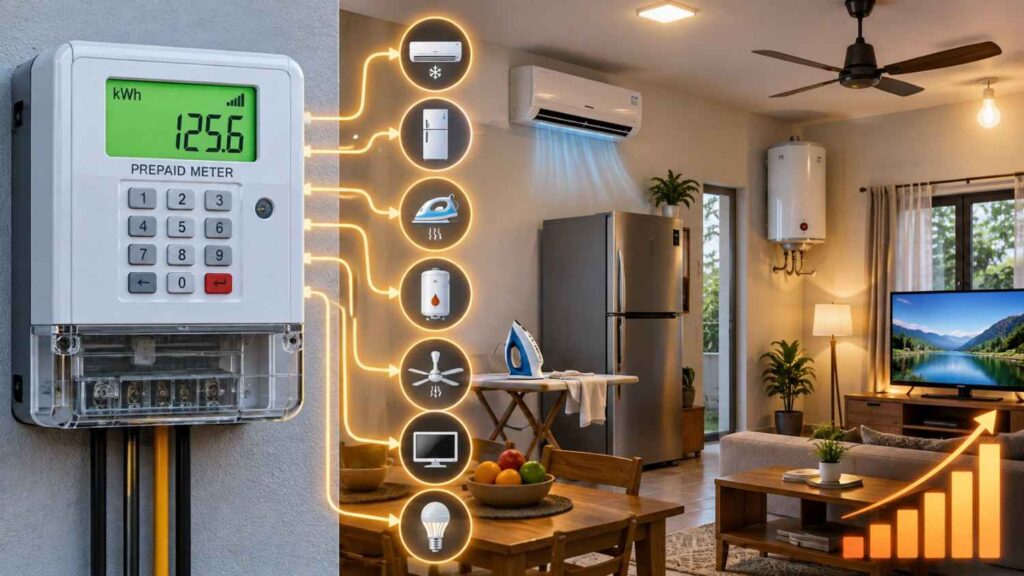
This article explains the genuine reasons consumption appears to rise after installing a prepaid meter, how to separate perception from actual usage, and what practical steps can reduce your real electricity spend.
You Are Now Paying for What You Actually Use
Under postpaid billing, many Nigerian customers received estimated bills that did not accurately reflect actual consumption, and in many cases those estimates were lower than real usage, especially in areas where meter reading was inconsistent.
A prepaid meter measures exact consumption in real time, so the jump many people notice is not new spending, it is the first time their bill matches what they were always using. This is one of the most misunderstood aspects of the switch and is worth keeping in mind before assuming the meter is faulty.
Increased Awareness Changes How You Perceive Cost
With a postpaid arrangement, a bill arrives monthly regardless of daily habits, so consumption feels abstract. A prepaid meter puts a visible, shrinking number in front of you every day, which naturally makes every unit feel more expensive because you see it disappearing in real time.
This heightened awareness is not a bad thing, since it is also what allows people to start managing consumption deliberately, a shift discussed further in our dedicated appliance electricity consumption calculation article.
Tariff Bands and How They Affect Your Cost Per Unit
Nigeria’s electricity tariff structure groups customers into bands based on the number of hours of supply they receive, with different rates applying to each band.
When a prepaid meter is installed, some customers are reclassified or move onto a band that reflects actual service levels in their feeder, which can change the cost per unit compared to what they were charged under estimated billing.
It is worth confirming your tariff band with your DisCo so you understand exactly what rate is being applied to the units you are buying.
Common Technical and Behavioural Factors That Genuinely Increase Consumption
Beyond billing accuracy, there are real factors that can increase measured consumption after a meter switch. The table below summarises the most common ones.
| Factor | Why It Increases Recorded Consumption |
|---|---|
| Old or inefficient appliances | Aging refrigerators, freezers, and air conditioners draw more current than modern equivalents for the same output |
| Voltage fluctuations | Unstable supply can cause some appliances to draw extra current, especially motors and compressors |
| Standby and phantom loads | Chargers, modems, and electronics left plugged in draw small amounts of power continuously |
| New household additions | An additional fan, freezer, or AC unit added after the old billing period raises genuine demand |
| Previous under-billing | Estimated bills before the meter often did not reflect true usage, making the new figure feel like an increase |
How to Confirm Whether Your Meter Is Reading Correctly
If you suspect the meter itself is faulty rather than your consumption genuinely rising, there are a few practical checks you can carry out. Track your daily unit usage for about a week, as explained in our dedicated meter reading article, and compare it against a rough calculation of your appliance wattages and hours of use.
If the measured consumption is close to your calculated estimate, the meter is very likely reading correctly, and the issue is simply that prepaid billing has revealed your true usage.
Steps to Take If Your Consumption Genuinely Seems Too High
- List every appliance in the house and estimate its wattage and daily hours of use.
- Compare that estimate against your tracked daily meter consumption.
- Check for appliances left running unnecessarily, such as freezers with poor door seals or pumping motors left on.
- Inspect wiring for signs of damage, loose connections, or unauthorized taps that could cause loss.
- If the discrepancy remains large and unexplained, formally request a meter accuracy test from your DisCo.
Reducing Real Consumption Without Reducing Comfort
Once you have confirmed the meter is reading correctly, the practical response is to manage load rather than dispute the bill. Simple measures such as servicing air conditioners regularly, using timers on water heaters, and replacing old refrigerators with more efficient models can meaningfully reduce daily kWh use.
For homes considering backup power, understanding your true consumption pattern first also makes it easier to size a generator or inverter system correctly, a subject explored in our backup power planning article.
Common Misconceptions
- “The prepaid meter charges more for the same amount of electricity.” A properly calibrated prepaid meter measures actual consumption accurately; the increase most people notice reflects previously inaccurate estimated billing, not a higher rate.
- “If units finish quickly, the meter must be faulty.” In the vast majority of cases, fast-finishing units reflect genuine household consumption that was simply not visible under postpaid billing.
- “Switching tariff bands is something only the DisCo controls and customers cannot query it.” Customers can and should confirm their tariff band and query it with their DisCo if they believe it does not match the service level they receive.
Frequently Asked Questions
Does a prepaid meter charge a higher rate per unit than postpaid billing?
No, the rate is determined by your tariff band, not by whether you are on prepaid or postpaid billing; prepaid simply measures your actual consumption more precisely.
How can I tell if my tariff band has changed after installing a prepaid meter?
Check your token receipt or the DisCo’s customer portal, which typically shows your band classification, and contact your DisCo directly if you are unsure.
Can voltage problems in my area increase my electricity consumption?
Yes, unstable voltage can cause certain appliances, particularly those with motors and compressors, to draw more current than they would under stable supply.
Final Thoughts
The sense that electricity consumption rises after a prepaid meter is installed is understandable, but in most cases it reflects newly accurate billing rather than a technical problem.
Taking the time to track your own daily usage, understand your tariff band, and audit your appliances gives you a clear picture of where your electricity actually goes.
With that clarity, you can make informed decisions about efficiency improvements and backup power planning rather than assuming the meter itself is the problem.