
That greenish-white crust building up around your battery terminals is not just an unsightly nuisance, it is an active chemical process that gradually weakens your connection, wastes power, and can eventually leave your inverter struggling to charge or deliver power properly.
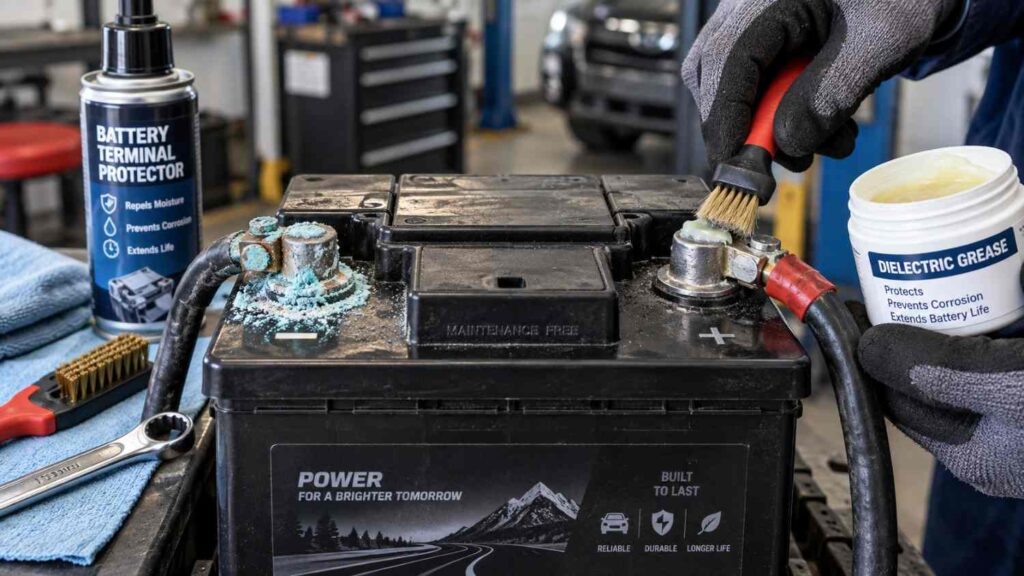
Corrosion is one of the most common battery-related complaints among Nigerian households, especially given the heat and humidity many parts of the country experience.
This article explains exactly what causes terminal corrosion, why it happens faster in local conditions, and the practical steps to clean and prevent it going forward.
What Battery Terminal Corrosion Actually Is
Corrosion at battery terminals is a chemical reaction between the metal of the terminal post and clamp (typically lead, copper, or their alloys) and substances in the surrounding air, most notably the hydrogen gas and acid vapor that lead-acid batteries naturally vent during normal charging.
The result is usually a crusty deposit, greenish or bluish on copper connectors, whitish or grayish on lead ones, that builds up over time on and around the terminal, gradually interfering with the clean metal-to-metal contact a good connection needs.
Why Lead-Acid Batteries Are More Prone to This
Flooded and even some sealed lead-acid batteries release small amounts of hydrogen gas and acid vapor during charging, a normal byproduct of the chemical reaction happening inside the cells. This vapor settles on nearby metal surfaces, including the terminals themselves, and reacts with moisture in the air to form the corrosive deposits you see building up.
Lithium batteries, being sealed systems without this same off-gassing behavior, are far less prone to this specific type of terminal corrosion, though their terminals can still corrode from general environmental exposure if left uncleaned for long periods.
Why Corrosion Happens Faster in Nigeria
Heat accelerates virtually every chemical reaction, including the ones that cause corrosion, and Nigeria’s warm climate across most of the year means terminal corrosion tends to develop faster than it might in cooler regions.
Humidity compounds this further, since moisture in the air is a necessary ingredient in the corrosion reaction, and many parts of the country, especially coastal and southern areas, experience high humidity for much of the year.
Households that store their inverter batteries in poorly ventilated rooms or cupboards, where both heat and moisture become trapped, often see corrosion develop noticeably faster than those with batteries kept in well-ventilated spaces.
Signs You Have a Corrosion Problem
- Visible crusty, powdery buildup around the base of the terminal post or on the clamp itself.
- A terminal connection that feels loose or wiggly even after being tightened, since corrosion prevents full metal contact.
- Terminals that feel warm under load, a related issue covered in our dedicated article on why battery terminals get hot.
- Reduced charging efficiency or the inverter taking noticeably longer to fully charge the battery.
- A slight sulfur-like or acidic smell near the battery, particularly with flooded lead-acid types.
How to Clean Corroded Terminals Safely
- Turn off the inverter and disconnect the battery, removing the negative terminal first for safety.
- Mix a solution of baking soda and water (roughly one tablespoon of baking soda per cup of water) to neutralize any acid residue in the corrosion.
- Apply the solution to the corroded areas with an old toothbrush or wire brush, scrubbing gently until the buildup lifts away.
- Rinse the area lightly with clean water, avoiding letting excess liquid drip into the battery’s vent caps.
- Dry the terminals and posts thoroughly with a clean cloth before reconnecting anything.
- Inspect the clamp and post for any pitting or damage caused by the corrosion; replace the clamp if it is significantly eaten away.
- Reconnect the battery, positive terminal first, and tighten firmly.
Preventing Corrosion From Coming Back
| Prevention Method | Why It Works |
|---|---|
| Petroleum jelly or terminal grease on clean terminals | Creates a barrier that blocks moisture and acid vapor from reaching bare metal |
| Felt anti-corrosion washers under terminal clamps | Absorbs and neutralizes acid vapor before it reaches the clamp surface |
| Good ventilation in the battery storage area | Reduces trapped humidity and allows vented gases to disperse rather than settle |
| Regular inspection and cleaning schedule | Catches corrosion early before it significantly damages the connection |
| Ensuring vent caps are intact and functional (flooded types) | Directs gas venting properly rather than allowing excess vapor near terminals |
When Corrosion Signals a Bigger Problem
Occasional light corrosion is a normal part of owning a lead-acid battery and is not, on its own, a sign of a failing battery.
However, unusually rapid or heavy corrosion, especially recurring soon after cleaning, can sometimes indicate overcharging, which causes excessive gassing, or a battery nearing the end of its useful life, a topic explored in our dedicated article on knowing when to replace a battery.
If corrosion keeps returning aggressively within weeks of a thorough cleaning, it is worth having your charging system checked rather than simply cleaning terminals on repeat.
Common Misconceptions
- “Terminal corrosion means the battery is about to fail.” Light, gradual corrosion is a normal byproduct of lead-acid charging and does not by itself indicate battery failure.
- “Any grease or oil works fine to prevent corrosion.” Proper petroleum jelly or dedicated terminal grease is designed to resist the acidic environment; some household oils break down faster and offer less protection.
- “Lithium batteries never develop terminal corrosion.” While far less prone to it due to their sealed design, lithium battery terminals can still corrode from general environmental moisture if never cleaned.
Frequently Asked Questions
How often should I clean my battery terminals to prevent corrosion?
Checking every one to two months and doing a thorough clean roughly every three to six months is reasonable for most households, more often in particularly humid locations.
Is battery terminal corrosion dangerous to touch?
The corrosion itself is mildly acidic and can irritate skin, so it is best handled with gloves and washed off promptly if it contacts bare skin.
Can heavy corrosion permanently damage the terminal post itself?
Yes, prolonged untreated corrosion can pit and eat away at the metal post or clamp, eventually requiring the clamp to be replaced or, in severe cases, affecting the battery’s own terminal.
Final Thoughts
Battery terminal corrosion is a normal but manageable byproduct of lead-acid charging, made faster and more frequent by Nigeria’s heat and humidity, and it is almost always preventable with routine cleaning and a protective layer of grease.
Left unaddressed, it gradually weakens your connection, contributes to the terminal heating problems covered elsewhere on the site, and can eventually damage the terminal hardware itself.
A simple baking soda cleaning every few months, combined with anti-corrosion grease and decent ventilation in your battery storage area, keeps this problem from becoming a recurring naira expense. Treat terminal care as routine maintenance rather than a one-time installation task, and your connections will stay reliable for the life of the battery.