
“The breaker keeps tripping” is one of the most common complaints electricians hear in Nigerian homes, but the phrase actually hides two very different problems with different causes and different fixes. One is an overload, a gradual buildup of demand beyond what a circuit can handle.
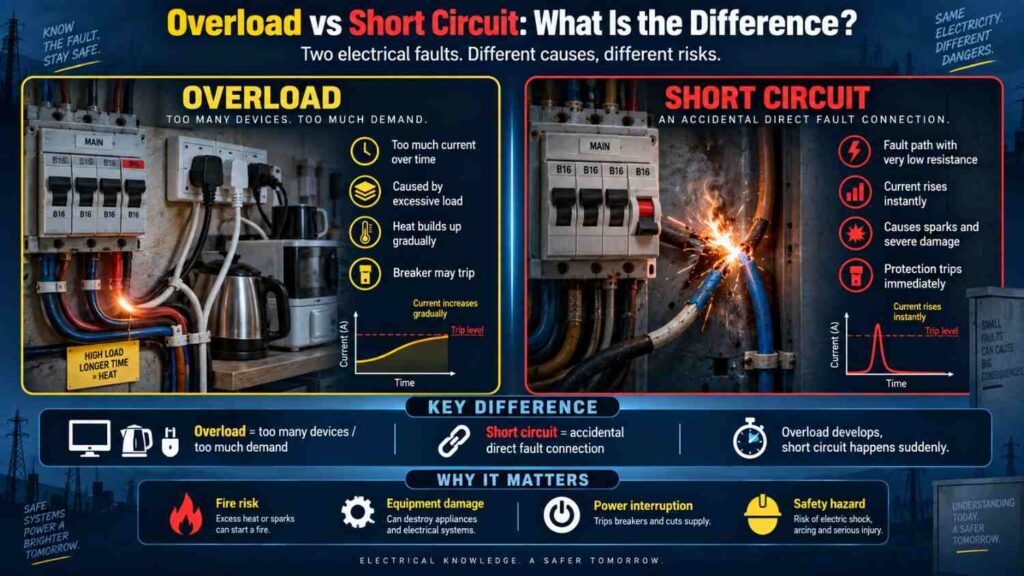
The other is a short circuit, a sudden, direct fault that can happen in an instant. Understanding the difference helps you respond correctly, and know when to simply unplug something versus when to call an electrician immediately.
What an Overload Actually Is
An overload happens when the total current drawn by appliances on a circuit exceeds what the cable and protective device were designed to carry, even though every appliance is otherwise working normally. It is not caused by damaged wiring or a fault; it is simply too much demand on one circuit.
A classic Nigerian example is a single socket circuit feeding an air conditioner, a freezer, an iron, and a microwave through several extension boards, all switched on around the same time. Each appliance individually is fine, but together they push the circuit past its rated capacity.
Overloads build up gradually. Current rises above the safe limit, the cable slowly heats, and a correctly sized breaker responds with a deliberate, slightly delayed trip, giving normal momentary surges like a fridge compressor starting up time to pass without nuisance tripping.
What a Short Circuit Actually Is
A short circuit is fundamentally different. It happens when a live conductor makes direct, unintended contact with a neutral conductor or earthed metal, bypassing the appliance’s normal resistance entirely. This could be caused by damaged insulation, a nail driven through a hidden cable, water ingress into a socket, or a wiring fault inside an appliance.
Because there is almost no resistance in the fault path, current spikes to extremely high values almost instantly, and a correctly working breaker trips immediately, often within a fraction of a second, well before any of our dedicated wiring and cable sizing considerations about cable heating even come into play.
Comparing the Two Side by Side
| Feature | Overload | Short Circuit |
|---|---|---|
| Cause | Too many appliances drawing current on one circuit | Direct fault between live and neutral or earth |
| Speed of Onset | Gradual, builds up over seconds or minutes | Instant, within milliseconds |
| Current Level | Moderately above rated capacity | Extremely high, many times rated capacity |
| Breaker Response | Delayed trip after sustained excess | Instant trip |
| Typical Fix | Redistribute appliances across circuits | Locate and repair the fault before reconnecting |
How Your Distribution Board Tells the Two Apart
Modern circuit breakers, as covered in our dedicated circuit breakers article, are actually built with two separate tripping mechanisms inside a single device. A thermal element responds to sustained moderate overcurrent, bending gradually as it heats, which handles overloads.
A magnetic element responds to the sudden surge of a short circuit, tripping almost instantly regardless of temperature. This dual mechanism is why a good quality MCB can protect against both slow overloads and sudden faults without needing two separate devices, and why using proper MCBs instead of old rewireable fuses gives far more reliable, predictable protection.
How to Tell Which One You Are Dealing With
- If the breaker trips only after several appliances have been running together for a while, suspect an overload first.
- If the breaker trips instantly the moment you plug something in or switch it on, suspect a short circuit in that appliance or its cable.
- If you smell burning, see scorch marks, or notice a socket that is warm to the touch, treat it as a possible short circuit or serious fault, not a simple overload.
- If the breaker will not reset at all, or trips again immediately every time, do not keep forcing it; call a qualified electrician rather than repeatedly resetting it yourself.
Why the Difference Matters for Safety
Treating a short circuit like a simple overload is dangerous. If someone responds to a repeatedly tripping breaker by fitting a higher-rated breaker or, worse, bypassing protection entirely, an actual short circuit fault can continue causing arcing and heat damage at the fault point every time the circuit is closed, risking fire even though the breaker is technically resetting.
In Nigeria, where many buildings have wiring installed years ago and sometimes with poor earthing practices, an undetected short to an earthed metal part can also create a shock hazard for anyone touching that metalwork, which is where earth leakage protection, discussed in our dedicated earth leakage article, becomes an important additional layer of safety alongside overcurrent devices.
Common Misconceptions
- “Any tripped breaker means the same problem.” A slow, delayed trip after heavy use points to overload, while an instant trip on switch-on usually signals a short circuit fault.
- “I can just keep resetting the breaker until it stays on.” Repeated resetting without finding the cause can allow a dangerous fault to keep arcing at the fault point, increasing fire risk.
- “Short circuits only happen with old or damaged appliances.” New appliances can also short circuit due to manufacturing faults, transit damage, or water exposure, so age alone is not a reliable indicator.
Frequently Asked Questions
Can an overload turn into a short circuit if ignored?
Yes, sustained overheating from an overload can degrade insulation over time until it eventually fails and causes a direct short circuit fault.
Is it safe to just plug appliances into a different socket if a circuit keeps tripping?
For a genuine overload this can work as a short-term measure, but if the trip is instant or repeats after moving appliances, it likely indicates a fault that needs professional inspection.
Do generators and inverters protect against overloads and short circuits the same way as mains supply?
Most quality generators and inverters, as discussed in our dedicated generators and inverters articles, include their own overcurrent protection, but the household distribution board’s breakers remain the primary protection for the wiring itself.
Final Thoughts
Overload and short circuit may both end with a tripped breaker, but they represent very different problems: one is a matter of demand exceeding supply, the other is a direct electrical fault that needs locating and fixing before power is restored.
Learning to recognise the pattern, gradual versus instant, moderate versus extreme, helps you respond appropriately instead of simply resetting a breaker and hoping for the best. When a trip pattern looks like a short circuit, or keeps recurring no matter what is unplugged, the safest and most sensible step is to call a qualified electrician to trace and fix the actual fault.