
Walk into any electrical shop in Lagos, Kano, or Port Harcourt and you will find three broad families of light bulbs sitting side by side: incandescent, fluorescent, and LED. They all produce light, but they do it in very different ways, and the difference shows up clearly on your electricity bill and your generator fuel consumption.
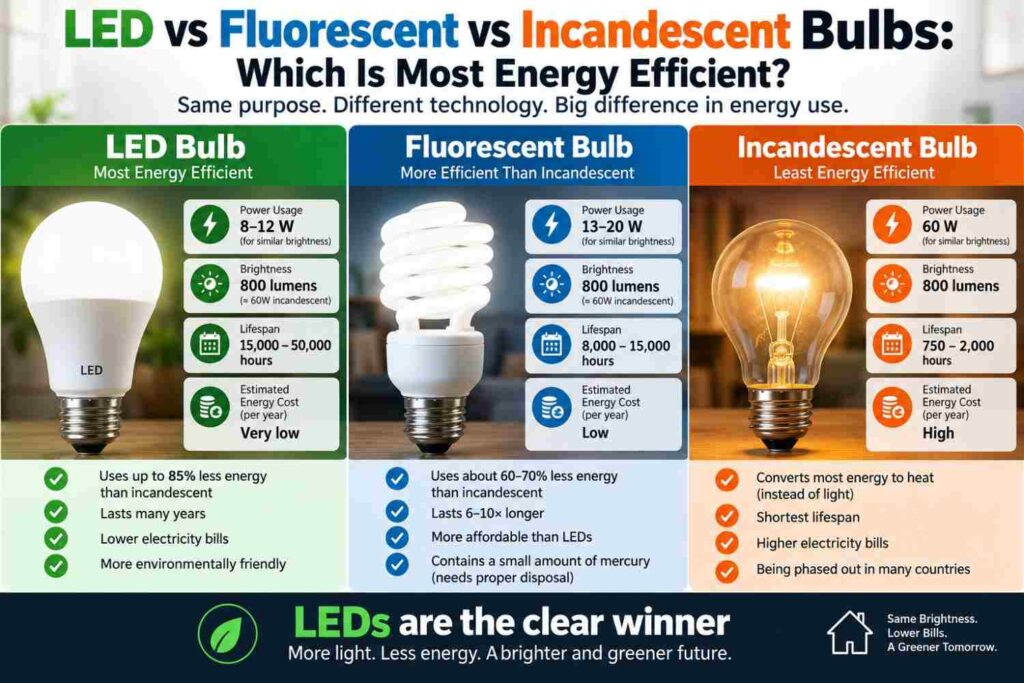
This article compares the three technologies on efficiency, cost, and lifespan so you can decide which one actually makes sense for your home or office.
How Each Bulb Type Produces Light
An incandescent bulb works by passing current through a thin tungsten filament until it glows white-hot. It is simple and cheap to manufacture, but most of the electricity going into it is wasted as heat, not light. A fluorescent bulb, including the compact fluorescent lamp (CFL) common in Nigerian homes, passes current through a tube filled with gas that produces ultraviolet light, which then strikes a phosphor coating that converts it into visible light. An LED (light-emitting diode) bulb produces light through a semiconductor chip that emits photons directly when current flows through it, with almost no wasted heat in the process compared to the other two.
Energy Efficiency Compared
Efficiency in lighting is measured in lumens per watt, meaning how much visible light you get for every watt of electricity consumed. Incandescent bulbs are the least efficient, typically producing 10 to 17 lumens per watt because so much energy turns into heat. Fluorescent bulbs improve on this significantly, producing 50 to 70 lumens per watt. LED bulbs lead the pack, producing 80 to over 100 lumens per watt in good quality products. In practical terms, an LED bulb can produce the same brightness as an incandescent bulb while using roughly 85 percent less electricity.
Quick Comparison Table
| Feature | Incandescent | Fluorescent (CFL) | LED |
|---|---|---|---|
| Efficiency (lumens/watt) | 10-17 | 50-70 | 80-100+ |
| Average lifespan | 1,000 hours | 8,000 hours | 25,000-50,000 hours |
| Heat output | Very high | Moderate | Low |
| Contains mercury | No | Yes, small amount | No |
| Withstands voltage swings | Fairly tolerant | Moderate | Good, with quality driver |
| Typical price in Nigeria | Cheapest | Mid-range | Higher upfront, lowest over time |
Cost Over Time, Not Just at Purchase
A common mistake buyers make is comparing only the shop price. An incandescent bulb may cost less than an LED bulb on the shelf, but it burns out faster and consumes far more electricity to deliver the same brightness. Over a year of regular use, an LED bulb will almost always work out cheaper once you factor in electricity usage and replacement frequency, especially with prepaid meter tariffs from DisCos rising steadily. If you run generators for backup power, the lower wattage of LED bulbs also means less fuel burned to keep your lights on, which matters when petrol and diesel prices are unpredictable.
Lifespan and Replacement Frequency
Incandescent bulbs typically last around 1,000 hours, which is roughly six weeks if left on continuously, or a few months of normal evening use. Fluorescent bulbs last considerably longer, around 8,000 hours. LED bulbs are built to last 25,000 to 50,000 hours or more, which can translate to 15 to 20 years of typical household use. Fewer replacements mean fewer trips to the market and less handling of fragile glass components, which matters with fluorescent and incandescent bulbs that break easily during installation or cleaning.
Heat, Safety, and Voltage Tolerance
Because incandescent bulbs waste so much energy as heat, they can become uncomfortably hot to touch and pose a fire risk if placed too close to curtains, paper, or plastic fittings. Fluorescent tubes run cooler but still generate noticeable heat during operation. LED bulbs stay much cooler, which makes them safer for enclosed fittings and reduces the load on air conditioning in warm Nigerian climates. On the subject of Nigeria’s frequent voltage fluctuations, LED bulbs with well-built drivers tend to handle irregular mains supply better than the other two, though sudden severe spikes can still damage any bulb type, which is why using a stabilizer or surge protection is worth considering, as discussed in our dedicated voltage fluctuation and surge protection article.
Environmental and Disposal Considerations
Fluorescent bulbs, including CFLs, contain a small amount of mercury vapor, which means they need to be disposed of carefully rather than thrown into regular household waste. Broken fluorescent tubes should be handled with care and the area ventilated. Incandescent and LED bulbs do not contain mercury, making them simpler to dispose of, though LED electronic components should still ideally be kept out of general waste where recycling options exist. For most Nigerian households without dedicated e-waste collection, the practical takeaway is to handle broken fluorescent bulbs cautiously and avoid stepping on shattered glass or inhaling dust from them.
Which One Should You Choose?
For nearly every residential and commercial application today, LED bulbs are the clear winner on efficiency, lifespan, and long-term cost, despite a higher upfront price. Fluorescent bulbs remain a reasonable middle-ground option where LED products are unavailable or budget is extremely tight at the point of purchase. Incandescent bulbs are now mostly obsolete for general lighting and only make sense in rare cases requiring instant full brightness with no dimming circuitry or where the fitting specifically cannot accept other bulb types.
Common Misconceptions
- “LED bulbs are too expensive to be worth it.” The higher purchase price is recovered within months through lower electricity use and far fewer replacements over the bulb’s lifetime.
- “Brighter bulbs always use more watts.” Brightness depends on lumens, not watts, so a low-wattage LED can be brighter than a high-wattage incandescent bulb.
- “All fluorescent bulbs flicker and hum.” Older magnetic ballast fluorescent fittings are prone to this, but modern electronic ballast CFLs run smoothly and quietly.
Frequently Asked Questions
Which bulb type is best for reducing generator fuel costs?
LED bulbs draw the least power for the same brightness, so they place the smallest load on a generator or inverter, directly reducing fuel or battery consumption during outages.
Do LED bulbs work well with inverter systems?
Yes, LED bulbs are well suited to inverter and solar backup systems because their low wattage means a small battery bank can power more lights for longer, a point covered further in our inverter and battery backup article.
Is it worth replacing all incandescent bulbs at once?
It is generally worth it, since the energy savings from LED replacement usually pay back the cost within a year for bulbs used several hours daily, and the switch also reduces heat buildup in the room.
Final Thoughts
When you weigh efficiency, lifespan, heat output, and total cost of ownership, LED bulbs are the most sensible choice for the vast majority of Nigerian homes and businesses today. Fluorescent bulbs still have a place as a budget alternative, while incandescent bulbs have largely fallen out of favor except in niche situations.
Given how often power supply fluctuates and generators supplement the grid, choosing the most efficient bulb available is one of the simplest ways to cut recurring electricity costs. Before your next bulb purchase, compare the lumen output rather than just the wattage printed on the pack, and you will make a far better buying decision.