
Prepaid electricity meters have become the standard metering approach across much of Nigeria, yet many users understand only the basic “buy token, get power” mechanic without genuinely understanding how these devices actually measure and manage their energy usage.
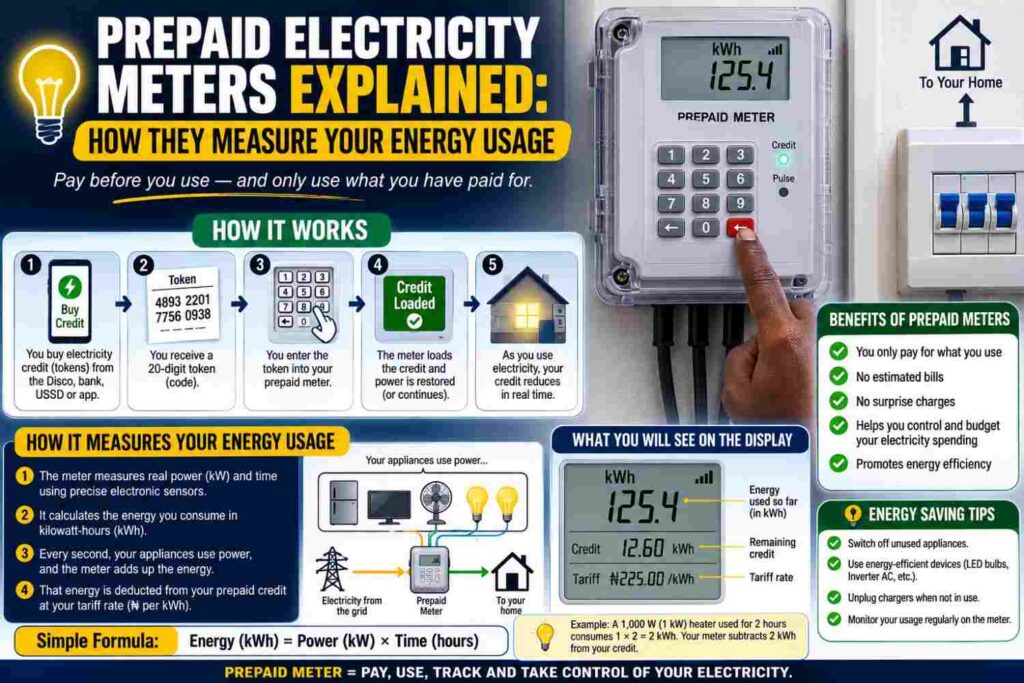
This article explains what’s actually happening inside a prepaid meter.
The Basic Working Principle: Measuring Actual Energy Consumption
At their core, prepaid meters measure electrical energy consumption the same fundamental way traditional postpaid meters do, tracking the actual kilowatt-hours of electricity flowing through the connection over time, using internal metering circuitry that continuously monitors voltage and current to calculate genuine energy usage.
How the Prepaid Credit System Actually Works
Unlike postpaid metering, which bills for consumption after the fact, prepaid meters maintain an internal credit balance that decreases as energy is actually consumed; when you purchase and enter a token, discussed further in our dedicated token rejection article, that value adds to your credit balance, and the meter continuously deducts from this balance based on real, measured consumption until the balance reaches zero, at which point it disconnects supply.
What’s Inside a Prepaid Meter
| Component | Function |
|---|---|
| Metering circuitry | Measures actual voltage, current, and energy consumption |
| Microprocessor | Calculates consumption, manages credit balance |
| Display | Shows remaining credit, consumption data, alerts |
| Keypad | For entering purchased tokens |
| Relay/switch | Physically connects/disconnects supply based on credit status |
Why Prepaid Metering Was Adopted So Widely in Nigeria
Prepaid metering addresses several genuine challenges that affected postpaid billing in Nigeria, reducing estimated billing disputes (since consumption is directly measured and immediately reflected), giving consumers direct visibility and control over their spending, and reducing revenue collection challenges for distribution companies by requiring payment before consumption rather than collecting after the fact.
Understanding the Different Tariff Bands
Nigeria’s electricity tariff structure includes different bands (often labeled by letter) reflecting different service reliability commitments and corresponding pricing, meaning your specific tariff band, tied to your DisCo and specific feeder’s service level, affects how much your consumption actually costs per kilowatt-hour, information typically displayed on your meter or available from your DisCo.
Low Credit Warnings and Self-Disconnection
Most prepaid meters provide low-credit warnings, often audible alerts or display indicators, before your balance is fully exhausted, giving you an opportunity to purchase additional credit before automatic disconnection occurs when the balance reaches zero, a built-in feature specifically designed to reduce unexpected, inconvenient disconnections.
Budgeting Practically Around Prepaid Electricity
Because prepaid metering gives immediate, direct visibility into consumption and spending, many households find it genuinely easier to budget for electricity by tracking typical weekly or monthly token purchase amounts against known appliance usage patterns, discussed throughout our appliance electricity consumption articles, treating electricity as a more actively managed, visible household expense rather than a deferred bill arriving after usage has already occurred.
Common Misconceptions
- “Prepaid meters measure consumption less accurately than postpaid meters.” Both meter types use fundamentally similar metering technology to measure actual energy consumption; the difference lies in billing timing, not measurement accuracy.
- “Prepaid meters can be manipulated to show lower consumption than actual usage.” Tampering with meters is both illegal and, in properly functioning, well-maintained meters, technically difficult without detection.
- “All prepaid meters and tariffs work identically regardless of location.” Tariff bands and specific meter models can vary by DisCo and location, affecting actual per-unit pricing.
Frequently Asked Questions
Why does my prepaid meter sometimes show different consumption for seemingly similar usage patterns?
Actual appliance usage patterns, discussed throughout our appliance electricity consumption articles, seasonal factors, and tariff band changes can all genuinely affect measured consumption and corresponding credit depletion rates.
Can I check my consumption history on a prepaid meter?
Many modern prepaid meters display recent consumption data directly, and some DisCos provide additional consumption history through customer portals or apps, though the specific features available vary by meter model and provider.
Is it possible for a prepaid meter to malfunction and overcharge for actual consumption?
While meters can develop faults like any electronic device, genuine overcharging malfunctions are relatively uncommon in properly certified meters; if you suspect a fault, requesting a meter test through your DisCo is the appropriate step.
Final Thoughts
Prepaid meters measure actual energy consumption using metering technology fundamentally similar to postpaid systems, while adding a credit-based system that deducts from purchased balance in real time, providing consumers direct visibility and control while addressing billing and collection challenges that affected traditional postpaid metering. Understanding how this system actually works helps consumers make more informed decisions about their electricity usage and purchasing patterns.