
Anyone who lives or works near an electrical distribution transformer has likely noticed a persistent humming sound, and many wonder whether it’s a normal characteristic or a sign something is wrong.
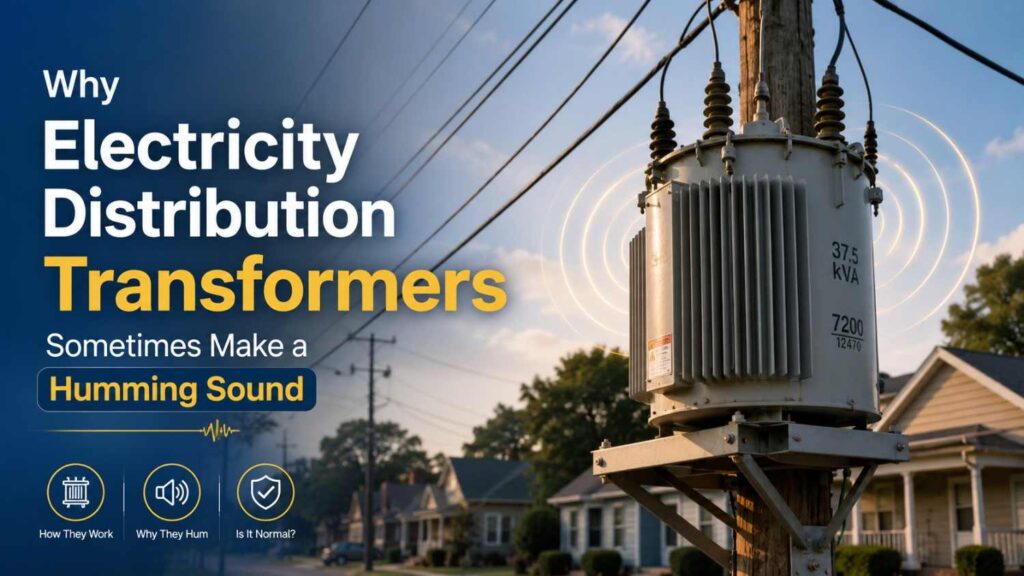
This article explains why transformers hum and when that sound genuinely warrants concern.
Why Transformers Hum: The Basic Physical Cause
Transformer humming results from a phenomenon called magnetostriction: the transformer’s iron core physically expands and contracts very slightly as the alternating magnetic field cycles through the core material, and this tiny, rapid mechanical vibration, occurring at twice the electrical supply frequency, produces the characteristic humming sound.
Why This Humming Is Genuinely Normal Under Regular Conditions
Because magnetostriction is an inherent physical property of the core materials used in transformer construction, some level of humming is a completely normal, expected characteristic of transformer operation, not a defect or warning sign in itself, similar to how a running refrigerator or air conditioner compressor produces some baseline operational sound.
Factors That Can Make Humming Louder or More Noticeable
| Factor | Effect on Humming |
|---|---|
| Transformer loading level | Higher load can increase humming intensity somewhat |
| Core/winding looseness | Can amplify vibration and resulting sound |
| Nearby surfaces | Can resonate and amplify the base sound |
| Ambient noise levels | Quieter surroundings make normal humming more noticeable |
When Humming Sound Changes Genuinely Warrant Attention
While baseline humming is normal, genuinely concerning changes include a sudden, significant increase in loudness, a shift to a buzzing, crackling, or popping sound rather than steady humming, or humming accompanied by other warning signs like visible oil leaks, burning smells, or unusual heat, all of which can indicate developing problems worth reporting to your electricity distribution company promptly.
Overloading’s Specific Role in Sound Changes
As discussed in our dedicated transformer explosion article, sustained overloading beyond a transformer’s rated capacity can contribute to increased operational stress and correspondingly more noticeable, sometimes irregular sound characteristics, making a genuine, noticeable increase in humming intensity over time worth monitoring, particularly in areas with known illegal connections or rapid load growth.
How Utilities Address Genuinely Excessive Transformer Noise
When distribution companies receive reports of unusual or excessive transformer sound, technicians typically investigate loading conditions, physical mounting and core integrity, and overall transformer condition, addressing genuine underlying issues like loose components, overloading, or developing insulation problems rather than the sound itself being the actual problem requiring correction.
Comparing Transformer Hum to Other Common Electrical Sounds
It’s worth distinguishing transformer humming from other electrical sounds people sometimes encounter, the buzzing of a faulty fluorescent ballast, the clicking of a relay or contactor switching, discussed in our dedicated contactor article, or the whine of an inverter or VFD; genuinely learning to distinguish transformer humming’s steady, low-frequency character from these other sounds helps residents more accurately identify what they’re actually hearing and whether it warrants any specific action.
Common Misconceptions
- “Any humming sound from a transformer indicates a problem requiring immediate action.” Baseline humming from normal magnetostriction is expected and doesn’t itself indicate malfunction.
- “Transformer sound has nothing to do with loading or operating conditions.” Loading level and operating stress can genuinely influence sound characteristics and intensity.
- “There’s nothing residents can do about transformer noise concerns.” Reporting genuine, concerning changes in sound to the distribution company is a legitimate, useful action.
Frequently Asked Questions
Is transformer humming louder at night, or does it just seem that way?
It often genuinely seems louder at night primarily because ambient background noise is lower, making the same consistent transformer sound more noticeable rather than the transformer itself becoming louder.
Can transformer humming affect nearby residents’ health or wellbeing?
Normal transformer humming is generally not associated with health effects, though persistent noise can be a genuine nuisance concern worth raising with your distribution company if it’s significantly disruptive.
Should I be concerned if a transformer’s humming sound has always been present at a consistent level?
Consistent, unchanged humming over time generally reflects normal, stable operation; it’s genuine changes in sound character or intensity, rather than steady baseline humming, that warrant closer attention.
Final Thoughts
Transformer humming results from a normal physical phenomenon, magnetostriction in the core material, making some baseline sound a genuinely expected characteristic of transformer operation rather than an inherent warning sign. Understanding what’s normal versus what genuinely warrants reporting, sudden loudness changes, buzzing or crackling sounds, or accompanying warning signs, helps residents respond appropriately to what they observe near distribution infrastructure.