
Transformer explosions occasionally make dramatic local news in Nigeria and elsewhere, and understandably alarm residents living near distribution transformers.
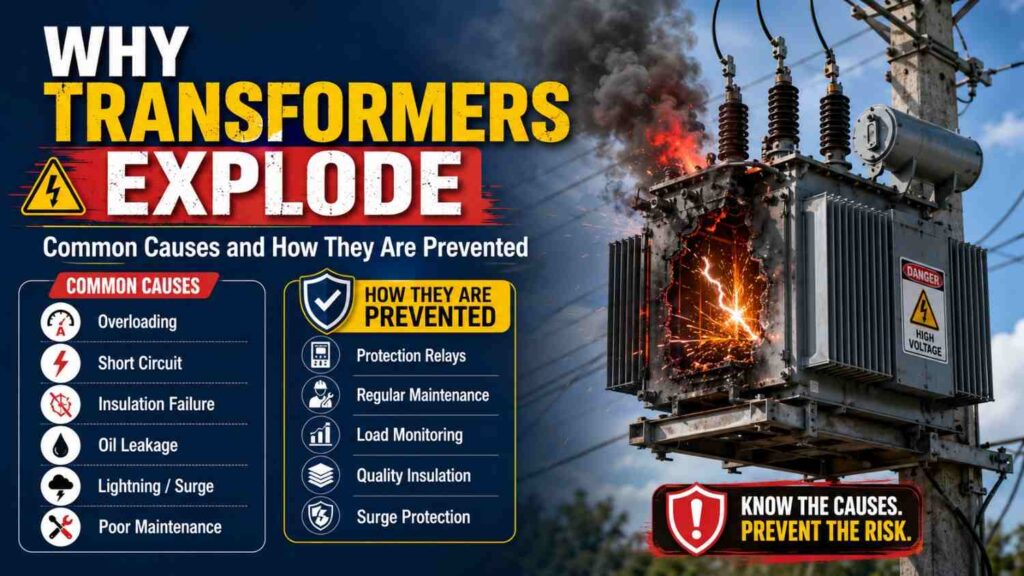
This article explains the genuine technical causes behind these failures and how utilities and engineers work to prevent them.
What a Distribution Transformer Actually Does
Distribution transformers step down higher voltage electricity from the transmission or primary distribution network to the lower voltage used in homes and businesses, discussed in our dedicated transmission versus distribution article, using oil-cooled windings that must dissipate the heat generated during this constant energy conversion process.
Overloading: The Most Common Underlying Cause
When a transformer is asked to supply more load than its rated capacity, whether from organic growth in connected customers, illegal connections tapping into the network, or a genuine capacity mismatch, it generates excess heat beyond what its cooling design can dissipate, progressively degrading the internal insulating oil and windings until catastrophic failure occurs.
Insulating Oil Breakdown and Its Role in Explosions
The mineral oil inside a transformer serves both cooling and electrical insulation functions; when this oil degrades from excessive heat, moisture contamination, or age, it can no longer adequately insulate internal components, potentially leading to internal arcing, and the extreme heat from an internal arc can rapidly vaporize surrounding oil, generating gas pressure that, if not safely released, causes the tank to rupture explosively.
Common Contributing Causes at a Glance
| Cause | How It Contributes to Failure |
|---|---|
| Chronic overloading | Excess heat degrades oil and insulation over time |
| Illegal connections/theft | Adds unaccounted load beyond design capacity |
| Moisture contamination | Reduces oil’s insulating properties |
| Lightning/surge damage | Sudden voltage spikes stress insulation |
| Deferred maintenance | Undetected developing problems worsen unchecked |
How Protection Devices Are Designed to Prevent Explosions
Properly functioning transformers include protective devices, pressure relief valves that vent excess internal gas pressure before it reaches catastrophic rupture levels, and protective relays that disconnect the transformer from the network when abnormal conditions are detected, both specifically designed to prevent conditions from escalating to explosive failure when working correctly.
Why Overloaded, Aging Infrastructure Remains a Genuine Concern in Nigeria
Nigeria’s distribution infrastructure has, in many areas, faced genuine growth in connected load without proportional infrastructure upgrade investment, alongside challenges around illegal connections and deferred maintenance in some locations, all factors that meaningfully increase transformer failure risk beyond what well-maintained, appropriately sized infrastructure would experience.
What Residents Can Genuinely Do
- Report unusual transformer sounds or smells (buzzing, burning odor) to your DisCo promptly rather than assuming it’s normal.
- Avoid illegal connections, which add unaccounted load stress to transformers beyond their designed capacity.
- Maintain safe distance from transformer installations, particularly during storms or after reported faults.
- Report visible oil leaks or damage to transformer housings, which can indicate developing problems.
How Investment and Upgrades Reduce Failure Risk Over Time
Beyond immediate protective devices, longer-term investment in transformer capacity upgrades matched to genuine local load growth, systematic replacement of aging units nearing the end of their expected service life, and stricter enforcement against illegal connections all contribute meaningfully to reducing failure risk across a distribution network over time, representing the kind of sustained infrastructure investment that genuinely addresses root causes rather than only responding after failures occur.
Common Misconceptions
- “Transformer explosions happen randomly and unpredictably without underlying cause.” They typically result from identifiable, often preventable underlying causes like chronic overload or deferred maintenance.
- “Any humming or unusual sound from a transformer indicates imminent explosion risk.” Some humming is normal transformer operation, discussed in our dedicated humming sound article; distinguishing normal from concerning sounds matters.
- “Transformer explosions are solely the utility’s responsibility to prevent.” Illegal connections and unreported early warning signs from the community also genuinely contribute to failure risk.
Frequently Asked Questions
How can I tell if a nearby transformer is at elevated risk of failure?
Unusual sounds, visible oil leaks, burning smells, or flickering power in the area it serves can all indicate developing problems worth reporting to your electricity distribution company.
Are all transformer failures explosive, or do most fail more quietly?
Most transformer failures are actually quieter, gradual degradation leading to reduced performance or a controlled protective shutdown, with dramatic explosive failure being a less common, more severe outcome.
Does transformer size affect explosion risk or severity?
Larger transformers generally contain more oil and stored energy, potentially making failures more severe when they do occur, though smaller distribution transformers can still fail dramatically under the right failure conditions.
Final Thoughts
Transformer explosions typically result from identifiable underlying causes, chronic overloading, oil degradation, and deferred maintenance chief among them, rather than random unpredictable failure. Understanding these causes, and recognizing early warning signs worth reporting, provides genuinely valuable context for communities living near distribution infrastructure and for engineers working to improve grid reliability and safety.