
Power systems engineering, focused on the generation, transmission, and distribution of electrical power, represents one of the most consistently in-demand electrical engineering specializations globally, and particularly relevant given Nigeria’s ongoing power infrastructure challenges and development needs. This article covers what a genuine career in this field actually involves.
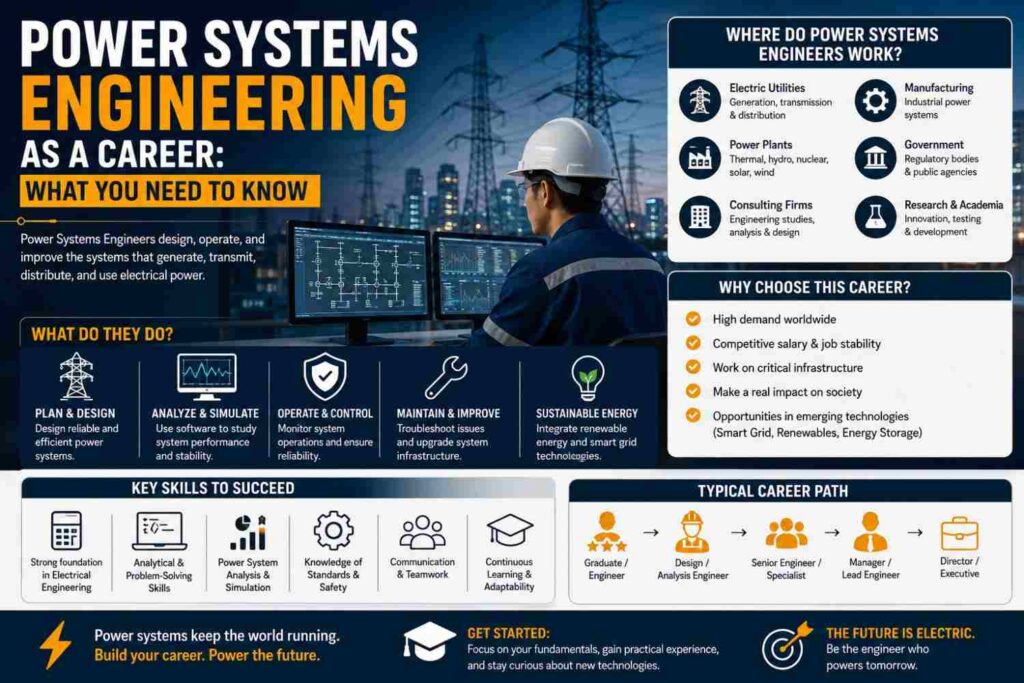
What Power Systems Engineers Actually Do
Power systems engineers work across a genuinely broad range of activities: designing and analyzing generation facilities, planning and maintaining transmission and distribution networks, developing protection systems that safely isolate faults (discussed throughout this site’s troubleshooting articles from a homeowner perspective, but genuinely engineered by professionals in this field), conducting load flow and stability studies, and increasingly, integrating renewable energy sources into existing grid infrastructure.
Core Technical Skills This Career Genuinely Requires
Beyond foundational circuit theory, power systems engineers need genuine competency in power system analysis (load flow, fault analysis, stability studies), protection system design and coordination, understanding of power quality issues, and increasingly, knowledge of renewable energy integration challenges given the growing role of solar and other renewable sources in modern grids, discussed throughout our solar energy articles.
Why This Field Is Particularly Relevant in Nigeria
Nigeria’s electrical grid faces genuine, well-documented challenges around generation capacity, transmission infrastructure, and distribution reliability, creating substantial, ongoing demand for skilled power systems engineers across generation companies (GenCos), transmission infrastructure (TCN), distribution companies (DisCos), and the broader independent power sector, alongside growing renewable energy and off-grid power development.
Typical Career Paths and Employers
| Employer Type | Typical Focus Areas |
|---|---|
| Generation companies (GenCos) | Power plant operation, maintenance, efficiency |
| Transmission company (TCN) | Grid-level transmission infrastructure and planning |
| Distribution companies (DisCos) | Distribution network operation and customer-facing infrastructure |
| Independent power producers | Private generation, including renewable projects |
| Engineering consulting firms | Design, planning, and advisory services across the sector |
| Industrial facilities | In-house power infrastructure for large industrial operations |
Educational Foundation and Continued Learning
Beyond core electrical engineering coursework, students specifically interested in power systems benefit from focused coursework in power system analysis, electrical machines, high voltage engineering, and protection systems where available, alongside genuine proficiency in power system analysis software and MATLAB/Simulink, discussed in our dedicated software articles, for modeling and simulation work.
The Growing Intersection With Renewable Energy
Modern power systems engineering increasingly involves renewable energy integration challenges, managing variable generation from solar and wind, energy storage system integration, and grid stability considerations unique to renewable-heavy generation mixes, making genuine familiarity with renewable energy concepts, discussed throughout our solar energy articles, an increasingly valuable complement to traditional power systems knowledge rather than a separate, unrelated specialization.
Professional Certification and Continued Development
Pursuing relevant professional certifications and registration with recognized engineering bodies, alongside continued professional development through industry conferences, technical training, and staying current with evolving grid technology and standards, genuinely supports long-term career advancement within this specialization.
Understanding the Regulatory and Policy Dimension
Unlike some more purely technical specializations, power systems engineering genuinely intersects with regulatory and policy considerations, tariff structures, grid codes, and government energy policy all directly shape how power systems engineers’ technical work gets implemented and prioritized, making at least basic awareness of Nigeria’s power sector regulatory environment, alongside pure technical competency, a genuinely valuable complement for engineers wanting to understand the fuller context their work operates within.
Building a Realistic Picture Through Site Visits and Industry Contact
Beyond classroom coursework, genuinely understanding what power systems work actually looks like day-to-day benefits considerably from direct exposure, seeking out site visits to generation or transmission facilities where your institution or student chapter arranges them, or simply reaching out respectfully to practicing power systems engineers for informational conversations about their actual work; this kind of firsthand exposure, though sometimes requiring genuine initiative to arrange, gives considerably more accurate career insight than relying on textbook descriptions or assumptions alone.
Common Misconceptions
- “Power systems engineering is purely about large-scale, generation-level work.” The field spans generation through transmission, distribution, and increasingly, distributed and renewable generation at various scales.
- “This specialization is becoming less relevant given renewable energy growth.” Renewable integration is expanding rather than replacing the field, creating genuine new opportunities alongside traditional power systems work.
- “Power systems careers are limited to utility companies specifically.” Opportunities span utilities, independent power producers, consulting firms, and industrial facilities with significant in-house power infrastructure needs.
Frequently Asked Questions
Does power systems engineering require different mathematical skills than other electrical engineering specializations?
It draws on similar foundational mathematics as other specializations, with particular emphasis on the specific analysis techniques used for power flow, fault, and stability studies, generally taught through dedicated power systems coursework and software tools.
Is fieldwork a significant part of this career, or is it primarily office-based analysis?
This varies considerably by specific role; some positions involve substantial field and site work (particularly in generation, transmission maintenance, and project commissioning), while others focus more heavily on office-based analysis, planning, and design work.
How does someone gain practical power systems experience as a student?
Seeking internship or SIWES placements, discussed in our dedicated articles on both, specifically with power sector employers, alongside relevant coursework and independent study of power system analysis software, provides genuine practical exposure before graduation.
Final Thoughts
Power systems engineering offers a genuinely substantial, in-demand career path, particularly relevant given Nigeria’s ongoing power infrastructure development needs, spanning traditional generation, transmission, and distribution work alongside increasingly important renewable energy integration challenges. Building genuine technical competency in power system analysis, protection systems, and renewable integration concepts positions students well for this consistently valuable specialization.