
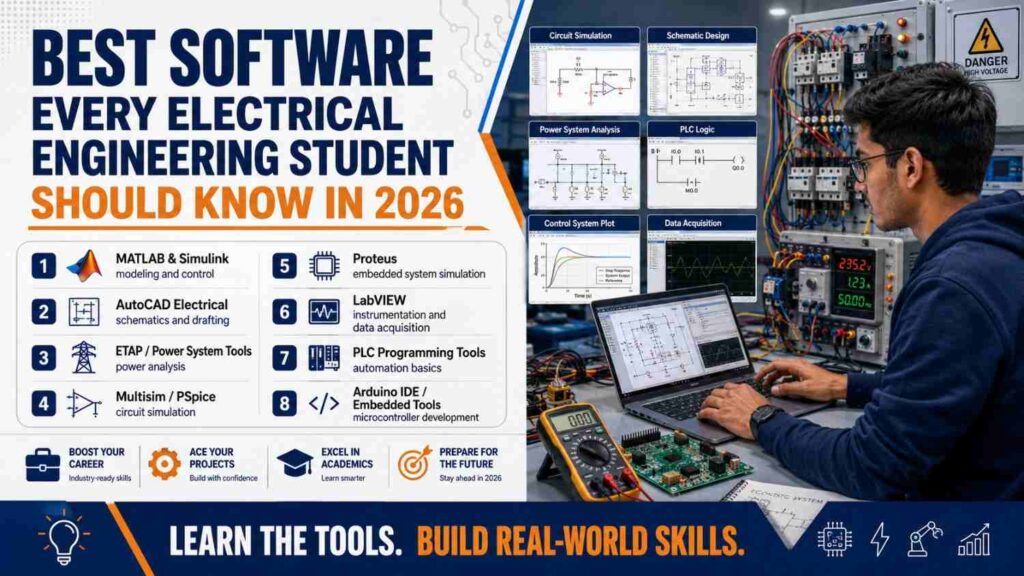
Beyond MATLAB, which we cover in depth elsewhere on this site, electrical engineering students benefit from familiarity with a broader range of software tools spanning circuit design, simulation, programming, and documentation. This article surveys the categories of software genuinely worth knowing and why each matters.
Circuit Simulation and Design Software
Tools like Proteus, LTspice, and Multisim allow students to design and simulate circuits before physical construction, catching design errors early and building genuine intuition for circuit behavior; familiarity with at least one such tool is genuinely valuable across nearly every electrical engineering specialization, from basic circuits coursework through more advanced design projects.
PCB Design Software
For students interested in hardware design specifically, tools like Eagle, KiCad, or Altium Designer for printed circuit board layout represent genuinely practical, in-demand skills, particularly valuable for students pursuing embedded systems, hardware design, or product development-oriented career paths.
Programming Languages and Environments
Beyond MATLAB, genuine programming competency in Python, given its growing role in data analysis, automation, and increasingly in engineering-specific applications through libraries built for scientific computing, and C/C++, still foundational for embedded systems and microcontroller programming, represents broadly valuable, transferable skills.
PLC Programming Software
As discussed in our dedicated PLC beginner’s article, software environments for programming programmable logic controllers, varying by manufacturer (Siemens, Allen-Bradley, and others each have their own environments), are genuinely essential for students interested in industrial automation and control careers.
Power Systems Analysis Software
For students specifically interested in power systems engineering, discussed in our dedicated power systems career article, familiarity with power system analysis and simulation tools used for load flow analysis, fault analysis, and protection system design represents genuinely specialized, valuable domain-specific software knowledge.
A Software Priority Table by Interest Area
| Interest Area | Genuinely Valuable Software Categories |
|---|---|
| Circuit design/hardware | Circuit simulation, PCB design tools |
| Embedded systems | C/C++, microcontroller-specific IDEs, PCB design |
| Industrial automation/controls | PLC programming environments, MATLAB/Simulink |
| Power systems | Power system analysis software, MATLAB |
| General/undecided | Basic circuit simulation, Python, MATLAB |
Documentation and Technical Communication Tools
Beyond purely technical software, genuine proficiency with technical documentation tools, including proper use of word processing software for professional report formatting and presentation software for clear technical communication, discussed in our dedicated skills article, rounds out a genuinely practical software skill set relevant across virtually every engineering role.
Why Learning Multiple Tools’ Underlying Concepts Matters More Than Memorizing One Specific Interface
Software interfaces and specific tools change over time, and different employers and projects use different specific platforms; focusing on understanding the underlying concepts each tool addresses, circuit simulation principles, PCB design fundamentals, programming logic, rather than memorizing one specific tool’s interface exclusively, makes your skills genuinely more transferable across whatever specific tools a future employer happens to use.
Accessing Software as a Student
Many software vendors offer free or significantly discounted student licensing, and open-source alternatives (KiCad for PCB design, for example) provide genuinely capable, cost-free options for students wanting to build practical skills without significant financial investment; checking your institution’s specific software access arrangements and researching free/open-source alternatives for tools without student discounts is a worthwhile early step.
Version Control Basics: A Genuinely Underrated Skill
Beyond the engineering-specific software discussed above, basic familiarity with version control systems like Git, standard practice in professional software and increasingly hardware/firmware development environments, for tracking changes and collaborating on code or design files, is a genuinely valuable, often overlooked skill for engineering students, particularly relevant for anyone whose work involves significant programming or collaborative design work.
Evaluating New Software Tools You Encounter Later in Your Career
Beyond the specific tools discussed above, you’ll genuinely encounter new or unfamiliar software throughout your career as employers, projects, and industry standards evolve; developing a general approach to quickly evaluating and picking up new tools, understanding what problem the tool actually solves, checking whether it maps to concepts you already know from tools you’ve used before, and working through its official tutorials rather than avoiding unfamiliar software out of discomfort, is itself a genuinely transferable skill worth deliberately building now, since no single list of tools learned as a student will remain complete throughout an entire career.
Common Misconceptions
- “Learning one circuit simulation tool thoroughly is sufficient; the specific tool doesn’t matter much.” While underlying concepts transfer, some genuine familiarity with multiple common tools broadens your practical readiness for different employer environments.
- “Expensive, industry-standard software is always necessary for genuine skill-building.” Free and open-source alternatives often provide genuinely sufficient capability for building real, transferable skills as a student.
- “Software skills matter less than pure theoretical understanding.” Both genuinely matter; theoretical understanding without practical tool proficiency limits your ability to apply that knowledge effectively in real engineering work.
Frequently Asked Questions
Should I try to learn every software category mentioned here, or focus narrowly?
Building basic familiarity across most categories, with deeper focus on whichever aligns with your specific specialization interest, discussed in our dedicated specializations article, is generally more valuable than extreme narrow focus, especially before you’ve fully settled on a specific career direction.
Is it worth pursuing formal certifications in specific software tools?
For some tools, particularly PLC programming environments and certain industry-standard design software, relevant certifications can meaningfully strengthen your resume, though genuine demonstrated project experience generally matters more to employers than certification credentials alone.
How can I gain practical software experience beyond formal coursework?
Personal projects, open-source contributions, online courses, and seeking out internship or SIWES placements, discussed in our dedicated articles on both, that specifically offer hands-on software experience all provide genuine, practical skill-building opportunities beyond standard coursework alone.
Final Thoughts
A well-rounded electrical engineering software skill set spans circuit simulation, programming, and domain-specific tools relevant to your particular interests, built through deliberate practice rather than passive coursework exposure alone. Developing genuine proficiency across these categories, understanding underlying concepts rather than memorizing single interfaces, gives you meaningfully stronger, more transferable practical readiness for whatever specific career path and employer environment you eventually pursue.