
Being able to calculate exactly what any specific appliance costs to run is one of the most genuinely useful practical skills for managing household electricity expenses, turning vague assumptions into concrete numbers you can actually act on. This article walks through the complete calculation method step by step.
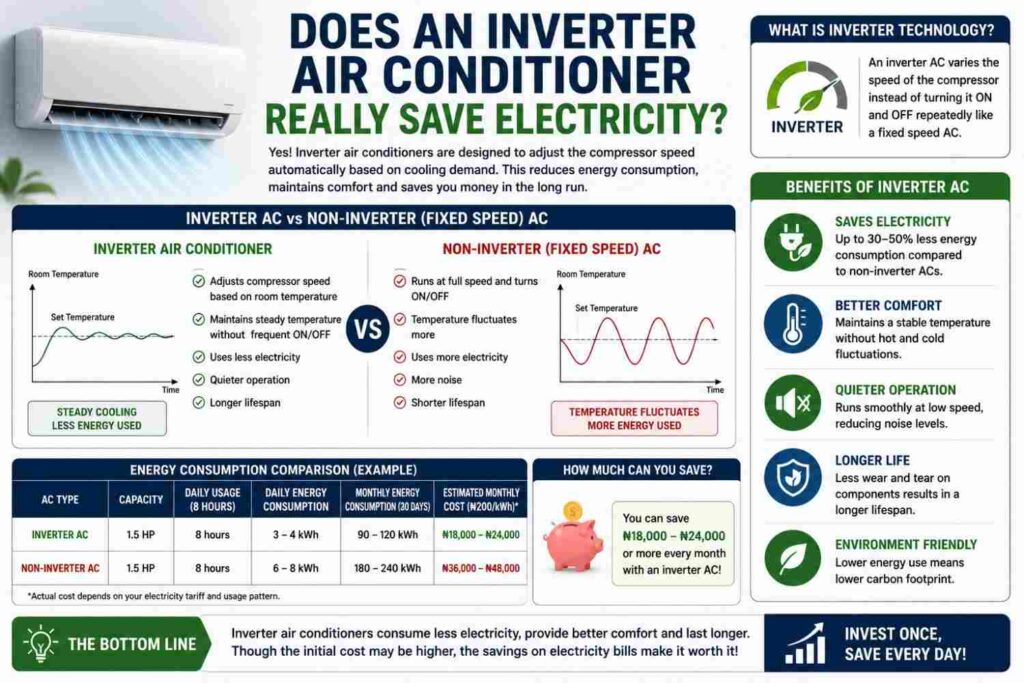
Step 1: Find the Appliance’s Power Rating
Check the appliance’s nameplate, usually found on a label on the unit itself, its manual, or the manufacturer’s specifications, for its power rating in watts (W) or kilowatts (kW); if only current (amps) and voltage are given, multiply these together to get watts, following the same relationship discussed in our voltage, current, resistance and power article.
Step 2: Convert to Kilowatts if Necessary
Since electricity is typically billed per kilowatt-hour (kWh), convert your appliance’s wattage to kilowatts by dividing by 1,000; a 1,500W kettle, for example, is 1.5kW.
Step 3: Estimate Realistic Daily or Weekly Usage Hours
Estimate how many hours the appliance actually operates, being realistic about actual active running time rather than simply how long it’s plugged in or switched on, particularly important for appliances that cycle on and off like refrigerators and air conditioners, discussed in our dedicated consumption articles for each.
Step 4: Calculate kWh Consumption
Multiply the appliance’s kilowatt rating by its actual usage hours to get kWh consumed for that period: kW × hours = kWh. A 1.5kW appliance running for 2 hours consumes 3kWh.
Step 5: Multiply by Your Electricity Tariff Rate
Multiply your calculated kWh consumption by your specific electricity tariff rate (cost per kWh, found on your electricity bill or from your DisCo) to get the actual monetary cost for that period.
A Worked Example
| Step | Example (1.5HP AC unit) |
|---|---|
| Power rating | ~1,100W = 1.1kW |
| Usage hours per day | 8 hours (with cycling factored in, effective ~6 hours full equivalent) |
| Daily kWh consumption | 1.1kW × 6 hours = 6.6 kWh |
| Electricity tariff (example) | ₦225/kWh |
| Daily cost | 6.6 kWh × ₦225 = ₦1,485 |
| Monthly cost (30 days) | ₦44,550 |
Note: tariff rates vary by DisCo, customer class, and change periodically; always use your current, specific rate for accurate calculations.
Accounting for Cycling Appliances More Precisely
For appliances like refrigerators and air conditioners that cycle their compressor on and off rather than running continuously at full power, discussed in our dedicated consumption articles for each, using an “effective full-power hours” estimate, rather than simply multiplying full running wattage by total hours the unit is switched on, gives a more accurate calculation, since the compressor isn’t actually drawing full power for the entire time the unit is operating.
Using a Plug-In Energy Monitor for Greater Accuracy
For the most accurate results, particularly for appliances with variable or cycling power draw, a plug-in energy monitor, if available, directly measures actual kWh consumption over any period you choose, removing the estimation uncertainty inherent in the calculation method above and giving you genuinely precise, appliance-specific data.
Why This Calculation Is Worth Doing for Your Major Appliances
Applying this calculation to your household’s biggest consumers, typically air conditioning, water heating, and refrigeration as discussed in our dedicated appliance ranking article, gives you concrete, actionable numbers for understanding your actual bill breakdown and identifying where genuine savings opportunities exist, rather than making assumptions or guessing at which appliances matter most.
Common Calculation Mistakes to Avoid
- Using nameplate maximum wattage for cycling appliances without adjustment, overestimating actual consumption for appliances that don’t run continuously at full power.
- Forgetting to convert watts to kilowatts before multiplying by hours, leading to results off by a factor of 1,000.
- Using an outdated or incorrect tariff rate, particularly relevant given periodic tariff adjustments.
- Underestimating actual usage hours based on optimistic rather than realistic usage patterns.
Building a Simple Household Appliance Cost Spreadsheet
Applying this calculation method to every significant appliance in your home and recording the results in a simple table or spreadsheet gives you a genuinely useful, at-a-glance reference for your household’s total electricity cost breakdown, one you can update periodically as tariffs change or usage patterns shift, turning a one-time calculation exercise into an ongoing, practical household budgeting tool.
Common Misconceptions
- “This calculation requires specialized technical knowledge or equipment.” The basic calculation uses simple arithmetic and information typically available on the appliance label and your electricity bill.
- “Nameplate wattage always accurately reflects actual real-world power draw.” Many appliances, particularly those with motors or compressors, draw less than nameplate maximum during much of their actual operation, especially cycling appliances.
- “This calculation isn’t worth doing since tariffs and usage patterns change anyway.” Even an approximate calculation provides genuinely useful, actionable insight into your relative appliance costs, worth updating periodically rather than avoiding entirely.
Frequently Asked Questions
Where can I find my current electricity tariff rate?
Your electricity bill typically states your current rate per kWh, or you can check directly with your DisCo, since rates vary by customer class and are periodically adjusted.
How do I estimate realistic usage hours for appliances I don’t actively monitor?
Reasonable estimation based on your typical daily routine, when you switch appliances on and off, combined with some conservative rounding, gives a reasonable approximation even without precise monitoring.
Is this calculation method different for three-phase appliances or supply?
The basic principle remains the same, though three-phase power calculations involve additional factors; most typical Nigerian residential appliances operate on standard single-phase supply, making the calculation method described here directly applicable for most households.
Final Thoughts
Calculating any appliance’s actual electricity cost is a straightforward, genuinely valuable skill requiring only basic information and simple arithmetic, transforming vague assumptions about your electricity bill into concrete, actionable understanding. Applying this method to your household’s major appliances helps you identify genuine savings opportunities and make informed decisions about usage habits and future appliance purchases.