
It’s a genuinely common household observation: an appliance that seemed to run fine for years starts consuming noticeably more electricity, or your bills creep upward even without any obvious change in usage habits, and appliance aging is often a genuine, physically explainable contributor. This article explains the actual mechanisms behind this phenomenon.
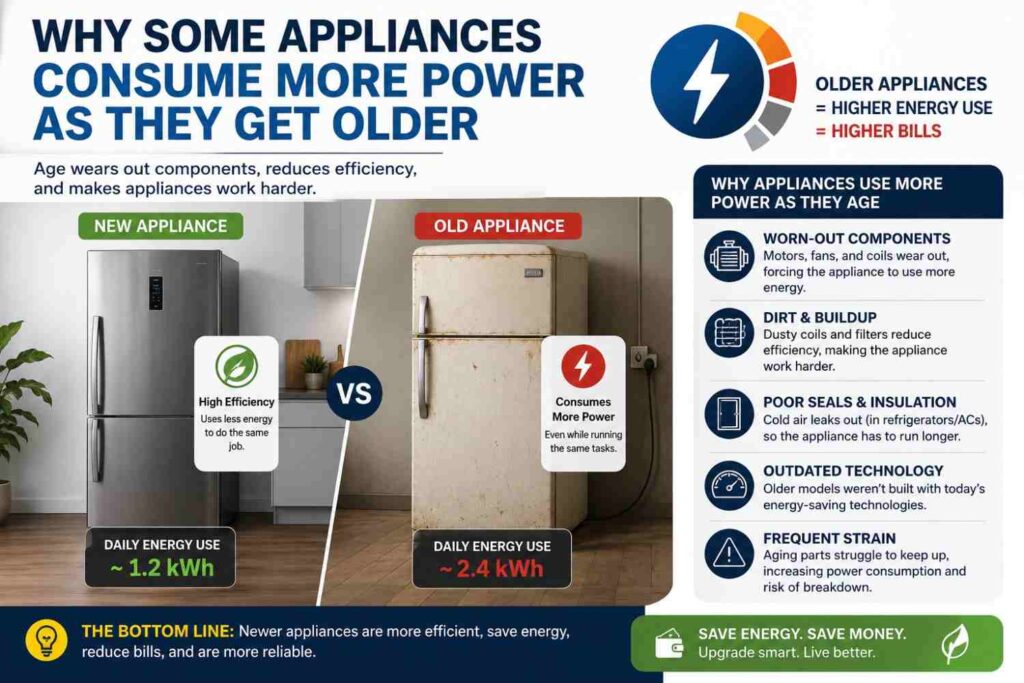
Why Aging Genuinely Affects Electrical Efficiency
Appliances aren’t static, unchanging machines; their components, motors, compressors, seals, insulation, and electronic control systems, gradually wear and degrade through normal use over years of operation, and this physical degradation frequently translates directly into reduced efficiency, meaning the same appliance requires more electricity input to deliver the same functional output it once achieved when newer.
1. Motor and Compressor Wear
Motors and compressors, found in refrigerators, air conditioners, washing machines, and fans, experience gradual mechanical wear, bearing degradation, and reduced magnetic efficiency over years of operation, meaning an aging motor or compressor increasingly requires more electrical input to produce the same mechanical output it once achieved effortlessly.
2. Refrigerant Loss in Cooling Appliances
Refrigerators and air conditioners can experience gradual, often very slow refrigerant leakage over years, even without an obvious dramatic fault; reduced refrigerant levels force the compressor to work harder and longer to achieve the same cooling effect, directly increasing electricity consumption for the same functional cooling output.
3. Insulation Degradation
Refrigerator door seals and internal insulation can degrade over years of use, allowing gradual heat infiltration that forces the compressor to run more frequently to maintain internal temperature, discussed further in our dedicated refrigerator consumption article, a commonly overlooked but genuinely impactful aging effect.
4. Dust and Debris Accumulation
Condenser coils, air filters, and internal components accumulate dust and debris over years of operation if not regularly cleaned, restricting airflow and heat transfer efficiency, forcing appliances to work harder and consume more electricity to achieve their intended function.
5. Electronic Component Degradation
Modern appliances with electronic control systems can experience gradual degradation of these components over years, sometimes resulting in less efficient operation even before an outright electronic failure becomes apparent, a subtler but genuine contributor to increased consumption in aging appliances with significant electronic control elements.
A Reference Table of Aging Effects by Appliance Type
| Appliance | Common Aging-Related Efficiency Loss |
|---|---|
| Refrigerator | Seal degradation, refrigerant loss, coil dust buildup |
| Air conditioner | Refrigerant loss, filter/coil dust buildup, compressor wear |
| Washing machine | Motor wear, heating element scale buildup (if applicable) |
| Fans | Motor bearing wear, dust accumulation on blades/motor |
Why Regular Maintenance Genuinely Slows This Process
While some degree of aging-related efficiency loss is essentially unavoidable over an appliance’s full service life, regular maintenance, coil and filter cleaning, seal inspection and replacement when needed, and professional servicing including refrigerant level checks for cooling appliances, meaningfully slows this decline compared to a neglected appliance, extending the period during which an aging appliance continues operating reasonably efficiently.
When Increased Consumption Signals It’s Time to Consider Replacement
At some point, an aging appliance’s accumulated efficiency loss, combined with increasing repair frequency and cost, means continuing to operate and repair it costs more, in both electricity and maintenance, than replacing it with a modern, efficient equivalent would; calculating this comparison using our dedicated appliance electricity cost article, comparing your aging appliance’s actual current consumption against a modern replacement’s rated consumption, gives a genuine, numbers-based basis for this decision rather than guesswork.
Tracking Consumption Over Time to Catch Aging Effects Early
Households that periodically note a major appliance’s approximate consumption, whether through bill review, spot-checks with an energy monitor, or simple observation of run-time patterns, are better positioned to notice gradual aging-related increases early, while the underlying cause (a seal, dust buildup, refrigerant level) is often still an inexpensive fix, rather than only recognizing the decline much later once consumption has increased substantially and the appliance is closer to needing full replacement.
Common Misconceptions
- “An appliance either works normally or is completely broken; there’s no meaningful in-between efficiency decline.” Gradual efficiency loss is a genuine, measurable phenomenon distinct from outright failure, often occurring well before an appliance stops functioning entirely.
- “Regular cleaning and maintenance can’t meaningfully slow aging-related efficiency loss.” Proper maintenance genuinely slows several of the mechanisms discussed above, meaningfully extending an appliance’s period of reasonably efficient operation.
- “If an old appliance still works, replacing it can’t be cost-justified.” A sufficiently inefficient aging appliance can genuinely cost more in ongoing electricity than the price difference of replacing it with an efficient modern equivalent, especially over several years.
Frequently Asked Questions
How can I tell if my specific appliance’s increased consumption is due to aging rather than a change in my usage habits?
Comparing your appliance’s actual measured or estimated consumption against its original rated specification, while accounting for any genuine usage changes, helps isolate aging-related decline from simple increased use.
Is there a typical age at which appliances start showing meaningful efficiency decline?
This varies considerably by appliance type, build quality, and maintenance history, though many appliances begin showing some measurable decline within 7-10 years, with the rate and severity varying significantly based on the specific factors discussed throughout this article.
Does professional servicing genuinely restore lost efficiency, or only prevent further decline?
Professional servicing, including refrigerant recharging, coil cleaning, and component inspection, can genuinely restore some lost efficiency in many cases, though it typically can’t fully reverse all forms of accumulated mechanical wear discussed above.
Final Thoughts
Appliances genuinely do consume more electricity as they age, driven by real, physically explainable mechanisms including component wear, refrigerant loss, insulation degradation, and dust accumulation. Understanding these mechanisms helps you both maintain your appliances more effectively to slow this decline and make informed, numbers-based decisions about when continued operation no longer makes economic sense compared to replacement.