
The question of whether a charger left plugged into a wall socket, even without a device actually attached and charging, continues consuming electricity is one of the more persistent pieces of household electrical folklore, and it deserves a genuinely accurate, numbers-based answer rather than repeated assumption in either direction. This article explains what’s actually happening.
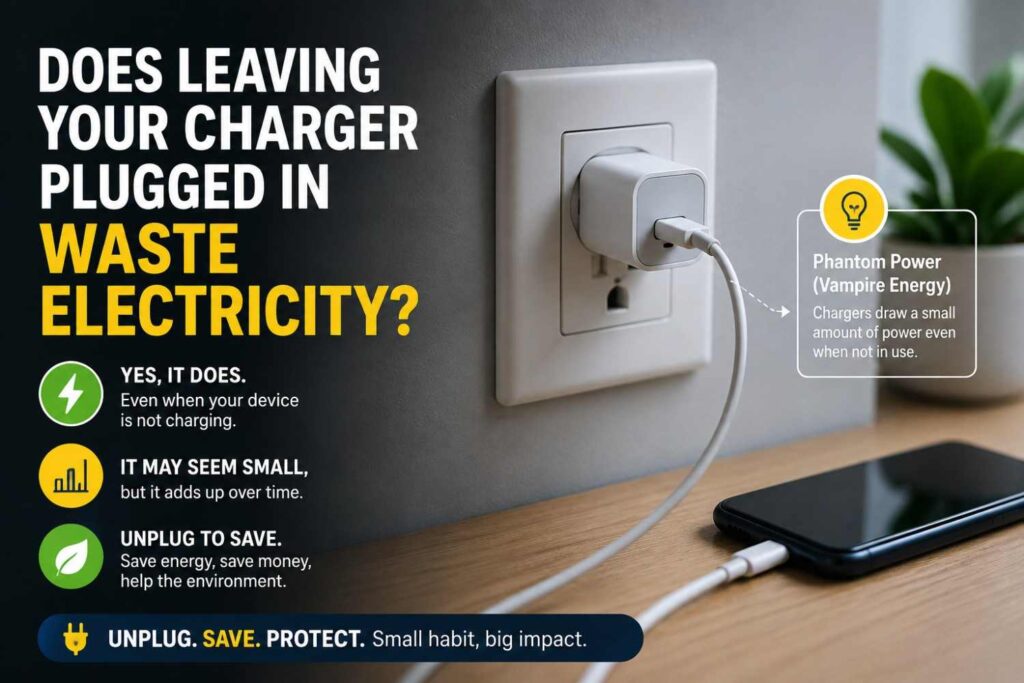
The Short Answer: Yes, But the Amount Is Genuinely Tiny
A charger plugged into a wall socket but not actively charging a device does draw a small amount of electricity, commonly called “standby power” or “phantom load,” a real, measurable phenomenon, but the actual amount involved is typically extremely small for modern chargers, often well under 0.5W, meaning the practical electricity cost impact is genuinely negligible for most households.
Why This Small Draw Happens at All
A charger’s internal circuitry, even when not actively charging a device, typically remains in a low-power standby state to be ready to detect and begin charging the moment a device is connected, and this standby circuitry itself consumes a small amount of power to function, the source of the phantom load phenomenon.
Putting the Actual Numbers in Perspective
A charger drawing 0.3W continuously for an entire month (730 hours) consumes approximately 0.22 kWh, a genuinely tiny amount compared to virtually any other household electricity use discussed throughout this series, meaning even multiple chargers left plugged in throughout your home collectively represent a very small fraction of a typical household’s total electricity consumption and cost.
Why Older or Lower-Quality Chargers May Draw Somewhat More
Older charger designs, particularly older transformer-based chargers rather than modern switching power supply designs, and lower-quality or counterfeit chargers with less efficient internal circuitry, can draw somewhat more standby power than modern, well-designed chargers, making charger quality and age a relevant, if still generally modest, factor in actual phantom load.
A Comparison Table for Perspective
| Device/Scenario | Approx. Monthly kWh |
|---|---|
| Modern phone charger, plugged in unused, all month | ~0.1-0.3 kWh |
| Older/lower-quality charger, plugged in unused, all month | ~0.5-1.5 kWh |
| Refrigerator, typical daily use, one month | ~30-55 kWh |
| Air conditioner, 8 hrs/day, one month | ~135-165+ kWh |
Why the “Unplug Everything” Advice Sometimes Overstates the Benefit
While unplugging unused chargers is a reasonable, harmless habit, and does technically save a small amount of electricity, the actual financial impact is genuinely minor compared to the effort and inconvenience some households invest in rigorously unplugging every charger, especially when compared against the much larger savings available from addressing genuinely significant consumption sources like air conditioning usage patterns, discussed in our dedicated AC consumption article, or appliance efficiency more broadly.
When Standby Power Genuinely Adds Up
While a single charger’s phantom load is negligible, a household with numerous devices left in standby mode, not just chargers but also televisions, set-top boxes, and other electronics with standby functionality, can see this phantom load accumulate to a more genuinely noticeable, if still relatively modest, portion of total consumption, making a broader household audit of standby-drawing devices, rather than focusing narrowly on chargers alone, a more proportionate way to address this category of consumption if you’re motivated to do so.
A Reasonable, Balanced Approach
Given the genuinely small individual impact of a single charger’s phantom load, a reasonable approach treats unplugging unused chargers as a minor, low-effort good habit worth maintaining, particularly for safety and equipment longevity reasons beyond just electricity savings, discussed below, rather than a significant electricity-cost-saving strategy deserving major household effort or anxiety.
How to Spot-Check Your Own Chargers’ Standby Draw
If you’re curious about your specific chargers rather than relying on general estimates, a simple plug-in energy monitor placed between the charger and wall socket, with no device connected, gives a direct, precise reading of that specific charger’s actual standby draw, letting you distinguish genuinely negligible modern chargers from any older or lower-quality units in your home that might warrant more deliberate unplugging.
Common Misconceptions
- “A plugged-in charger uses the same amount of electricity whether or not it’s charging a device.” Standby draw when not actively charging is typically a small fraction of the power consumed during actual active charging.
- “Unplugging all chargers will meaningfully reduce my electricity bill.” The actual savings from this specific habit are typically quite small compared to your household’s total consumption from larger appliances.
- “Modern chargers draw zero power when not actively charging.” While modern designs minimize standby draw considerably compared to older technology, a small, genuine draw typically still exists.
Frequently Asked Questions
Is there any non-electricity-cost reason to unplug chargers when not in use?
Yes, reducing wear on the charger itself, minor fire risk reduction (particularly relevant for lower-quality or damaged chargers), and general electrical safety practice are all reasonable, valid reasons independent of the modest electricity savings involved.
Do laptop chargers draw more standby power than phone chargers?
Generally somewhat more, given their typically higher capacity and more complex internal circuitry, though still a relatively modest amount compared to most other household appliances discussed throughout this series.
How can I check my specific chargers’ actual standby draw?
A plug-in energy monitor, if available, can measure your specific chargers’ actual standby consumption directly, giving you a precise, personalized answer rather than relying on general estimates.
Final Thoughts
Chargers left plugged in without an active device do draw a small, genuine amount of standby electricity, but the actual cost impact is typically negligible for modern chargers, making this a reasonable but relatively low-priority habit compared to addressing your household’s genuinely significant electricity consumption sources. Understanding the real, proportionate scale of this specific issue helps you focus your energy-saving efforts where they’ll actually make a meaningful difference.