
An inverter’s beeping alarm is its way of communicating specific status information, and learning to interpret these signals, rather than simply finding them annoying, turns your inverter into a genuinely useful diagnostic tool rather than a source of household frustration.
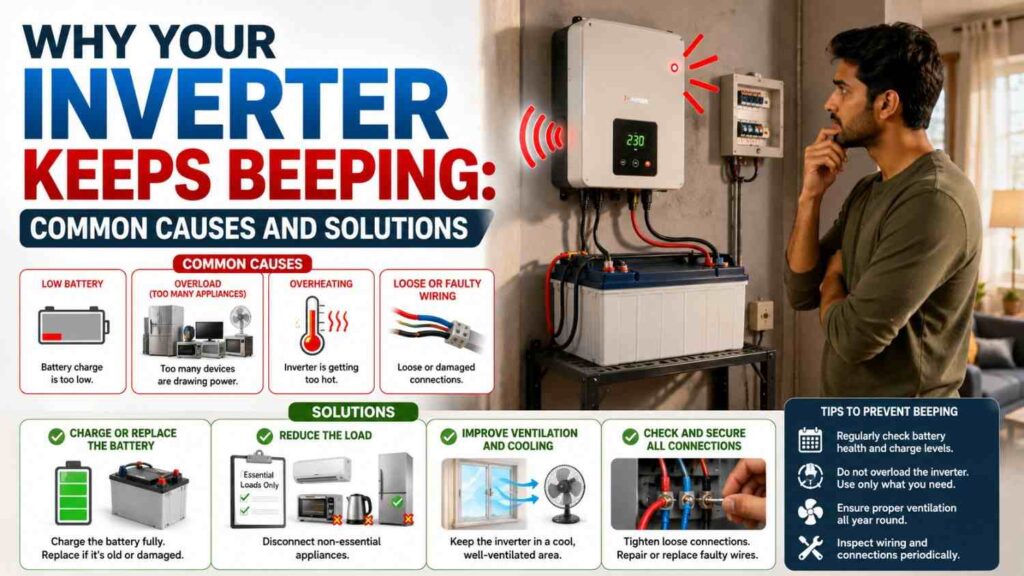
This article walks through the most common reasons inverters beep and what each pattern typically means.
Why Inverters Use Audible Alarms at All
Inverters use beeping alarms specifically because many important status changes, battery level dropping, a fault developing, load exceeding capacity, aren’t otherwise immediately obvious to someone not actively watching the unit’s display, and prompt awareness of these conditions genuinely matters for both protecting your equipment and managing your household’s power usage appropriately in response.
1. Low Battery Warning
Most commonly, sustained or repeated beeping indicates your battery has discharged to a warning threshold, typically set to alert you before the battery reaches a critically low level that could cause damage or trigger automatic shutdown, discussed further in our dedicated depth of discharge article. This is your inverter’s way of telling you to reduce load, prepare for imminent shutdown, or seek an alternative power source soon.
2. Overload Warning
A different, often more urgent beeping pattern typically signals your connected load exceeds your inverter’s rated capacity, meaning you’re asking it to deliver more power than it’s designed to safely provide. This requires immediate attention, unplugging or switching off some connected appliances, since continuing to operate an overloaded inverter risks damage to the unit itself or triggering a protective shutdown.
3. Switchover Notification (Grid to Battery or Battery to Grid)
Many inverters produce a brief, distinct beep specifically when transitioning between power sources, grid power to battery backup, or battery back to grid power, once restored, a normal, expected notification rather than a warning, simply keeping you informed of your current power source.
4. High Temperature Warning
Some inverters beep specifically to indicate internal temperature has risen beyond a safe operating threshold, often due to poor ventilation around the unit, prolonged operation near or above rated capacity, or ambient temperature conditions, particularly relevant during Nigeria’s hottest periods. This warrants checking the unit’s ventilation and reducing load if the warning persists.
5. Battery Fault or Charging Issue
A distinct beeping pattern, often different from the standard low-battery warning, can indicate the inverter has detected a genuine battery fault, failing to charge properly, an internal cell issue, or a connection problem, warranting investigation rather than simply waiting for the battery to recharge normally.
A Quick Reference Table for Common Beep Patterns
| Beep Pattern | Likely Meaning | Recommended Action |
|---|---|---|
| Steady, repeated beeping, escalating urgency | Low battery warning | Reduce load; prepare for shutdown or alternate power |
| Rapid, urgent beeping | Overload warning | Immediately reduce connected load |
| Single brief beep | Power source switchover | Normal; no action needed |
| Continuous beeping with warning light | Temperature or fault warning | Check ventilation; consult manual or electrician if persistent |
| Irregular or unfamiliar pattern | Consult your specific inverter’s manual | Different brands vary; manual has the definitive reference |
Why Consulting Your Specific Manual Matters
Beep patterns and their meanings vary meaningfully between inverter brands and models, meaning the general categories above are a useful starting framework but not a universal, precise reference for every unit; keeping your inverter’s manual accessible, or looking up the model-specific beep code reference online if the physical manual is misplaced, gives you the precise, authoritative interpretation for your exact equipment.
When Beeping Indicates a Genuine Problem Requiring Professional Attention
While low-battery and switchover beeps are normal, expected operation, persistent fault or temperature warnings that don’t resolve after addressing the obvious cause (reducing load, improving ventilation, waiting for normal recharge), or beeping accompanied by other symptoms like unusual smells, visible damage, or inconsistent output, warrant having a qualified technician inspect the unit rather than continuing to operate it uninvestigated.
Reducing Nuisance Beeping Without Ignoring Genuine Warnings
Some inverters allow adjusting alarm sensitivity or muting certain non-critical notifications through their settings menu, a reasonable option for genuinely non-critical, frequently triggered notifications, though it’s worth being cautious about muting warnings related to overload or battery health specifically, since these protect both your equipment and your understanding of your system’s actual condition.
Keeping a Simple Log of Beep Patterns Over Time
For households experiencing recurring or confusing beeping, keeping a brief log noting when beeping occurs, what pattern it follows, and what was happening at the time (load level, time since last charge, weather) can reveal patterns useful both for your own troubleshooting and for a technician’s diagnosis if professional help becomes necessary, turning a vague, hard-to-describe complaint into specific, actionable information.
Common Misconceptions
- “All inverter beeping indicates a problem requiring immediate concern.” Some beeping, like power source switchover notifications, is entirely normal, expected operation.
- “Beep patterns mean the same thing across all inverter brands.” Patterns and their specific meanings vary between manufacturers and models; your unit’s manual is the authoritative reference.
- “Muting or ignoring persistent beeping is a reasonable long-term solution.” Persistent warning beeps typically indicate a condition that benefits from actual investigation and resolution rather than simply being silenced.
Frequently Asked Questions
Is it normal for a new inverter to beep more frequently than an older one did?
Not inherently; if beeping seems excessive compared to your actual usage pattern, checking your load against the inverter’s rated capacity and reviewing your specific model’s alarm settings is a reasonable starting point.
Can I disable the beeping alarm entirely?
Many inverters allow reducing or muting alarm volume through settings, though completely disabling warning alerts removes a genuinely useful diagnostic and protective function, generally not recommended even if the sound is occasionally inconvenient.
Does beeping frequency relate to battery health or age?
Indirectly yes; an aging battery, discussed in our dedicated replacement-timing article, often struggles to hold charge as effectively, potentially triggering low-battery warnings more frequently than it did when newer, a useful indirect signal worth paying attention to.
Final Thoughts
Your inverter’s beeping is a genuine communication system worth understanding rather than dismissing as background noise, giving you real, actionable information about battery status, load conditions, and equipment health. Learning your specific unit’s beep patterns, keeping its manual accessible, and responding appropriately to genuine warnings rather than simply muting them all makes your inverter a more useful, transparent part of your household’s power management.