
With Nigeria’s distinct rainy season affecting large parts of the country for several months each year, understanding exactly what happens to your solar system’s performance during extended cloudy and rainy periods is essential for realistic planning rather than being caught off guard by a seasonal performance dip.
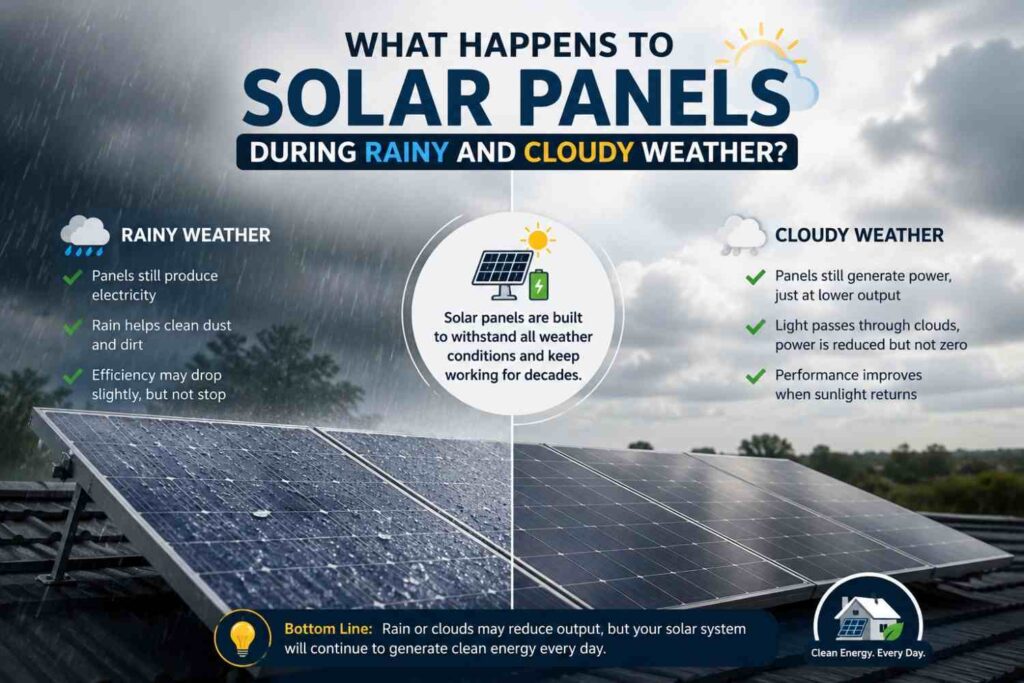
This article explains what actually happens, why, and how to plan your system around it.
Solar Panels Still Work in Cloudy Weather, Just Less Efficiently
A common misconception is that solar panels stop producing power entirely without direct, unobstructed sunlight; in reality, panels continue generating power from diffuse light, sunlight scattered by clouds and atmospheric particles, even on heavily overcast days, just at meaningfully reduced output compared to clear, direct sunlight conditions. Typical cloudy-day output ranges from roughly 10-25% of clear-day output, depending on cloud density and thickness, meaning cloudy days produce real, usable power, just considerably less of it than sunny days.
Why Rain Itself Isn’t the Primary Problem
Rainfall itself doesn’t damage properly installed, weatherproof solar panels, which are specifically designed and rated for outdoor exposure to rain and moisture; the reduction in output during rainy weather comes from the associated cloud cover blocking sunlight, not from the rain itself interfering with the panels’ electrical function. In fact, rain can provide an incidental benefit by naturally washing away accumulated dust, discussed in our dedicated cleaning article, sometimes providing a modest performance boost immediately after rainfall clears, once direct sunlight returns.
The Real Planning Challenge: Extended Low-Generation Periods
The genuine challenge Nigeria’s rainy season poses isn’t any single rainy day, which your system’s battery storage should reasonably absorb, but extended multi-day periods of persistently overcast, low-generation conditions, which can gradually deplete battery reserves faster than they’re being replenished if your system wasn’t sized with this seasonal pattern specifically in mind.
How to Properly Account for This in System Sizing
When calculating your panel and battery capacity, as discussed in our dedicated panel-count article, it’s important to size for your region’s worst realistic sustained low-generation period during rainy season, not just average annual conditions, since a system sized only for average conditions will predictably struggle to keep up during the specific weeks when generation is consistently below average for extended stretches. This typically means either oversizing panel capacity beyond what average conditions alone would suggest, ensuring sufficient generation even during reduced-output periods, or maintaining a backup power source (generator or grid) specifically for extended low-generation stretches rather than relying on solar and battery alone year-round.
A Seasonal Planning Table
| Condition | Typical Relative Output |
|---|---|
| Clear, sunny day | 100% (baseline) |
| Light cloud cover | 50-80% |
| Heavy, overcast cloud cover | 10-25% |
| Active heavy rainfall with thick cloud | 5-15% |
| Brief clearing between rain showers | Can briefly spike higher than average, sometimes above 100% momentarily due to reflection effects |
Battery Management During Extended Low-Generation Periods
Being deliberately more conservative with battery usage during recognized rainy-season stretches, reducing non-essential loads and prioritizing critical appliances, helps stretch available stored energy further during periods when generation isn’t keeping pace with normal consumption patterns. Some system owners also adjust their expectations seasonally, planning for reduced solar reliance and increased grid or generator use specifically during the heaviest weeks of rainy season, rather than expecting identical year-round solar performance regardless of season.
Panel Angle Considerations for Rainy Season
Steeper panel angles, beyond what might be optimal for maximizing direct sun capture during dry season, can help panels shed rainwater more effectively and reduce standing water or debris accumulation during heavy rainy periods, an installation consideration worth discussing with your installer if your region experiences particularly intense rainy seasons, balancing this secondary benefit against the primary goal of optimal annual sun exposure.
How Grid and Generator Backup Fit Into a Rainy-Season Strategy
For most Nigerian households, solar exists alongside rather than as a complete replacement for grid power and generator backup, and rainy season is precisely when this hybrid approach earns its value most clearly: rather than oversizing an expensive solar and battery system purely to handle the year’s worst few weeks of generation, many households find it more cost-effective to lean more heavily on grid or generator power specifically during the heaviest rainy stretches, reserving solar as the primary source during the sunnier majority of the year. Thinking through this seasonal balance explicitly during system design, rather than assuming solar alone should carry the full year-round load, often produces a more cost-effective overall setup.
Monitoring Your System’s Actual Rainy-Season Performance
If your inverter or controller offers output monitoring or logging, reviewing your system’s actual performance through a full rainy season after installation gives you genuinely useful, location-specific data for future planning, whether that means adjusting usage habits, considering a capacity upgrade, or confirming your existing backup strategy adequately covers the gap. This real-world data is considerably more valuable than generic regional averages, since your specific site’s shading, orientation, and local microclimate all influence how your system actually performs compared to broader regional statistics.
Preparing Mentally as Well as Technically for Seasonal Variation
Beyond the technical sizing and backup planning discussed above, simply setting realistic seasonal expectations for your household, understanding in advance that August’s generation will look different from January’s, and planning appliance use accordingly, reduces the frustration and surprise some new solar owners experience when their first rainy season arrives and performance predictably dips compared to the sunnier months they may have based their initial expectations on.
Common Misconceptions
- “Solar panels produce zero power on cloudy or rainy days.” Panels continue generating meaningful, if reduced, power from diffuse light even under heavy cloud cover.
- “Rain damages or degrades solar panels over time.” Properly installed, weatherproof panels are specifically designed to withstand ongoing rain exposure without damage.
- “A system that performs well in dry season will automatically perform adequately in rainy season.” Proper sizing must specifically account for extended low-generation periods, not just typical dry-season performance.
Frequently Asked Questions
Should I expect my battery to fully drain during a long rainy stretch?
A properly sized system, accounting for realistic worst-case sustained low-generation periods, shouldn’t fully deplete under normal rainy season conditions, though very extended or unusually severe periods may still require conservative usage or backup power.
Does thunderstorm activity pose any additional risk to my solar system?
Properly installed systems include surge protection, discussed in our dedicated surge protector article, and grounding to manage lightning-related risks; ensuring these protections are correctly installed is worth confirming with your installer, particularly in regions with frequent severe storms.
Is it worth adding extra panels specifically to compensate for rainy season?
This depends on your specific backup power alternatives and budget; some system owners find it more cost-effective to rely on grid or generator backup during the heaviest rainy weeks rather than oversizing solar capacity purely for a seasonal dip.
Final Thoughts
Rainy and cloudy weather genuinely reduces solar output, but doesn’t eliminate it, and understanding this distinction, combined with properly sizing your system for extended low-generation periods rather than only average conditions, is key to a solar setup that performs reliably across Nigeria’s full seasonal cycle rather than only during the sunniest months.